The way customers pay for goods and services is changing in Kenya. While cash and mobile money remain popular payment methods, card payments are also an important part of modern business transactions. Customers increasingly expect businesses to provide convenient, secure and flexible payment options when shopping.
Whether you operate a supermarket, minimart, pharmacy, restaurant, hotel, boutique, electronics shop or wholesale business, accepting card payments can help improve the customer experience and make your business more accessible.
For Kenyan traders, offering different payment methods is an important step towards improving customer service and business efficiency. However, accepting card payments requires the right payment equipment, reliable financial service providers and an effective system for recording transactions.
This is where a modern POS (Point Of Sale) solution becomes useful.
A reliable POS SYSTEM helps businesses manage sales transactions, record payments, monitor inventory and maintain organised business records. When connected to supported payment terminals and services, a point of sale system can help businesses manage card payments alongside other payment methods.
In this guide, Digee Technologies Limited Company explains how card payments work in Kenya, what businesses need to start accepting them, their benefits and how reliable pos software can simplify daily business operations.
1. What Are Card Payments?
Card payments are electronic transactions made when customers use payment cards to purchase goods or services instead of paying with cash.
Customers can use different types of cards depending on what the business and payment provider support.
Common examples include:
- Visa debit cards.
- Mastercard debit cards.
- Visa credit cards.
- Mastercard credit cards.
- Other supported bank payment cards.
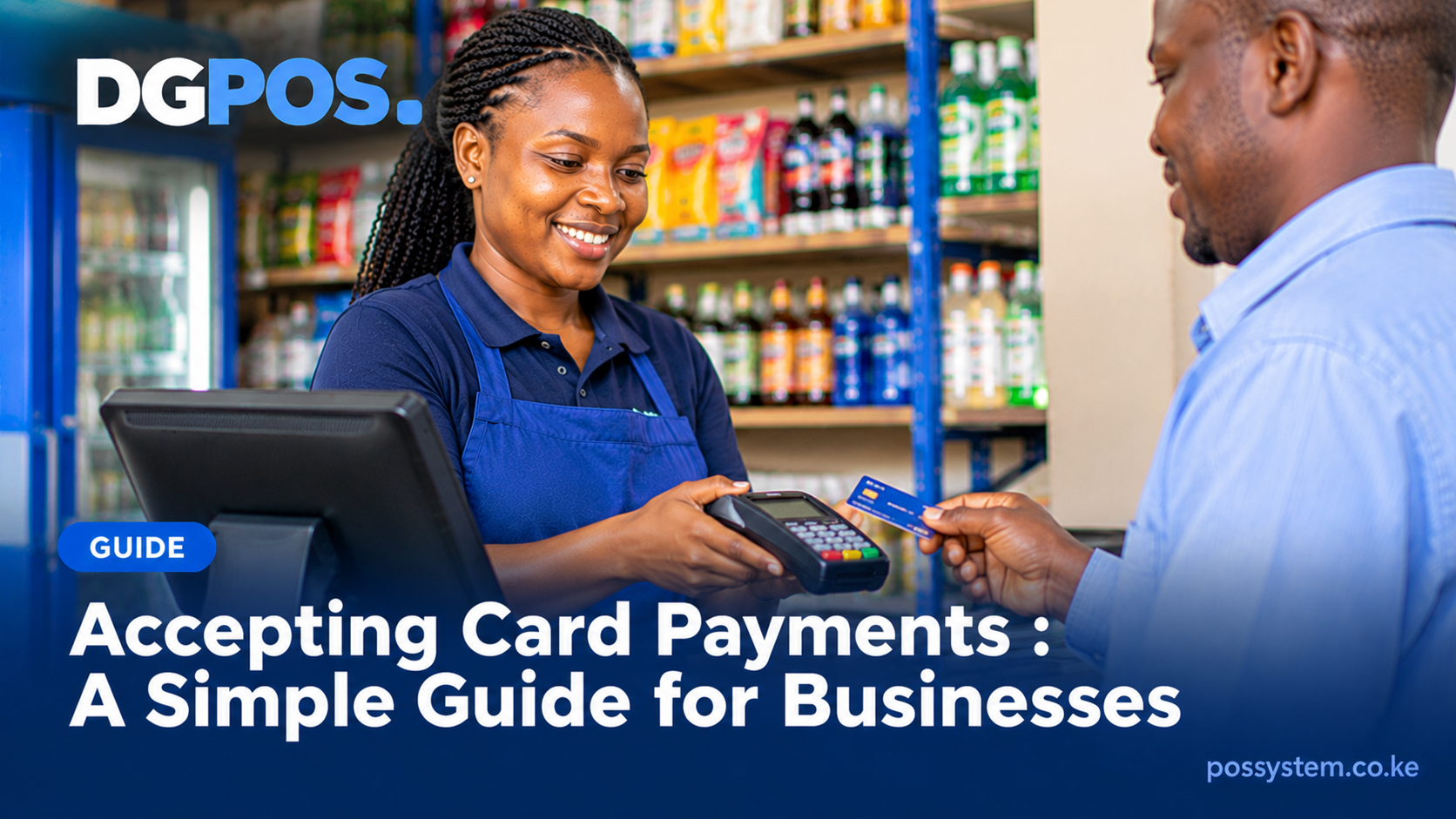
When a customer pays using a card, the transaction is processed electronically through a payment terminal or another approved payment channel.
The payment provider communicates with the relevant financial institutions to authorise or decline the transaction.
Once the transaction is successfully completed, the business receives confirmation through the payment service provider.
A modern POS SYSTEM can help record the transaction and connect the payment information with the business’s sales records.
Using reliable pos software makes it easier to monitor completed sales and maintain organised transaction histories.
2. How Do Card Payments Work in Kenya?
Accepting card payments involves several steps that connect the customer, business, payment provider and financial institutions.
Here is a simple explanation of how the process works.
Step 1: The Customer Selects Products or Services
A customer visits your business, selects the products they want to purchase and proceeds to the checkout counter.
Step 2: The Cashier Records the Sale
The cashier enters the products into the POS SYSTEM or scans their barcodes.
The point of sale system calculates the total amount payable.
Step 3: The Customer Presents Their Card
The customer inserts, taps or swipes their card depending on the capabilities of the payment terminal.
Some transactions may require a PIN or additional authentication.
Step 4: The Payment Is Authorised
The payment terminal communicates with the payment processor and relevant financial institutions to request transaction authorisation.
The transaction may be approved or declined.
Step 5: The Business Receives Confirmation
If the transaction is approved, the payment terminal displays a confirmation message.
The business should confirm the transaction status before releasing the purchased goods or completing the service.
Step 6: The Sale Is Recorded
A connected POS (Point Of Sale) solution can help record the sale and its associated payment information.
This makes it easier for business owners to review sales records and reconcile payments.
3. What Do You Need to Start Accepting Card Payments in Kenya?
Before accepting card payments, your business needs the appropriate payment services and equipment.
The exact requirements depend on your preferred payment provider and the type of business you operate.
Here are the main things to consider.
A Business Bank Account
Many payment providers require businesses to have a suitable bank account where card transaction settlements can be deposited.
Check the provider’s requirements before applying.
A Payment Service Provider
You need to work with a bank or authorised payment service provider that offers card acceptance services.
Compare providers based on transaction charges, settlement periods, supported cards, customer support and other applicable conditions.
A POS Payment Terminal
A payment terminal allows customers to make card payments.
Depending on the provider, the terminal may support:
- Chip-and-PIN transactions.
- Contactless card payments.
- Magnetic stripe transactions where supported.
- Different card networks.
- Electronic transaction confirmations.
A Business POS System
A reliable POS SYSTEM helps manage sales and connect business transactions with payment information.
A suitable point of sale system can make it easier to maintain records of sales completed through different payment methods.
Internet or Network Connectivity
Many payment terminals require reliable network connectivity to communicate with payment processing services.
Some providers may offer alternative connectivity arrangements.
Business Documentation
Payment providers may request business registration documents, identification details, KRA PIN information, bank details and other onboarding documents.
Always confirm the specific requirements directly with your chosen provider.
4. Benefits of Accepting Card Payments in Your Business
Accepting card payments can provide several advantages for Kenyan businesses.
As customers look for convenient ways to pay, offering different payment options can help improve the shopping experience.
1. More Payment Convenience for Customers
Customers do not always carry cash. Accepting cards gives them another convenient way to complete purchases.
A reliable POS (Point Of Sale) setup helps businesses accommodate customers who prefer electronic payments.
2. Reduced Dependence on Cash
Handling large amounts of physical cash can create additional responsibilities for business owners.
Card payments help reduce the amount of cash that needs to be collected, stored and transported.
3. Better Transaction Records
Electronic payments create transaction records that can support business accounting and financial reconciliation.
A suitable point of sale system helps organise sales records from different payment methods.
4. Improved Customer Experience
Providing multiple payment options makes shopping more convenient and can improve customer satisfaction.
5. Support for Higher-Value Purchases
Some customers prefer using cards when purchasing expensive products rather than carrying large amounts of cash.
Accepting cards can make these transactions more convenient, subject to the customer’s available card limits and provider requirements.
6. Improved Business Professionalism
Offering card payments can help position your business as a modern retail establishment that accommodates different customer preferences.
7. Easier Sales Monitoring
When payment information is properly integrated with your POS SYSTEM, business owners can review sales records and monitor different payment categories.
5. Difference Between Card Payments, M-Pesa and Cash Payments
Kenyan businesses commonly receive payments through cash, mobile money and bank cards.
Each method has different characteristics, and offering several options helps accommodate different customers.
| Payment Method | How It Works | Main Benefit |
|---|---|---|
| Cash | Customer pays using physical money | Simple and familiar |
| M-Pesa | Customer sends money electronically | Convenient mobile payments |
| Debit Card | Customer pays using available bank funds | Electronic payment convenience |
| Credit Card | Customer pays using an approved credit facility | Flexible purchasing option |
A modern POS SYSTEM can help businesses record transactions made through supported payment methods.
Using suitable pos software allows business owners to organise sales records and compare how customers pay.
A good point of sales system should make it easier to maintain accurate payment information without unnecessarily complicating the checkout process.
6. What Is the Difference Between a POS Terminal and POS Software?
Many business owners use the terms POS terminal and POS software interchangeably. However, they serve different purposes.
POS Terminal
A POS terminal is a physical payment device used to accept card transactions.
It allows customers to insert, tap or swipe their cards and complete electronic payments through a supported payment provider.
POS Software
pos software is the application used to manage sales, products, inventory, transactions and business reports.
A modern POS SYSTEM can connect with compatible payment terminals to help businesses manage sales and payment records together.
How They Work Together
Consider a customer purchasing products worth KSh 3,500 from a supermarket.
- The cashier scans the products using the point of sale system.
- The system calculates the total amount.
- The customer chooses to pay using a debit card.
- The cashier initiates the card payment through the connected or separate payment terminal.
- The payment provider authorises the transaction.
- The cashier confirms successful payment.
- The sale is recorded in the business system.
This arrangement helps improve transaction management and makes it easier to reconcile business sales.
Not every payment terminal automatically integrates with every POS SYSTEM. Businesses should confirm compatibility with their software and payment provider before purchasing equipment.
7. How POS Software Helps Manage Card Payments
Accepting card payments is only one part of managing a business.
Business owners also need to record sales, monitor stock, track transactions and understand daily performance.
A reliable POS (Point Of Sale) solution helps bring these activities together.
Here are some important ways pos software supports businesses accepting card payments.
Sales Recording
The system records products sold and the corresponding transaction amounts.
Payment Method Tracking
A suitable point of sale system can categorise transactions according to payment methods, such as cash, card and supported mobile money payments.
Inventory Management
When a sale is completed, the POS SYSTEM can update available stock quantities.
Sales Reports
Business owners can review sales performance and understand how much revenue was generated through different payment methods.
Transaction History
A point of sales system helps maintain organised records that can be used when reviewing transactions.
Employee Accountability
User accounts and permissions can help business owners monitor employee activities.
Payment Reconciliation
Where the necessary transaction references and settlement information are available, the business can compare recorded card sales with payment provider settlement reports.
These features make reliable pos software useful for businesses that want better control over daily operations.
8. How Much Does It Cost to Accept Card Payments in Kenya?
The cost of accepting card payments varies depending on the bank or payment service provider you choose.
There is no single standard price for every business.
Before selecting a provider, understand the different charges that may apply.
Transaction Fees
Some payment providers charge a percentage or fixed amount for each successful card transaction.
POS Terminal Charges
Depending on the provider, you may pay to purchase, rent or lease the payment terminal.
Installation Fees
Some providers may charge setup or installation fees.
Monthly Service Charges
Certain payment arrangements may include recurring service or maintenance fees.
Settlement Charges
Check whether additional fees apply when funds are transferred to your business bank account.
Other Applicable Charges
Some providers may have additional fees depending on card type, transaction category or service arrangement.
When comparing providers, ask for a complete fee schedule.
Also consider how quickly card payments are settled into your account and how declined or disputed transactions are handled.
A reliable POS SYSTEM can help you monitor recorded card sales and compare them against settlement reports.
9. Which Businesses in Kenya Should Accept Card Payments?
Card payments are useful for many industries.
Although customer payment preferences differ, businesses that offer card payment options can accommodate more purchasing needs.
Supermarkets
Supermarkets handle large numbers of transactions every day. Card payments help customers complete purchases conveniently.
A supermarket POS SYSTEM can help manage checkout operations, sales records and inventory.
Minimarts
Minimarts can use card payment services alongside cash and mobile money to serve different customers.
Pharmacies
Pharmacies can offer card payments for medicine and other products while using suitable pos software to manage inventory and sales.
Restaurants
Restaurants can accept card payments for food, beverages and other services.
A restaurant point of sale system can help manage orders, billing and payment records.
Hotels
Hotels can use card payment facilities for accommodation, restaurant services and other customer transactions.
Boutiques
Clothing shops can accommodate customers who prefer using bank cards for fashion purchases.
Electronics Shops
Electronics businesses often handle higher-value transactions, making card acceptance a useful payment option.
Wholesale Businesses
Wholesalers can provide additional payment flexibility for business customers purchasing products in bulk.
For all these industries, a reliable POS (Point Of Sale) solution can help organise sales and maintain better business records.
10. Common Challenges of Accepting Card Payments
Although card payments offer several advantages, businesses should prepare for possible challenges.
Understanding these issues helps you choose the right payment provider and establish proper procedures.
Transaction Charges
Payment providers may charge fees for processing card transactions.
Compare different providers before making a decision.
Network Interruptions
Poor internet or network connectivity may prevent some card transactions from being completed.
Choose a provider with reliable connectivity and understand its procedures for handling service interruptions.
Declined Transactions
Card payments can be declined because of insufficient funds, card restrictions, incorrect PIN entries or other banking issues.
Train employees to handle declined payments professionally.
Settlement Delays
Some transactions may take time to reflect in your business bank account.
Understand your provider’s settlement schedule.
Fraud and Security Risks
Businesses should follow payment security procedures and never request customers to disclose their card PINs.
Employee Training
Employees must understand how to operate payment terminals and confirm transaction results before completing sales.
A suitable POS SYSTEM can help organise sales records and reduce confusion when handling different payment methods.
11. Security Tips When Accepting Card Payments
Payment security is important for both businesses and customers.
Businesses should work with reputable payment providers and follow the recommended security procedures.
Consider these practices:
- Use payment terminals supplied or approved by your payment provider.
- Keep payment terminals secure.
- Never ask customers to reveal their card PINs.
- Do not record or store sensitive card details unnecessarily.
- Train employees on safe payment handling.
- Restrict access to business payment systems.
- Report suspicious transactions to your payment provider.
- Keep your POS SYSTEM and connected devices updated.
- Use strong passwords and appropriate user permissions.
- Follow applicable payment security standards and provider instructions.
A secure point of sale system should support responsible access management and protect business information.
Businesses should also confirm whether their payment provider handles sensitive card information directly or whether additional security responsibilities apply to their setup.
12. How to Choose the Right POS System for Your Business in Kenya
Choosing the right POS SYSTEM is important when introducing card payments into your business.
You need a solution that supports your daily operations and works with your preferred payment arrangements.
Consider the following features when evaluating pos software.
1. Easy Sales Processing
Choose a system that allows employees to record transactions quickly and accurately.
2. Payment Method Support
The point of sale system should support the payment methods your business uses.
3. Payment Terminal Compatibility
Confirm that the software can integrate with your preferred card payment terminal if you want an integrated checkout process.
4. Inventory Management
The system should help track available stock and update inventory after completed sales.
5. Sales Reporting
Look for detailed reports showing daily sales and payment categories.
6. Employee Management
A good POS SYSTEM should support individual user accounts and suitable access permissions.
7. Transaction History
The point of sales system should maintain accessible transaction records.
8. Ease of Use
Employees should be able to learn how to operate the system without unnecessary difficulty.
9. Technical Support
Choose a provider that can assist when technical problems arise.
10. Business Growth
Select pos software that can support your business as you add more products, employees or branches.
The best Point Of Sale solution is one that matches your actual business requirements and supports efficient operations.
13. Best Practices for Managing Card and Other Electronic Payments
Once your business starts accepting card payments, establish procedures that help maintain accurate records.
Some useful practices include:
- Confirm successful card transactions before releasing goods.
- Provide customers with transaction receipts where applicable.
- Reconcile card sales with payment provider reports.
- Monitor payment settlement records.
- Record cash, card and mobile money sales correctly.
- Train employees on payment handling.
- Review declined and reversed transactions.
- Maintain accurate daily sales reports.
- Monitor transaction fees.
- Use a reliable POS SYSTEM to organise sales records.
A good point of sale system makes it easier to monitor payment activity and maintain better financial control.
14. Why Digee Technologies Limited Company for POS Solutions?
Modern businesses need reliable technology to manage sales, payments, inventory and customer transactions.
Digee Technologies Limited Company provides technology solutions designed to help businesses improve their daily operations.
For businesses looking to accept different payment methods and maintain organised sales records, investing in a suitable POS SYSTEM is an important step.
A reliable POS (Point Of Sale) solution can help your business:
- Record daily sales.
- Manage products and inventory.
- Track different payment methods where supported.
- Generate sales reports.
- Monitor employee transactions.
- Maintain organised business records.
- Improve checkout operations.
Whether you operate a supermarket, minimart, restaurant, pharmacy, boutique, electronics shop or wholesale business, the right pos software can help simplify your daily activities.
A suitable point of sale system should support your business requirements and work effectively alongside your chosen payment services.
Digee Technologies Limited Company understands the importance of technology in helping businesses operate efficiently and prepare for growth.
If you are looking for a reliable POS SYSTEM for your business in Kenya, explore the solutions offered by Digee Technologies Limited Company.
Visit our website: https://digeetechnologies.co.ke
Conclusion
Accepting card payments in Kenya is an important step towards offering customers more convenient payment options.
With the right payment provider, suitable card payment terminal and proper business procedures, traders can introduce card payments alongside cash and mobile money.
However, accepting payments is only one part of running an efficient business. You also need accurate sales records, proper inventory management and reliable reporting.
A modern POS SYSTEM helps bring these activities together by recording transactions, managing products and monitoring business performance.
With suitable pos software, businesses can improve checkout operations, maintain organised records and manage different payment methods more effectively.
Whether you operate a small shop, supermarket, pharmacy, restaurant or wholesale business, a reliable point of sale system can help you build a more efficient business.
At Digee Technologies Limited Company, we recognise the importance of technology in supporting modern business operations.