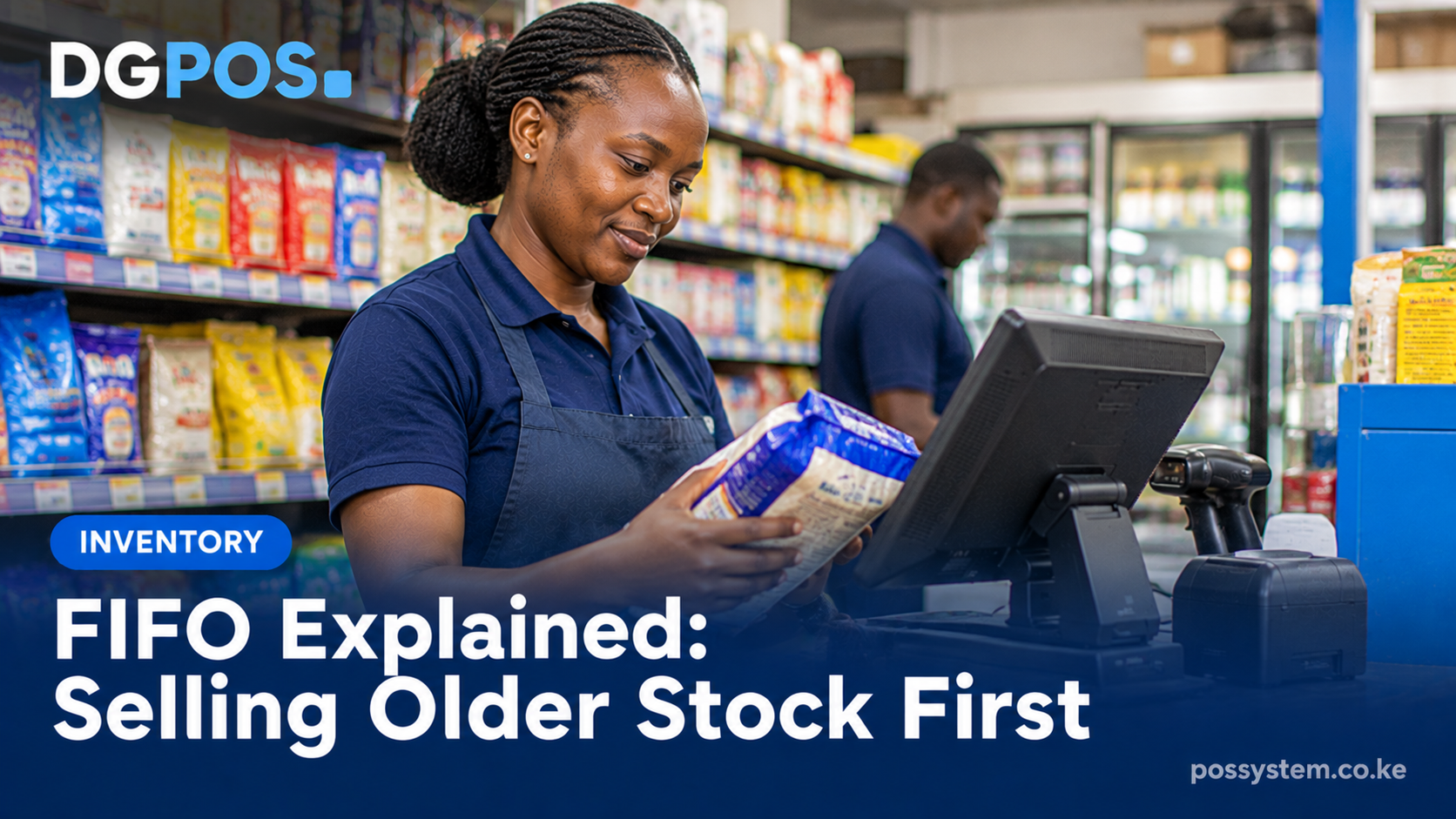
Managing inventory is one of the most important responsibilities in any retail business. Whether you operate a supermarket, minimart, pharmacy, agrovet, restaurant, hardware shop or wholesale store, you need to ensure that products move efficiently and older stock does not remain forgotten on your shelves.
One effective inventory management method is FIFO, which stands for First In, First Out.
FIFO means that products received first should generally be sold or used first. This approach helps businesses reduce waste, manage expiry dates, maintain product quality and avoid unnecessary stock losses.
For businesses handling hundreds or thousands of products, managing FIFO manually can become challenging. A modern POS SYSTEM can help organise inventory records and support better stock rotation.
In this guide, Digee Technologies Limited Company explains how FIFO works, why it matters and how a reliable point of sale system can help your business manage older stock more effectively.
1. What Is FIFO in Inventory Management?
FIFO stands for First In, First Out.
It is an inventory management method where the oldest stock received is sold or used before newer stock.
For example, imagine your shop receives 50 packets of milk on Monday and another 50 packets on Wednesday.
Using FIFO, you should prioritise selling the Monday delivery before opening or selling the Wednesday delivery, provided the products are in suitable condition and their expiry dates support that order.
The idea is simple: stock should move in the same general order it enters your business.
FIFO is useful for businesses selling products such as:
- Food and beverages.
- Dairy products.
- Medicines and healthcare products.
- Seeds and agricultural supplies.
- Cosmetics and personal care products.
- Animal feeds.
- Household products.
- Products with limited shelf lives.
A suitable Point Of Sale solution can help businesses maintain stock records and monitor product movement.
2. How Does FIFO Work?
FIFO works by organising inventory according to when it was received.
When new stock arrives, you record the delivery date and quantity. Older stock is then prioritised for sale before newer stock.
Consider this example:
A minimart receives cooking oil as follows:
| Delivery | Date Received | Quantity |
|---|---|---|
| First delivery | 1 November | 40 bottles |
| Second delivery | 8 November | 30 bottles |
| Third delivery | 15 November | 50 bottles |
The shop has 120 bottles in total.
Under FIFO, the 40 bottles received on 1 November should be sold first, followed by the 30 bottles received on 8 November and then the 50 bottles received on 15 November.
If the shop sells 55 bottles, the expected remaining stock would be:
- 0 bottles from the first delivery.
- 15 bottles from the second delivery.
- 50 bottles from the third delivery.
This gives the business a clearer understanding of which stock remains on the shelves.
Using pos software can make this process easier by organising inventory records, especially where batch or delivery tracking features are available.
3. Why Is FIFO Important for Your Business?
FIFO is not just about selling old products. It helps businesses control inventory, reduce losses and improve daily operations.
Here are some important benefits.
A. Reduces Product Expiry and Waste
Products with limited shelf lives can become unsellable if they remain in storage for too long.
FIFO encourages businesses to move older stock first, reducing the likelihood of products expiring before they are sold.
This is particularly important for:
- Supermarkets.
- Pharmacies.
- Restaurants.
- Agrovets.
- Cosmetics shops.
- Food distributors.
For example, a supermarket receiving fresh yoghurt every few days should organise deliveries so that older suitable stock is sold before newer deliveries.
B. Improves Product Quality
Customers expect to receive products that are fresh, safe and in good condition.
Allowing older stock to remain at the back of shelves while newer products are sold first can lead to poor customer experiences.
FIFO helps maintain better stock rotation and makes it easier for employees to identify products that need attention.
C. Reduces Financial Losses
Expired, damaged or obsolete stock can reduce business profits.
When products are not sold on time, the business may have to discount them, return them where permitted or write them off.
A good POS SYSTEM can help you monitor stock movement and identify products that are not selling as expected.
D. Improves Inventory Organisation
FIFO encourages businesses to arrange products according to delivery dates and stock batches.
Employees can identify older inventory more easily and avoid mixing new deliveries with existing stock without proper organisation.
E. Supports Better Purchasing Decisions
When you know how quickly products are moving, you can make better purchasing decisions.
For example, if a product takes three months to sell, ordering a very large quantity may not be necessary.
A point of sale system can help you review sales trends and compare them with stock received.
4. How to Implement FIFO in Your Shop
You do not need complicated procedures to start using FIFO. However, your employees must understand how stock should be received, arranged and sold.
Follow these steps.
Step 1: Record Every Stock Delivery
Whenever you receive products from a supplier, record important information such as:
- Product name.
- Product code.
- Quantity received.
- Delivery date.
- Supplier.
- Purchase cost.
- Batch number, where applicable.
- Expiry date, where applicable.
Accurate receiving records make it easier to identify older stock.
A POS solution with inventory management capabilities can help organise this information.
Step 2: Arrange Older Stock in Front
Place older suitable products where employees can easily access them.
Newer deliveries should be placed behind the older stock where the product and storage arrangement allow.
For example, when restocking a supermarket shelf, employees should move existing suitable products forward before placing newer deliveries behind them.
This simple practice helps reduce accidental selling of newer stock first.
Step 3: Label Products Clearly
Use delivery dates, batch numbers or stock labels to identify different deliveries.
Clear labelling is especially useful when a shop stocks similar products from different suppliers or receives frequent deliveries.
For example, two boxes of the same product may have different batch numbers and expiry dates.
Labels help employees distinguish between them.
Step 4: Train Employees on Stock Rotation
Every employee involved in receiving, storing or selling stock should understand FIFO.
Explain that:
- Older suitable stock should be prioritised.
- New deliveries should not automatically replace older products.
- Damaged products should be separated.
- Expiry dates must be checked.
- Stock records should be updated correctly.
Training helps ensure that FIFO is followed consistently, even when the owner is not present.
Step 5: Monitor Inventory Regularly
Conduct regular shelf inspections and stock counts.
Check whether employees are following the correct stock rotation procedure.
A POS SYSTEM can help you compare recorded quantities with physical stock, where inventory tracking is supported.
5. FIFO vs FEFO: What Is the Difference?
FIFO and FEFO are related inventory management methods, but they are not exactly the same.
FIFO means First In, First Out. FEFO means First Expiry, First Out.
| Method | Meaning | Main Priority |
|---|---|---|
| FIFO | First In, First Out | Oldest received stock |
| FEFO | First Expiry, First Out | Stock with the earliest expiry date |
For example, suppose a pharmacy receives two batches of medicine:
- Batch A arrives on 1 November and expires in December.
- Batch B arrives on 5 November and expires in November.
FIFO would prioritise Batch A because it arrived first.
FEFO would prioritise Batch B because it expires earlier.
For expiry-sensitive products, FEFO is often more appropriate than relying on delivery dates alone.
This is especially important for pharmacies, agrovets, food shops and businesses handling products with different expiry dates.
A point of sale system that supports batch and expiry tracking can help employees identify which products require priority attention.
Remember that products should only be sold when they are within their approved shelf life, properly stored and suitable for sale.
6. Which Businesses Should Use FIFO?
FIFO is useful for many businesses, especially those dealing with products that can expire, deteriorate or become outdated.
A. Supermarkets and Minimarts
Supermarkets receive frequent deliveries of food, beverages and household products.
FIFO helps ensure older suitable stock is sold before newer deliveries.
Common examples include:
- Milk.
- Yoghurt.
- Bread.
- Juice.
- Canned products.
- Packaged foods.
A POS SYSTEM can help supermarkets monitor sales and inventory quantities while employees follow shelf rotation procedures.
B. Pharmacies and Chemists
Pharmacies need careful inventory management because medicines have expiry dates and specific storage requirements.
FIFO can help organise stock by delivery date, while FEFO is particularly important when prioritising medicines according to expiry dates.
Pharmacy employees should also follow applicable product storage, handling and dispensing requirements.
C. Agrovets
Agrovets stock seeds, fertilisers, veterinary medicines, pesticides and other agricultural supplies.
Some products have expiry dates, batch requirements or specific storage conditions.
FIFO helps organise incoming stock, while FEFO should be considered for products where expiry dates determine the correct selling priority.
D. Restaurants and Hotels
Restaurants purchase fresh ingredients frequently.
FIFO helps kitchen employees use older suitable ingredients before opening newer deliveries.
Examples include:
- Vegetables.
- Dairy products.
- Meat.
- Cooking ingredients.
- Packaged foods.
Proper stock rotation can help reduce food waste and improve kitchen organisation.
E. Cosmetics and Beauty Shops
Cosmetics, skincare products and personal care items may have expiry dates or recommended periods of use.
FIFO helps prevent older products from remaining unsold at the back of shelves.
7. How a POS System Helps You Manage FIFO
Managing FIFO using notebooks and manual stock cards can become difficult as your business grows.
A modern POS SYSTEM can improve inventory organisation by keeping sales and stock information in one place.
Depending on the available features, a point of sale system may help with:
Recording Stock Receipts: Record quantities received from suppliers and update inventory records.
Monitoring Stock Levels: Review how many units are available for sale.
Tracking Product Sales: Monitor which products are moving quickly and which are remaining on shelves.
Managing Product Batches: Where supported, record stock batches and identify different deliveries.
Monitoring Expiry Dates: Where supported, maintain expiry information and identify products approaching expiry.
Generating Inventory Reports: Review stock movement and identify products requiring attention.
Reducing Manual Errors: Automatically updating stock after recorded sales can reduce the need for repeated manual calculations.
It is important to confirm whether your selected pos software supports batch-level inventory and FIFO or FEFO workflows. Basic stock quantity tracking does not automatically provide full batch rotation management.
8. Common FIFO Mistakes to Avoid
Even when a business understands FIFO, poor implementation can lead to inventory problems.
Here are mistakes to avoid.
Selling New Stock Before Old Stock
Employees may place new deliveries at the front of shelves without checking existing products.
Train staff to rotate stock whenever new deliveries arrive.
Ignoring Expiry Dates
The oldest delivery does not always have the earliest expiry date.
For expiry-sensitive products, use FEFO where appropriate.
Mixing Different Batches Without Records
Mixing products from different deliveries without recording their batch information makes stock tracking difficult.
Use clear labels and maintain accurate records.
Failing to Record Damaged Stock
Damaged products should not remain in normal saleable inventory.
Separate them and record the necessary stock adjustment.
Poor Storage Organisation
Products stored in crowded or disorganised areas may be forgotten.
Keep shelves and storage areas clean, labelled and accessible.
Ignoring Slow-Moving Products
Some products may remain unsold even when FIFO is followed.
Review sales reports and adjust purchasing quantities based on actual demand.
9. How to Calculate Stock Remaining Under FIFO
Understanding how stock moves helps you manage inventory more accurately.
Consider a shop that receives the following deliveries:
| Delivery | Quantity |
|---|---|
| First delivery | 100 units |
| Second delivery | 80 units |
| Third delivery | 120 units |
| Total received | 300 units |
The business sells 150 units.
Under FIFO:
- The first 100 units come from the first delivery.
- The next 50 units come from the second delivery.
- The remaining 30 units from the second delivery are still available.
- All 120 units from the third delivery remain.
<text weight=”semibold”>Remaining inventory:</text>
- First delivery: 0 units.
- Second delivery: 30 units.
- Third delivery: 120 units.
Total remaining stock = 150 units.
This method helps businesses understand which delivery batches are still in inventory.
For businesses that use FIFO for inventory costing, the cost of older inventory is generally assigned to goods sold first, while newer costs remain in closing inventory. Accounting treatment should follow the applicable financial reporting standards.
A Point Of Sale solution can help maintain the transaction and inventory records needed for these calculations when the relevant features are available.
10. How DGPOS Can Help Your Business Manage Stock
Digee Technologies Limited Company provides DGPOS, a business management solution designed to support Kenyan businesses.
Whether you operate a supermarket, minimart, pharmacy, agrovet, restaurant, boutique or hardware shop, organised inventory records are important for controlling stock and improving daily operations.
A suitable POS solution can help your business manage:
- Product information and categories.
- Daily sales transactions.
- Stock quantities.
- Inventory movement.
- Sales reports.
- Cashier transactions.
- Payment records.
When products are recorded properly, it becomes easier to review stock movement and understand which items need replenishment.
If your business requires advanced FIFO or FEFO management, batch tracking or expiry alerts, contact Digee Technologies to confirm which capabilities are available in DGPOS and how they can be configured.
Using suitable pos software alongside clear stock rotation procedures can help your employees maintain better inventory records.
11. Practical FIFO Checklist for Your Employees
Use this simple checklist to encourage proper stock rotation in your shop.
When receiving stock:
- Record the delivery date.
- Confirm product quantities.
- Check product condition.
- Record batch numbers where applicable.
- Check expiry dates where applicable.
When arranging stock:
- Place older suitable products where they can be accessed first.
- Put newer deliveries behind older stock where appropriate.
- Label products clearly.
- Follow storage instructions.
When selling stock:
- Prioritise older suitable stock.
- Check expiry dates.
- Avoid selling damaged or expired products.
- Record every transaction correctly.
During stock checks:
- Compare physical stock with system records.
- Identify products approaching expiry.
- Investigate missing or damaged items.
- Record authorised adjustments.
Following these steps consistently helps employees understand their responsibilities.
12. Frequently Asked Questions About FIFO
What does FIFO mean in business?
FIFO means First In, First Out. It is an inventory management method where stock received first is generally sold or used first.
Why is FIFO important in retail shops?
FIFO helps reduce product waste, improve stock rotation, organise inventory and minimise losses caused by old or forgotten products.
Is FIFO better than FEFO?
Neither method is universally better. FIFO prioritises the earliest received stock, while FEFO prioritises stock with the earliest expiry date. FEFO is particularly important for expiry-sensitive products.
Can a POS system manage FIFO?
Some POS SYSTEM solutions support inventory batch tracking and stock rotation workflows. Confirm the available functionality with your provider before relying on it for automated FIFO management.
Does FIFO apply to all products?
FIFO is useful for many inventory categories, but the correct method depends on the product. For items with expiry dates, FEFO may be more appropriate.
How often should a business check stock rotation?
It depends on the type of products and how quickly they move. Perishable and expiry-sensitive products may require daily or frequent checks, while other products can be reviewed during scheduled inventory inspections.
Conclusion
FIFO is a simple but important inventory management method that helps businesses sell older stock before newer deliveries.
By recording stock receipts, arranging products properly, training employees and monitoring inventory, you can reduce waste and improve stock control.
For products with expiry dates, remember that FEFO may be more appropriate because it prioritises the earliest-expiring items.
A reliable POS SYSTEM can make inventory management easier by organising product records, sales and stock movement.
DGPOS from Digee Technologies Limited Company offers a business management solution for Kenyan businesses looking to improve their daily operations.
Whether you run a minimart, supermarket, pharmacy, agrovet or hardware shop, choosing a suitable Point Of Sale solution and following proper stock rotation procedures can help you maintain better control of your inventory and business performance.