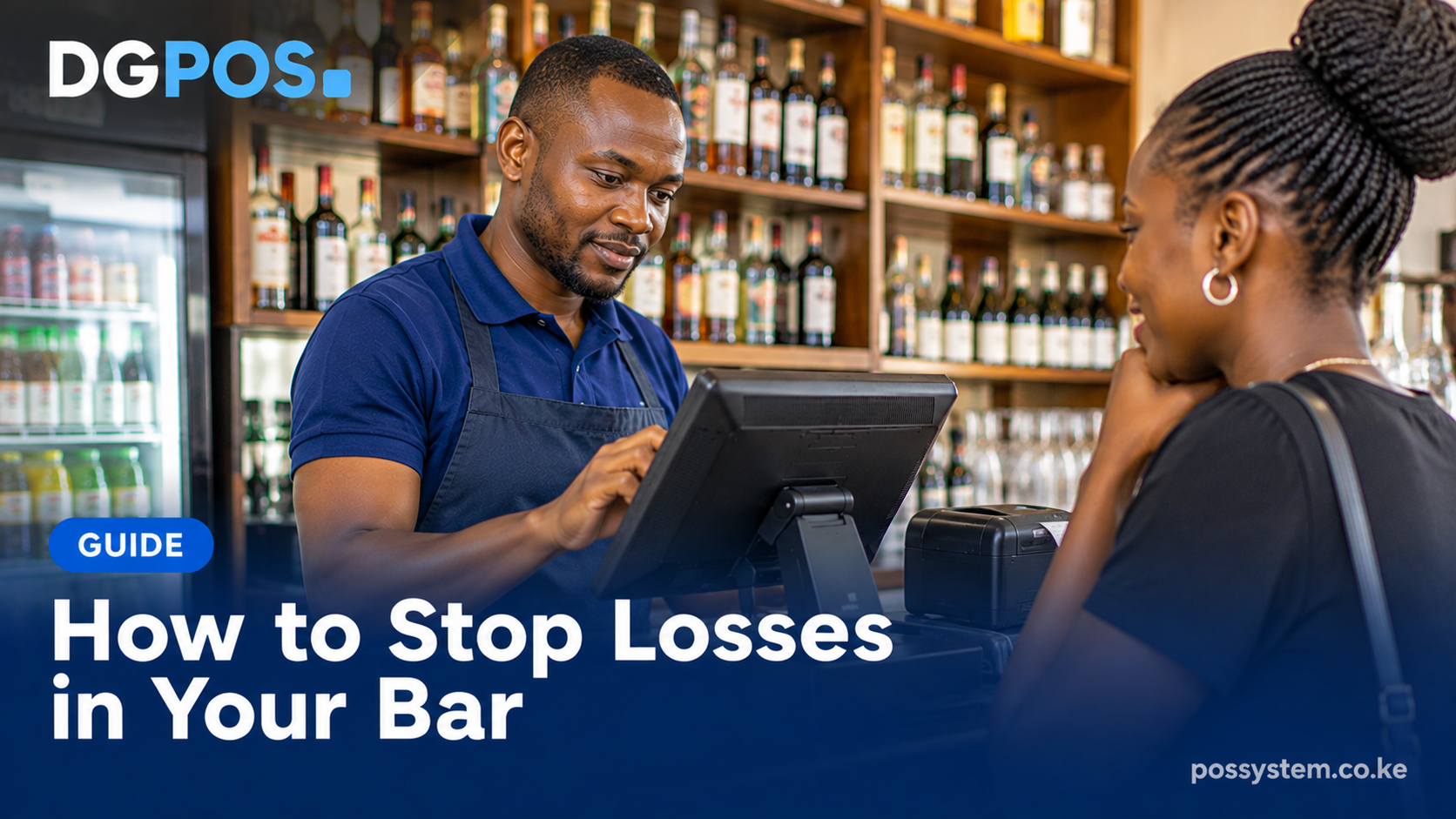
Running a bar can be profitable, but small daily losses can quickly reduce your earnings. Drinks may be served without being recorded, stock may disappear, cash may go missing, and careless purchasing can lead to unnecessary expenses. Without proper controls, it becomes difficult to know how much your bar is actually making.
Whether you operate a small local pub, a busy neighbourhood bar, a restaurant with a drinks section, or a large entertainment establishment, controlling losses should be a priority.
A reliable POS SYSTEM, proper stock management, staff accountability, and regular financial checks can help you protect your business.
In this guide, Digee Technologies Limited Company explains practical ways to reduce losses, improve accountability, and use a point of sale system to manage your bar more effectively.
1. Understand Where Your Bar Is Losing Money
Before reducing losses, identify where they are coming from. Many bar owners focus only on missing cash and overlook other sources of financial leakage.
Common causes of losses include:
- Drinks served without being entered into the system.
- Employees giving unauthorised discounts.
- Unrecorded complimentary drinks.
- Theft of bottles, cans, and other stock.
- Incorrect cash change given to customers.
- Unexplained differences between sales and cash received.
- Poor stock rotation leading to expired or damaged products.
- Excessive purchasing of slow-moving drinks.
- Unauthorised customer credit.
- Incorrect recording of supplier deliveries.
A Point Of Sale solution can help improve visibility into daily transactions, but it must be supported by clear procedures and responsible employees.
2. Record Every Drink Before Serving It
One of the biggest causes of losses in a bar is serving drinks without recording the sale.
For example, a bartender may serve five beers but record only four. If this happens repeatedly, the business loses money without the owner immediately noticing.
Make it a standard rule that every drink must be entered into the POS before it is served.
This includes:
- Bottled beer.
- Canned drinks.
- Spirits.
- Wines.
- Cocktails.
- Soft drinks.
- Water.
- Snacks and food orders.
Employees should not be allowed to serve products first and record them later unless there is an approved procedure for handling system downtime.
Using pos software helps organise transactions and provides sales records that can be reviewed at the end of each shift.
3. Monitor Your Bar Stock Regularly
Stock control is essential for preventing losses. If you do not know how many bottles you have, how many you have sold, and how many remain, it becomes difficult to identify missing products.
Start by recording every stock delivery.
Your records should include:
- Product name and brand.
- Bottle, can, or pack size.
- Quantity received.
- Supplier name.
- Purchase price.
- Delivery date.
- Person responsible for receiving the goods.
For example, if your bar receives 10 crates of beer, the quantity should be checked against the supplier’s delivery note before the stock is accepted.
A point of sales system with inventory management capabilities can help maintain stock records and compare recorded sales with available inventory.
4. Carry Out Daily Stock Counts
Do not wait until the end of the month to discover that drinks are missing.
Daily stock counts help you identify problems while they are still easy to investigate.
At the end of each shift or business day, count important products such as:
- Fast-moving beer brands.
- Popular spirit bottles.
- Wine bottles.
- Soft drinks.
- Premium drinks.
- High-value products.
Compare the physical stock with the expected stock based on opening quantities, deliveries, sales, and approved adjustments.
Example:
Your bar starts the day with 100 bottles of beer and receives another 40 bottles. The system records sales of 85 bottles.
Expected closing stock:
100 + 40 – 85 = 55 bottles.
If the physical count shows 49 bottles, there is a shortage of six bottles that needs investigation.
A POS SYSTEM with suitable inventory reporting can make these checks easier by providing transaction and stock movement records.
5. Control Free Drinks and Complimentary Orders
Free drinks can become a major source of losses when employees give them away without approval.
Your bar may occasionally offer complimentary drinks for legitimate reasons, such as promotions, customer service recovery, or special events. However, every complimentary item should be recorded.
Establish clear rules:
- Only authorised employees can approve complimentary drinks.
- Every free drink must be entered into the POS.
- The reason for the complimentary item should be recorded.
- Management should review complimentary transactions regularly.
- Employees should not use promotions for personal benefit.
A Point Of Sale system with suitable discount and complimentary transaction controls can help create a record of these activities.
6. Prevent Unauthorised Discounts
Discounts can attract customers, but uncontrolled discounts reduce profit.
For example, if a bottle normally sells for KSh 250 and an employee repeatedly sells it for KSh 200 without approval, the business loses KSh 50 per bottle.
Create a discount policy that explains:
- Which products qualify for discounts.
- The maximum discount allowed.
- Who can approve special prices.
- When promotional prices apply.
- How discounted sales should be recorded.
Avoid giving every cashier or bartender unlimited permission to change product prices.
Where supported, pos software can help restrict discounts to authorised users and maintain records of price changes.
7. Track Open Bottles and Spirit Measurements
Spirits can be difficult to control because one bottle may be used to prepare several drinks.
If bartenders pour without standard measurements, the business may give away more alcohol than the selling price covers.
For example, a bar may intend to serve 30 ml per measure, but employees regularly pour 45 ml. Over time, this creates significant losses.
To improve control:
- Set standard measurements for every spirit.
- Use approved measuring tools.
- Train bartenders on correct pouring procedures.
- Record every spirit serving.
- Monitor open bottles during stock counts.
- Investigate unusual differences between expected and actual consumption.
For cocktails, create standard recipes showing the quantity of each ingredient required.
A point of sale system may support recipe or ingredient-level stock deduction if the feature is available and properly configured.
8. Separate Employee Responsibilities
Giving one employee complete control over receiving stock, recording sales, handling cash, and checking inventory creates opportunities for mistakes and fraud.
Where possible, divide responsibilities.
For example:
| Responsibility | Assigned person |
|---|---|
| Receiving deliveries | Storekeeper or supervisor |
| Recording sales | Bartender or cashier |
| Approving discounts | Manager |
| Handling cash reconciliation | Cashier or supervisor |
| Checking closing stock | Supervisor or manager |
In smaller bars where employees perform several duties, introduce independent checks.
A POS SYSTEM can also support user accounts and transaction tracking where those capabilities are available. This makes it easier to review which employee performed particular activities.
9. Reconcile Cash and M-Pesa Every Day
A bar may record many sales but still experience financial losses if cash and mobile payments are not properly reconciled.
At the end of each shift, compare:
- Total sales recorded.
- Cash received.
- M-Pesa payments received.
- Card payments, where applicable.
- Approved discounts.
- Refunds and cancelled transactions.
- Outstanding customer credit, if permitted.
For example, if the POS records KSh 35,000 in sales, you should be able to explain how those sales were settled.
If customers paid KSh 20,000 through M-Pesa and KSh 15,000 in cash, the records should support that breakdown.
Do not assume that selecting M-Pesa as a payment method automatically confirms that money was received. Verify payments using the appropriate payment records or supported integration.
10. Control Customer Credit
Allowing customers to take drinks on credit can affect cash flow and create bad debts.
Some bars have regular customers who request to pay later. While this may help maintain customer relationships, it should be controlled.
Introduce a credit policy covering:
- Who qualifies for credit.
- Maximum credit limits.
- Approved payment periods.
- Who can authorise credit sales.
- How payments are recorded.
- How overdue balances are followed up.
Every credit transaction should have the customer’s name and the amount owed.
If your point of sales system supports customer accounts and credit tracking, use the available features to monitor outstanding balances.
Avoid allowing employees to create credit accounts without management approval.
11. Review Your Daily Sales Reports
Do not wait until the business is struggling financially before checking its performance.
Review sales reports every day to understand what is happening in your bar.
Important figures to monitor include:
- Total daily sales.
- Sales by product.
- Sales by employee.
- Sales by payment method.
- Discounts given.
- Voided transactions.
- Refunds.
- Complimentary items.
- Fast-moving and slow-moving products.
Pay attention to unusual patterns. For example, if one employee consistently records more voided transactions than others, investigate the reason.
A Point Of Sale system can make these reports easier to access, depending on the reporting features available.
12. Manage Supplier Deliveries Carefully
Supplier mistakes can also cause losses.
You may pay for 20 crates but receive only 18. If nobody checks the delivery, the business may lose money before the products even reach the shelves.
Use a proper receiving procedure:
- Check the delivered products against the order.
- Count crates, bottles, cans, and individual items.
- Inspect damaged or leaking products.
- Confirm prices and quantities on the delivery note.
- Record the received stock.
- Report shortages immediately.
Do not allow suppliers to leave deliveries without proper verification.
Your pos software can help maintain purchase and stock records where supplier and inventory management features are supported.
13. Reduce Expired, Damaged, and Slow-Moving Stock
Not every product sells at the same rate. Some drinks move quickly, while others remain in storage for weeks or months.
Poor stock planning can tie up money in products that customers rarely purchase.
To reduce these losses:
- Review sales before placing new orders.
- Identify slow-moving products.
- Avoid buying excessive quantities.
- Store products according to supplier instructions.
- Monitor expiry dates.
- Follow appropriate stock rotation procedures.
- Record damaged and expired products.
Use sales reports to understand which brands and sizes customers prefer.
A POS SYSTEM with product performance reports can help you make better purchasing decisions and avoid unnecessary stock accumulation.
14. Install Clear Staff Rules and Procedures
Technology alone cannot prevent every loss. Your employees must understand the business rules and follow them consistently.
Create written procedures covering:
- Recording every sale.
- Handling cash and M-Pesa.
- Issuing refunds.
- Giving discounts.
- Serving complimentary drinks.
- Receiving stock.
- Handling customer credit.
- Closing the bar.
- Reporting missing or damaged stock.
Train new employees before allowing them to operate independently.
Also, explain the consequences of unauthorised transactions, stock theft, and deliberate manipulation of sales records.
A reliable point of sale system becomes more effective when employees understand how to use it correctly.
15. Use a POS System to Improve Bar Accountability
Managing a busy bar using notebooks and manual calculations can become difficult. Sales, stock, staff activities, and payments may be recorded in different places, making it harder to identify discrepancies.
A suitable POS SYSTEM brings important business records together.
Depending on the available features, a bar management solution can help with:
- Recording drinks and food sales.
- Organising products and prices.
- Monitoring stock movements.
- Reviewing daily sales.
- Tracking payment methods.
- Managing user accounts.
- Recording discounts and refunds.
- Identifying fast-moving products.
- Generating sales reports.
DGPOS from Digee Technologies Limited Company is designed to support businesses with their Point Of Sale operations.
Before adopting any point of sale system, confirm that its inventory, reporting, payment, and staff-control features match your bar’s daily operations.
The goal is not simply to record transactions. It is to make it easier to understand where money comes from, where stock goes, and where improvements are needed.
16. Common Mistakes Bar Owners Should Avoid
Even experienced bar owners can lose money through poor management practices.
Avoid these common mistakes:
Not counting stock: Without regular counts, missing drinks may go unnoticed.
Allowing unrecorded sales: Every drink served should have a corresponding transaction.
Sharing employee accounts: Individual user accounts improve accountability where supported.
Ignoring voids and refunds: Unusual cancellations should always be investigated.
Buying too much stock: Excessive purchasing ties up capital and increases the risk of damage or expiry.
Failing to reconcile payments: Cash, M-Pesa, and other payment methods should be checked against recorded sales.
Giving unlimited discounts: Uncontrolled price reductions can quietly destroy profit margins.
Ignoring sales reports: Business decisions should be based on actual sales and stock information.
17. Daily Bar Loss Prevention Checklist
Use this checklist to keep your business under control.
- Record every drink and food order before serving.
- Verify all supplier deliveries.
- Check high-value and fast-moving stock.
- Monitor complimentary drinks and discounts.
- Confirm that all cash and M-Pesa payments are recorded.
- Review refunds and voided transactions.
- Check outstanding customer credit.
- Compare expected stock with physical stock.
- Review daily sales reports.
- Record and investigate any unexplained shortages.
Consistency is important. A checklist followed every day is more effective than occasional stock checks after losses have already occurred.
Frequently Asked Questions About Preventing Losses in a Bar
1. What causes the biggest losses in a bar?
Common causes include unrecorded drinks, stock theft, excessive pouring, unauthorised discounts, cash discrepancies, uncontrolled complimentary drinks, and poor inventory management.
2. How often should a bar conduct stock counts?
High-value and fast-moving products should ideally be checked daily. A more comprehensive stock count can be conducted weekly or according to the size and needs of the business.
3. How can I prevent bartenders from giving away free drinks?
Require every complimentary drink to be recorded and approved by an authorised manager. Review complimentary transactions regularly and compare stock usage against recorded sales.
4. Can a POS system help prevent theft in a bar?
Yes. A POS SYSTEM can improve accountability by recording transactions and, where supported, tracking employee activities, discounts, refunds, and stock movements. However, management must still conduct physical checks and investigate unusual transactions.
5. How can I know if my bar is making a profit?
Compare your sales revenue with the cost of drinks sold and other operating expenses, including salaries, rent, electricity, licences, and other business costs. Do not confuse total sales with actual profit.
6. Why is daily sales reconciliation important?
Daily reconciliation helps identify differences between recorded sales and actual payments while the transactions are still easy to investigate. It also helps prevent small mistakes from becoming large financial losses.
7. Is manual stock management enough for a busy bar?
Manual records may work for a small operation, but they become harder to maintain as product variety, staff numbers, and daily transactions increase. A suitable Point Of Sale solution can help organise records and improve reporting.
Conclusion: Protect Your Bar’s Profit Through Better Control
Stopping losses in your bar requires more than increasing drink prices or reducing expenses. You need proper stock management, accurate sales records, staff accountability, controlled discounts, and daily payment reconciliation.
Make sure every drink is recorded, every delivery is checked, and every unexplained stock shortage is investigated.
A reliable point of sale system can make these responsibilities easier by bringing sales, stock, and payment records into a more organised process.
Digee Technologies Limited Company provides DGPOS to support businesses looking to improve their POS operations and manage daily transactions more effectively.
Take control of your bar today. Better records and consistent management can help you reduce unnecessary losses, protect your stock, and build a more profitable business.