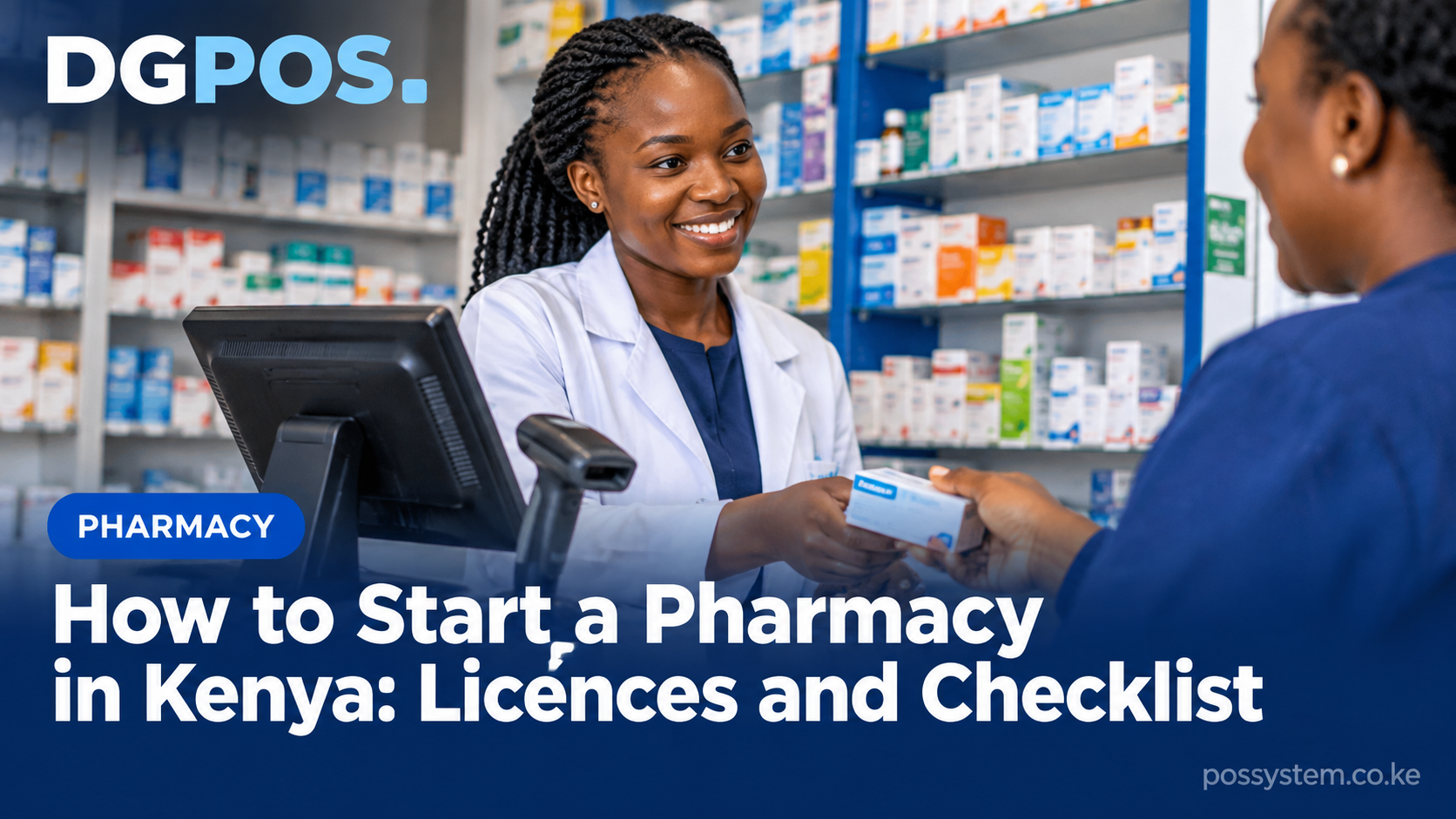
Starting a pharmacy in Kenya can be a rewarding business opportunity, especially as communities continue to seek reliable access to medicines, healthcare products and professional pharmaceutical services. However, opening a pharmacy involves more than renting a shop, purchasing medicines and putting up a signboard. You must meet professional requirements, register suitable premises, obtain the necessary licences and establish systems for managing stock, sales and daily operations.
Whether you want to open a small retail pharmacy in Nakuru, a chemist in Nairobi, or a larger pharmaceutical outlet in another Kenyan town, understanding the legal requirements is essential. Proper planning helps you avoid unnecessary expenses, licensing delays and operational problems.
Technology is also becoming increasingly important in pharmacy management. A reliable POS solution, Point Of Sale system or pharmacy management platform can help organise sales, monitor stock and maintain accurate business records. With the right preparation, professional support and management tools, you can build a pharmacy that serves customers responsibly while remaining financially sustainable.
This guide explains how to start a pharmacy in Kenya, the licences to consider, the documents to prepare and the practical checklist to follow before opening your doors.
1. Understand the Pharmacy Business Requirements in Kenya
Before investing in premises or medicines, understand the legal framework governing pharmacy operations.
The Pharmacy and Poisons Board (PPB) is the national authority responsible for regulating pharmacy practice, pharmaceutical professionals and pharmaceutical business premises in Kenya. A pharmacy must meet the applicable professional and premises requirements before it can legally operate.
One important point is that a pharmacy is not an ordinary retail shop. Medicines must be handled, supplied and dispensed under the required professional supervision.
The PPB’s requirements include registration of the premises and appropriate professional qualifications for the person acting as the superintendent. The Board’s published guidance states that a registered pharmacist or an enrolled pharmaceutical technologist with at least three years of post-enrolment experience may apply to be a premises superintendent, subject to the applicable requirements.
You should therefore establish whether you have the required professional qualifications or need to work with an eligible professional before committing to the business.
2. Choose the Type of Pharmacy You Want to Open
The type of pharmaceutical business you intend to operate will influence your licensing application, premises requirements, stock planning and startup budget.
Common options include:
Retail Pharmacy
A retail pharmacy supplies medicines and other approved healthcare products directly to customers. It may serve individuals, families and patients who need prescription medicines or over-the-counter products.
Community Chemist
A community chemist serves customers within a particular neighbourhood or town. Its product range and services must comply with the applicable regulations and professional requirements.
Wholesale Pharmaceutical Business
A pharmaceutical wholesale business supplies medicines and related products to other authorised businesses and healthcare facilities. Wholesale operations have different regulatory and storage requirements from retail pharmacies.
Specialised Pharmacy
A specialised pharmacy may focus on particular categories of healthcare products or services, subject to the relevant approvals and professional requirements.
Choose your business model carefully. Do not assume that a retail pharmacy licence automatically permits wholesale distribution or other specialised pharmaceutical activities.
3. Register Your Pharmacy Business
The next step is to establish the business legally.
You can explore an appropriate business structure, such as a sole proprietorship, partnership or private limited company. Your choice should reflect the ownership arrangements, professional eligibility requirements, financial plans and long-term goals of the business.
Business registration is generally handled through the Business Registration Service on eCitizen.
Common registration documents include:
- Certificate of business name registration for an eligible business name.
- Certificate of incorporation for a private limited company.
- CR12 and other company documents where applicable.
- Partnership documentation where relevant.
- Identification and other supporting documents requested during registration.
Important: Pharmacy ownership is subject to specific requirements under the Pharmacy and Poisons Act and PPB guidance. The Board’s premises guidelines state that holders of financial interests in a pharmacy business must meet the applicable professional registration or enrolment requirements. Do not assume that an ordinary investor can own a pharmacy simply by registering a company. Confirm your proposed ownership structure directly with PPB before investing.
Your business registration details should also be consistent with the information submitted during the premises licensing process.
4. Identify a Qualified Superintendent
A superintendent is the qualified professional responsible for overseeing the pharmacy premises in accordance with the applicable requirements.
For a retail pharmacy, the PPB states that the superintendent may be:
- A registered pharmacist who meets the Board’s requirements.
- An enrolled pharmaceutical technologist with at least three years of post-enrolment experience who meets the Board’s requirements.
The professional must also have the appropriate current practising authorisation.
The PPB FAQ explains that one person can only superintend over one premises at a time. This is important when planning staffing arrangements or engaging a professional who already works at another pharmacy.
Before appointing a superintendent, confirm their registration or enrolment status, practising licence and eligibility to oversee the proposed premises.
You should also agree on their responsibilities, working arrangements and professional obligations.
5. Find Suitable Pharmacy Premises
Location can influence the success of your pharmacy. A good location should be accessible, visible and convenient for the customers you intend to serve.
Consider areas such as:
- Residential neighbourhoods.
- Busy shopping centres.
- Commercial streets.
- Areas near healthcare facilities, where permitted.
- Growing towns and developing estates.
For example, someone opening a pharmacy in Nakuru may consider customer traffic, nearby residential estates, accessibility and the presence of other healthcare providers.
However, do not sign a long-term lease or spend heavily on renovations before understanding the PPB’s premises requirements.
The premises must be suitable for the proposed pharmacy activity and pass the relevant inspection.
Consider the following when assessing a location:
Accessibility: Customers should be able to reach the pharmacy conveniently.
Space: The premises should provide adequate room for dispensing, storage, customer service and other required activities.
Security: Medicines and business equipment should be protected from unauthorised access.
Ventilation: The premises should support suitable storage conditions for pharmaceutical products.
Cleanliness: Floors, shelves, counters and storage areas should be easy to maintain.
Storage conditions: Products requiring special temperature or handling conditions need appropriate arrangements.
6. Apply for Pharmacy Premises Registration and Licensing
One of the most important steps is applying for approval of the pharmacy premises through the Pharmacy and Poisons Board.
The application process is conducted through the PPB’s online practice portal.
The general process for a new premises application includes:
- Register or sign in to the relevant PPB online portal using the required professional registration or enrolment details.
- Select the option for a new facility.
- Enter the required information about the proposed premises.
- Attach the supporting documents requested by the portal.
- Submit the application for review.
- Follow the Board’s instructions regarding the applicable application category and payment.
- Await communication concerning the premises inspection.
- Make the premises available for inspection by the relevant PPB office.
- Complete any required corrections or additional steps communicated by the Board.
- Once approved, download and display the issued premises licence as required.
The exact documents and steps may vary depending on the type of premises and ownership structure.
Do not begin selling medicines simply because you have submitted an application. Wait until the required approvals and licences have been granted.
7. Understand the Licences and Permits You May Need
Opening a pharmacy involves different regulatory and business requirements. Some approvals relate specifically to pharmacy operations, while others relate to running a business in a particular county.
Here are the main requirements to investigate.
A. PPB Premises Licence
This is a key approval for the pharmacy premises. The premises must be registered and approved by the Pharmacy and Poisons Board before the pharmacy business operates.
B. Professional Practising Licence
The registered pharmacist or enrolled pharmaceutical technologist responsible for professional practice must hold the appropriate current practising authorisation.
A professional’s academic qualification alone should not be treated as permission to practise without the required registration or current licence.
C. County Single Business Permit
You should contact the county government where the pharmacy will operate to establish the applicable business permit requirements, fees and application procedure.
For example, a pharmacy in Nakuru County should confirm the relevant county business permit requirements with the county authorities.
County charges and procedures can differ depending on the location, business classification and premises.
D. KRA Tax Registration and Compliance
Set up the appropriate tax arrangements with the Kenya Revenue Authority.
Understand the tax obligations that apply to your business structure and activities. Depending on the business, you may need to consider income tax, corporation tax, VAT registration where applicable and other statutory obligations.
E. KRA eTIMS Compliance
Businesses should understand the applicable KRA electronic invoicing requirements and how to issue compliant transaction records.
A suitable business system can make it easier to organise sales information and support record-keeping. However, you should confirm that the system and your invoicing process meet the current KRA requirements.
F. Other Applicable Approvals
Depending on the premises, county and services offered, additional requirements may apply. Confirm any relevant fire safety, public health, signage, building or occupational safety obligations with the responsible authorities.
Do not assume that every pharmacy requires exactly the same set of permits.
8. Prepare the Documents Required for Your Application
Preparing your documents early can help reduce delays.
The PPB may request different supporting documents depending on the type of premises and business ownership selected.
Your preparation checklist may include:
- Business registration or incorporation documents.
- Relevant company ownership documents, such as a CR12 where applicable.
- Business name search documentation requested by PPB.
- Professional registration or enrolment details.
- Current practising licence for the proposed superintendent.
- Academic and professional qualifications where requested.
- Appointment documentation for the superintendent, where applicable.
- Premises details and floor plans where required.
- Identification documents requested by the relevant application process.
- Proof of payment for applicable fees.
- Any additional documents requested by the Board.
The PPB online application process determines the documents required for the selected business type and ownership structure. Always follow the current instructions rather than relying only on an old checklist.
9. Budget for Your Pharmacy Startup Costs
Starting a pharmacy requires careful financial planning. Your total investment will depend on the location, size of premises, business model, stock range and equipment.
Prepare a budget covering the following areas:
| Startup expense | What to consider |
|---|---|
| Business registration | Registration and related professional or administrative costs |
| Premises | Rent, deposit and utility connections |
| Renovations | Shelving, counters, lighting and approved layout adjustments |
| Licensing | Applicable PPB and county fees |
| Professional staffing | Salaries and other employment costs |
| Initial stock | Medicines and approved healthcare products |
| Equipment | Storage equipment, computers and other necessary tools |
| Technology | Pharmacy management and POS SYSTEM software |
| Security | Locks, secure storage and other safety arrangements |
| Marketing | Signage, branding and customer awareness |
| Working capital | Money reserved for daily operations and unexpected expenses |
Avoid spending your entire budget on initial stock. You will also need enough working capital to pay rent, staff, utilities and suppliers while the business establishes a regular customer base.
10. Find Reliable Pharmaceutical Suppliers
Your suppliers play an important role in the safety and reliability of your pharmacy.
Purchase pharmaceutical products through appropriately authorised and reputable suppliers. Verify that products are properly registered where required and that the supplier can provide legitimate documentation.
When choosing suppliers, consider:
- Regulatory compliance.
- Product quality and authenticity.
- Consistent product availability.
- Clear invoices and transaction records.
- Appropriate storage and transportation practices.
- Delivery reliability.
- Return and expiry policies.
- Competitive pricing.
Avoid purchasing medicines from unknown sources simply because they offer lower prices.
Maintain records of purchases, supplier details, batches and expiry dates. These records can help you trace products and manage stock responsibly.
11. Set Up Proper Medicine Storage and Inventory Management
Stock management is particularly important in a pharmacy because medicines have expiry dates, storage requirements and different levels of demand.
Poor inventory management can lead to expired stock, unnecessary purchases, stockouts and financial losses.
Organise your stock using clear product categories and appropriate storage arrangements.
Important inventory practices include:
Track expiry dates: Monitor medicines regularly and identify products approaching expiry.
Use batch information: Maintain appropriate batch records to support product traceability.
Monitor stock levels: Know which products are running low and which are moving slowly.
Follow storage instructions: Store products according to their required conditions.
Separate products appropriately: Organise medicines and other products to support safe handling and professional dispensing.
Conduct regular stock counts: Compare physical stock with your records to identify discrepancies.
A pharmacy management POS solution can support daily stock monitoring. A well-configured Point Of Sale platform can help record sales, update inventory and provide reports that make business decisions easier.
Using suitable pos software can also reduce the amount of manual work involved in tracking product movement.
12. Choose the Right POS System for Your Pharmacy
A pharmacy handles many products, transactions and stock movements. Managing everything using handwritten records or spreadsheets can become difficult as the business grows.
A suitable POS SYSTEM can help organise sales, inventory and financial information.
When evaluating a pharmacy point of sale system, consider the following capabilities.
Stock Management
The system should help you monitor stock quantities, identify low-stock products and maintain organised product records.
Expiry-Date Tracking
Where supported, expiry-date monitoring can help staff identify products that need attention before they expire.
Sales Recording
A reliable point of sales system should make it easier to record customer transactions and review sales activity.
Product Search
Pharmacy staff need an efficient way to locate products using names, categories or other available identifiers.
Supplier Records
Depending on the software, supplier information and purchase records can help organise restocking activities.
Reporting
Sales and stock reports can help you understand which products are moving quickly, identify slow-moving items and monitor business performance.
User Access Controls
Different staff members may need different levels of access. Suitable user permissions can help protect important business information.
Tax and Invoicing Support
Check whether the system supports the invoicing and reporting processes your business requires, including any applicable KRA eTIMS integration or compliance needs.
For a pharmacy, technology should support responsible operations rather than replace professional judgement. A POS system does not authorise staff to dispense medicines or perform activities reserved for qualified professionals.
Digee Technologies Limited Company provides DGPOS for businesses looking to improve the organisation of sales and business operations. Pharmacy owners evaluating a POS SYSTEM should assess the available features and confirm that the configuration supports their specific pharmacy requirements.
13. Recruit and Train Your Pharmacy Staff
Your employees influence customer experience, service quality and daily business operations.
Recruit appropriately qualified professionals for regulated pharmaceutical responsibilities. Other support staff should understand their duties and the limits of their roles.
Train employees on:
- Customer service.
- Professional conduct.
- Stock handling.
- Product storage.
- Expiry-date monitoring.
- Sales recording.
- Cash and payment handling.
- Data protection and confidentiality.
- Use of the pharmacy’s POS or management software.
Employees should understand that prescription dispensing and other regulated activities must be performed under the required professional supervision.
Training on a Point Of Sale system can also help reduce transaction errors and improve stock-record accuracy.
14. Create a Pharmacy Marketing Strategy
Once your pharmacy has obtained the necessary approvals and is ready to operate, develop a responsible marketing strategy.
Your goal should be to help customers identify your pharmacy and understand the services you lawfully provide.
Consider these marketing activities:
Local visibility: Use appropriate signage that complies with applicable requirements.
Google Business Profile: Create an accurate business profile so customers can find your location, contact information and opening hours.
Social media: Share useful, responsible healthcare information and updates about your business.
Customer service: Provide professional, respectful and consistent service.
Community awareness: Build relationships within your local area without making misleading medical claims.
Customer convenience: Make it easy for customers to find your pharmacy, understand your operating hours and contact your team.
Always ensure your advertising and promotional activities comply with applicable rules governing medicines, pharmacy practice and healthcare claims.
15. Common Mistakes to Avoid When Starting a Pharmacy
Some pharmacy businesses experience difficulties because important requirements are overlooked during the planning stage.
Avoid these common mistakes:
- Opening before obtaining approval: Never assume that submitting a licence application means the premises are approved.
- Ignoring ownership rules: Confirm that the proposed ownership structure complies with PPB requirements.
- Hiring an ineligible superintendent: Verify professional registration, current practising authorisation and eligibility.
- Choosing unsuitable premises: Check the premises requirements before committing to expensive renovations.
- Buying stock from unreliable suppliers: Prioritise product quality, authenticity and regulatory compliance.
- Ignoring expiry dates: Establish an organised process for monitoring stock.
- Underestimating working capital: Keep enough money for recurring expenses.
- Using poor record-keeping methods: Maintain accurate sales, purchase and inventory records.
- Ignoring technology: Consider suitable pos software to make sales and stock management more organised.
- Failing to renew licences: Keep track of expiry dates and applicable renewal procedures.
Avoiding these mistakes can help you establish a more organised and sustainable pharmacy business.
16. Pharmacy Opening Checklist for Kenya
Use this checklist to organise your preparations before opening.
Business Setup
- Choose the type of pharmacy business.
- Research your target location and competitors.
- Confirm that your proposed ownership structure meets PPB requirements.
- Register the business through the appropriate government process.
- Prepare a startup budget.
Professional Requirements
- Identify an eligible superintendent.
- Verify professional registration or enrolment.
- Confirm the superintendent’s current practising licence.
- Confirm that the proposed superintendent meets the premises requirements.
- Arrange appropriate professional staffing.
Premises and Licensing
- Identify suitable premises.
- Review PPB premises requirements before major renovations.
- Prepare the required application documents.
- Apply for premises registration through the PPB portal.
- Complete the required inspection and approval process.
- Obtain and display the approved premises licence.
- Confirm applicable county business permit requirements.
- Confirm other relevant local approvals.
Tax and Financial Setup
- Arrange the appropriate KRA tax registration and compliance.
- Understand applicable eTIMS requirements.
- Set up business banking and payment arrangements.
- Prepare supplier payment procedures.
- Keep sufficient working capital.
Stock and Operations
- Identify authorised and reliable suppliers.
- Purchase appropriate initial stock.
- Establish medicine storage procedures.
- Set up expiry-date and batch monitoring.
- Prepare stock-taking procedures.
- Train staff on professional and operational responsibilities.
- Install and configure suitable pharmacy management tools.
- Test your POS SYSTEM before daily operations begin.
Marketing and Opening
- Prepare compliant business signage.
- Set up accurate business contact information.
- Create a Google Business Profile.
- Prepare a responsible marketing plan.
- Confirm that all necessary approvals are in place before opening.
17. How DGPOS Can Support Pharmacy Business Management
Running a pharmacy involves managing sales, stock, suppliers, expenses and daily transactions. Without an organised system, it can become difficult to understand how the business is performing.
DGPOS from Digee Technologies Limited Company provides a technology option for businesses looking to improve how they manage their operations.
A suitable POS solution can help pharmacy owners organise sales transactions and access useful business information. Depending on the features available and the configuration selected, a Point Of Sale system can also support inventory management, reporting and other operational processes.
For example, a pharmacy owner can use suitable pos software to review sales activity, monitor product movement and identify items that may need restocking.
A well-selected POS SYSTEM can also reduce reliance on manual sales records and make it easier to review daily business activity.
When evaluating a point of sale system for a pharmacy, make sure the features match your actual requirements. Ask about inventory management, expiry-date monitoring, reporting, supplier records, user permissions and tax-related capabilities.
A reliable point of sales system should support better organisation while allowing qualified pharmacy professionals to remain responsible for pharmaceutical practice.
Digee Technologies Limited Company aims to help businesses embrace digital tools that make daily management more organised. Pharmacy owners can explore DGPOS and confirm which features are appropriate for their operations.
18. Frequently Asked Questions About Starting a Pharmacy in Kenya
1. Can I open a pharmacy in Kenya without being a pharmacist?
Pharmacy ownership and premises licensing are regulated. PPB guidance sets professional requirements for persons holding financial interests in a pharmacy business and for the superintendent. You should confirm your eligibility and proposed ownership structure with PPB before investing.
2. Who can be a pharmacy superintendent in Kenya?
According to the PPB FAQ, a registered pharmacist or an enrolled pharmaceutical technologist with at least three years of post-enrolment experience may apply to be a premises superintendent, subject to the applicable requirements.
3. Which authority licenses pharmacies in Kenya?
The Pharmacy and Poisons Board is the national authority responsible for regulating pharmacy practice and pharmaceutical business premises.
4. Can I open a pharmacy before receiving the PPB premises licence?
You should not begin operating a pharmacy before obtaining the required premises approval and licences. Submitting an application does not mean that the premises have been approved.
5. Do I need a county business permit to operate a pharmacy?
You should confirm and obtain the applicable county business permit for the location where the pharmacy will operate. Requirements and charges may vary between counties.
6. How much money do I need to start a pharmacy in Kenya?
There is no single startup figure for every pharmacy. Costs depend on location, premises size, renovations, licences, staffing, equipment, initial stock and working capital. Prepare a detailed budget before committing to the business.
7. What documents are needed to register a pharmacy?
Depending on the business structure and application category, PPB may require business registration documents, professional registration details, practising licence information, premises details and other supporting documents. Follow the current portal instructions.
8. Why does a pharmacy need a POS system?
A POS SYSTEM can help organise sales transactions and, depending on the available features, support inventory tracking, reporting and supplier records. It can make daily business management easier and reduce reliance on manual records.
9. Can pharmacy software track medicine expiry dates?
Some pharmacy management platforms offer expiry-date tracking. Confirm that the pos software you choose includes this functionality and that it supports your stock-handling procedures.
10. Does a POS system replace a pharmacy management professional?
No. A Point Of Sale system is a business management tool. It does not replace a qualified pharmacist or pharmaceutical technologist, professional supervision, legal compliance or clinical judgement.
Conclusion
Starting a pharmacy in Kenya requires careful planning, professional eligibility, suitable premises and the correct regulatory approvals. From registering your business and identifying a qualified superintendent to applying for a PPB premises licence, every step should be handled properly before you begin operations.
You should also plan for reliable suppliers, suitable medicine storage, qualified staff, tax compliance and effective financial management. These preparations can help you build a pharmacy that serves customers responsibly and operates more efficiently.
Technology is another important part of modern pharmacy management. A suitable POS, Point Of Sale platform or point of sale system can help organise transactions, monitor stock and provide useful business reports. With the right pos software and a properly configured POS SYSTEM, pharmacy owners can improve business visibility and make more informed operational decisions.
Digee Technologies Limited Company supports businesses seeking practical digital management solutions through DGPOS. If you are planning to open a pharmacy, consider how an appropriate point of sales system can support your daily operations as you build a professional and well-managed business.
Disclaimer: This article provides general business information, not legal or regulatory advice. Pharmacy licensing requirements can change. Confirm the latest requirements, eligibility, fees and application procedures directly with the Pharmacy and Poisons Board and the relevant county authorities before making financial commitments.