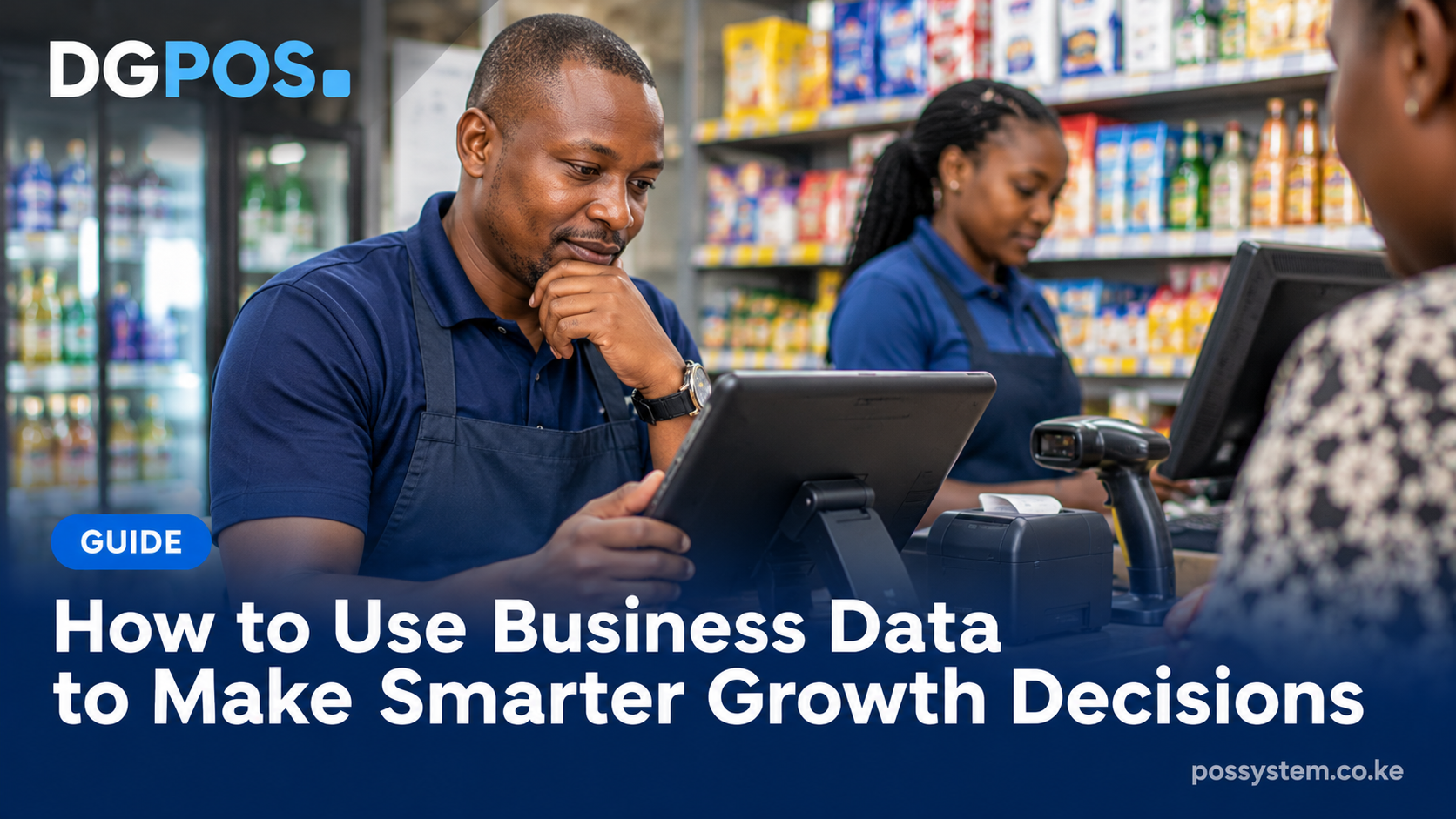
Growing a business requires more than hard work and good products. Business owners also need accurate information to understand performance, identify opportunities and make better decisions. Whether you operate a minimart, supermarket, restaurant, pharmacy, boutique, hardware shop or wholesale business in Kenya, using business data can help you grow strategically.
Business data includes information about sales, expenses, customers, inventory, profits and employee performance. When properly collected and analysed, this information helps business owners understand what is working, what needs improvement and where to invest more resources.
With a reliable POS SYSTEM, businesses can collect useful information from daily transactions and turn it into practical insights. A modern Point Of Sale solution makes it easier to monitor business activities, track performance and plan for sustainable growth.
1. Understand Your Sales Performance
Sales data helps you understand how much your business earns and which products generate the most revenue. Instead of relying on memory or rough estimates, use actual sales records to evaluate performance.
A reliable POS system can help you monitor:
- Daily, weekly and monthly sales.
- Best-selling and slow-moving products.
- Sales performance during different periods.
- Revenue generated by individual products.
- Sales trends across different branches.
For example, if your minimart consistently sells more household products at the end of the month, you can increase stock during that period. A good pos software solution makes it easier to identify these patterns and plan accordingly.
2. Identify Your Most Profitable Products
High sales do not always mean high profits. Some products generate significant revenue but have low profit margins, while others sell less frequently but contribute more to overall profitability.
Use your business records to compare:
- Purchase costs.
- Selling prices.
- Profit margins.
- Product demand.
- Discounts and promotional expenses.
A modern point of sale system helps organise product and transaction records, making it easier to evaluate which items contribute most to your business.
This information can guide purchasing decisions, pricing strategies and promotional campaigns.
3. Use Customer Buying Patterns to Improve Sales
Understanding customer behaviour is important when planning business growth. Customer purchasing data helps you identify what people prefer, how frequently they buy and which products are commonly purchased together.
For example, a pharmacy may notice that customers frequently purchase certain healthcare products together. A boutique may discover that particular clothing sizes and colours are more popular than others.
Using a POS SYSTEM allows businesses to review transaction histories and identify purchasing trends.
You can use these insights to:
- Recommend relevant products.
- Introduce suitable promotions.
- Improve customer service.
- Stock products customers frequently request.
- Develop better customer retention strategies.
A business that understands its customers can make more informed decisions about products and services.
4. Monitor Inventory to Avoid Stock Problems
Inventory management directly affects business growth. Overstocking ties up money that could be used elsewhere, while understocking can result in missed sales opportunities.
Business data helps you understand how quickly products move and when they need replenishment.
With reliable pos software, you can monitor:
- Available stock quantities.
- Fast-moving products.
- Slow-moving inventory.
- Reorder requirements.
- Stock shortages and adjustments.
For example, if a supermarket sells more cooking oil, flour and sugar during certain periods, historical sales information can help the owner prepare for increased demand.
A dependable Point Of Sale solution makes inventory information easier to access and use when planning future purchases.
5. Track Business Expenses and Control Costs
Revenue alone cannot determine whether a business is growing successfully. You must also understand how much money goes towards operating expenses.
Common business expenses include:
- Rent and utilities.
- Employee salaries.
- Stock purchases.
- Transportation and deliveries.
- Packaging materials.
- Maintenance costs.
- Marketing expenses.
Compare your expenses over different periods to identify unnecessary spending and areas where costs are increasing.
A point of sales system can provide useful transaction and sales information that supports financial monitoring. When combined with properly recorded operating expenses, this information helps business owners understand their financial position.
6. Measure Employee Performance
Employees play an important role in business growth. Monitoring staff performance helps identify training needs, improve accountability and reward good performance.
Depending on the features available, a POS SYSTEM can provide information about:
- Sales handled by individual cashiers.
- Transactions completed.
- Shift performance.
- Discounts and refunds processed.
- Sales targets achieved.
For example, a retail shop owner can compare sales performance across different shifts to understand when the business performs best.
Use this information fairly. Consider working hours, customer traffic and assigned responsibilities before evaluating individual employees.
7. Identify Your Best-Selling Business Periods
Understanding when customers purchase most frequently helps you plan staffing, inventory and promotions.
Analyse your sales records to identify:
- Busy days of the week.
- Peak business hours.
- Monthly sales patterns.
- Seasonal demand.
- Holiday and promotional performance.
For instance, a restaurant may experience higher customer traffic during weekends, while a retail shop may record increased sales at the beginning or end of the month.
A Point Of Sale system makes it easier to review sales reports and identify these patterns.
This allows you to prepare your business for busy periods instead of reacting after demand increases.
8. Compare Performance Over Time
Business growth should be measured consistently. Looking at one day’s sales does not provide enough information to determine whether your business is improving.
Compare current performance with previous periods to understand progress.
Important comparisons include:
- This month’s sales versus last month’s sales.
- Current expenses versus previous expenses.
- Current stock turnover versus previous stock turnover.
- Customer purchasing trends over time.
- Profit margins across different months.
A good pos software solution helps organise historical transaction data and generate reports for easier comparison.
These reports can help you identify positive trends and areas that require attention.
9. Use Data to Plan Business Expansion
Expanding a business requires careful planning. Whether you want to introduce new products, open another branch or increase your inventory, business data can help reduce unnecessary risks.
Before expanding, evaluate:
- Your current sales performance.
- Available working capital.
- Customer demand.
- Product profitability.
- Operating expenses.
- Inventory requirements.
- Performance of existing branches.
For example, if sales reports show strong demand in a particular location, you may consider opening another branch after assessing the costs and market opportunities.
A reliable point of sale system helps business owners access useful operational information when evaluating expansion opportunities.
10. Make Decisions Based on Accurate Reports
Business decisions should be supported by reliable information rather than assumptions.
However, data is only useful when it is accurate. Missing transactions, incorrect product prices, unrecorded expenses and inconsistent stock updates can affect the quality of your reports.
To improve data accuracy:
- Record every business transaction.
- Update product prices correctly.
- Ensure stock movements are recorded.
- Review reports regularly.
- Limit access to sensitive business information.
- Correct errors as soon as they are identified.
Using a dependable POS SYSTEM helps centralise important business records and makes it easier to monitor daily operations.
11. Set Measurable Growth Targets
Once you understand your business performance, use the information to establish realistic growth targets.
Instead of simply saying you want to increase sales, create specific targets that can be measured.
Examples include:
- Increase monthly sales by 10%.
- Reduce stock losses by 5%.
- Improve the turnover of slow-moving products.
- Reduce unnecessary operating expenses.
- Increase repeat customer purchases.
- Improve profit margins on selected products.
Review your targets regularly and compare actual results with your expectations.
A modern POS solution can provide sales and inventory reports that help you monitor progress towards these objectives.
12. Choose the Right POS Software for Better Business Management
Collecting business information manually can become difficult as your business grows. Paper records and spreadsheets may also make it harder to identify trends quickly.
This is where a reliable pos software solution becomes valuable.
A good Point Of Sale system can help businesses manage daily operations while collecting information that supports better decision-making.
When choosing a point of sales system, consider features such as:
- Real-time sales tracking.
- Inventory management.
- Detailed sales reports.
- Product performance analysis.
- Staff and cashier management.
- Expense tracking.
- Branch management.
- M-Pesa and payment integration.
- User access controls.
Choose a system that matches your business operations and can support your future growth.
Why Kenyan Businesses Need Data-Driven Growth Strategies
Businesses in Kenya operate in competitive environments where customer preferences, operating expenses and market conditions can change quickly.
Using business data helps entrepreneurs respond to these changes with better planning.
A minimart can use sales information to improve stock purchasing. A restaurant can analyse popular meals to reduce food waste. A pharmacy can monitor product movement and expiry dates. A boutique can identify popular sizes and colours.
With a reliable POS SYSTEM, businesses can organise important operational information and make decisions based on actual performance.
The goal is not simply to collect more data but to understand what the information means and use it to improve business results.
Grow Your Business with Digee Technologies Limited Company
Making smarter growth decisions starts with understanding your business. From monitoring daily sales to managing inventory and evaluating employee performance, accurate information gives you a better foundation for planning.
Digee Technologies Limited Company provides DGPOS, a business management solution designed to help Kenyan businesses manage their daily operations more efficiently.
With useful POS, Point Of Sale and pos software capabilities, businesses can simplify sales management, monitor inventory and access reports that support informed decision-making.
Whether you operate a supermarket, minimart, pharmacy, restaurant, boutique or hardware shop, having the right POS SYSTEM can make business management easier.
Choose a reliable point of sale system and start using your business data to identify opportunities, control costs and plan sustainable growth.
Digee Technologies Limited Company – Smarter Business Management Through Technology.