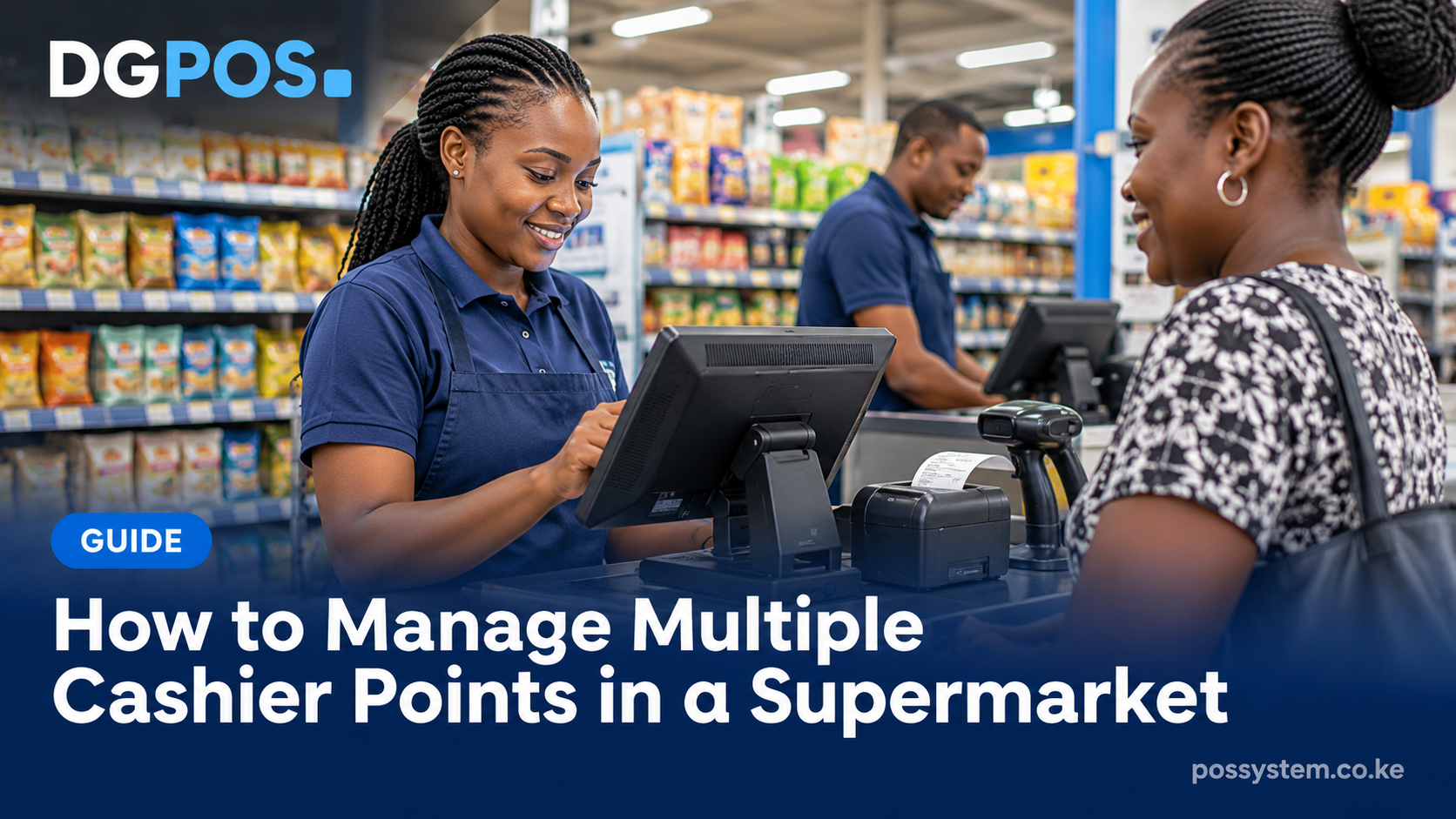
Managing multiple cashier points in a supermarket requires proper organisation, accurate sales tracking and efficient coordination. As a supermarket grows, serving more customers often means opening additional checkout counters to reduce queues and improve the shopping experience.
However, operating several cashier points can create challenges if transactions, cash collections, inventory and employee activities are not properly monitored. Without an organised system, supermarket owners may experience cash discrepancies, delayed reporting, stock errors and difficulties tracking cashier performance.
A reliable POS SYSTEM helps supermarkets manage multiple checkout counters from one central platform. With modern pos software, business owners can monitor transactions, track sales and coordinate cashier activities more efficiently.
In this guide, we explore practical ways to manage multiple cashier points and how a dependable Point Of Sale solution can improve supermarket operations.
1. Use a Centralised POS System
One of the most effective ways to manage multiple cashier points is by using a centralised system. Instead of operating independent checkout records, connect all cashier stations to one management platform.
A centralised POS system allows supermarket management to monitor transactions from different counters while maintaining organised business records.
Benefits include:
- Monitoring sales from all cashier points.
- Accessing consolidated sales reports.
- Tracking transactions by individual cashier.
- Managing product information centrally.
- Reducing manual reporting.
- Improving supervision across checkout stations.
With a reliable point of sale system, managers can understand what is happening across the supermarket without checking every counter individually.
2. Assign Unique Login Accounts to Cashiers
Every cashier should have an individual login account. Sharing login details makes it difficult to identify who processed specific transactions or performed certain activities.
Individual accounts improve accountability and help management monitor cashier performance.
A good POS SYSTEM should support:
- Unique cashier usernames and passwords.
- Individual transaction histories.
- Staff activity records.
- Role-based permissions.
- Cashier-specific sales reports.
For example, if a customer requests a refund, management can review the transaction history and identify the cashier who originally processed the sale.
A secure Point Of Sale solution makes employee accountability easier to maintain.
3. Monitor Sales Across All Checkout Counters
Supermarket owners need to understand how each cashier point contributes to overall sales.
Monitoring individual counter performance helps identify busy stations, operational challenges and differences in cashier productivity.
Use your pos software to review:
- Total sales per cashier.
- Number of transactions completed.
- Average transaction value.
- Discounts processed.
- Refunds and cancelled transactions.
- Sales performance during different shifts.
These reports help management distribute responsibilities and identify areas where additional training may be required.
A modern point of sales system makes it easier to compare performance across different checkout stations.
4. Manage Cash Collections Properly
Handling cash from multiple cashier points requires clear procedures. Without proper controls, supermarkets may experience shortages, overages and difficulties reconciling daily collections.
Establish a consistent cash management process for every counter.
Important practices include:
- Assigning a starting cash float to each cashier.
- Recording cash received during transactions.
- Separating personal money from business collections.
- Recording cash withdrawals and approved expenses.
- Counting cash at the end of each shift.
- Comparing physical cash with system records.
A reliable POS SYSTEM helps maintain transaction records that support accurate cash reconciliation.
5. Introduce Proper Shift Management
Supermarkets often operate for long hours, making cashier shift management important.
When one cashier leaves and another takes over, the handover should be properly documented to avoid confusion.
A structured shift management process should include:
- Recording the outgoing cashier’s closing balance.
- Counting cash before handing over.
- Recording pending transactions or issues.
- Confirming the incoming cashier’s starting float.
- Ensuring the correct employee login is used.
Depending on its available features, pos software can help maintain cashier activity records and shift reports.
This makes it easier for supermarket managers to track activities across different working hours.
6. Keep Product Prices Updated Across All Counters
One major challenge in supermarkets with multiple checkout stations is inconsistent pricing.
If product prices are updated at one counter but not another, customers may receive different prices for the same items.
To avoid this problem, maintain a central product database.
A good Point Of Sale system should help management:
- Update product prices centrally.
- Maintain consistent product descriptions.
- Manage product barcodes.
- Apply approved discounts.
- Update product information across connected cashier points.
For example, when the price of a packet of sugar changes, all connected checkout stations should use the correct updated price.
A centralised point of sale system helps reduce pricing errors and improves customer confidence.
7. Use Barcode Scanning to Speed Up Checkout
Barcode scanning makes supermarket checkout operations faster and more accurate.
Instead of manually searching for products or entering prices, cashiers can scan product barcodes to retrieve the correct information.
Using barcode scanners with a POS SYSTEM helps supermarkets:
- Reduce manual price-entry errors.
- Speed up product identification.
- Improve checkout efficiency.
- Maintain accurate transaction records.
- Reduce unnecessary delays at cashier points.
For supermarkets handling hundreds or thousands of products, barcode scanning can make a significant difference in daily operations.
8. Control Discounts, Voids and Refunds
When several cashiers handle transactions, management needs proper controls over discounts, cancelled sales and refunds.
Without clear approval procedures, these activities can create financial losses and inaccurate sales reports.
Establish rules covering:
- Who can approve discounts.
- Which employees can cancel transactions.
- When refunds are permitted.
- How returned products are recorded.
- How suspicious activities are reviewed.
A dependable pos software solution can provide user permissions and transaction records, depending on its features.
These controls help supermarket owners maintain accountability while allowing legitimate customer service activities.
9. Monitor Inventory Across All Cashier Points
Every sale processed at a supermarket checkout counter affects available inventory.
When all cashier points use a shared inventory database, stock records can be updated as transactions are completed.
A modern point of sales system can help supermarkets monitor:
- Available product quantities.
- Fast-moving products.
- Low-stock items.
- Stock movement.
- Reorder requirements.
- Product sales across different periods.
For example, if several checkout counters sell bottled water throughout the day, consolidated sales information helps management understand how much stock remains.
Accurate inventory tracking reduces the risk of selling unavailable products or purchasing unnecessary stock.
10. Manage Queues and Customer Flow
Having multiple cashier points does not automatically eliminate long queues. Supermarkets must organise checkout stations according to customer traffic.
Monitor customer flow and identify periods when more checkout counters are needed.
Practical ways to improve checkout operations include:
- Opening additional counters during peak hours.
- Assigning experienced cashiers to busy stations.
- Keeping barcode scanners and receipt printers functional.
- Ensuring sufficient change is available.
- Separating express checkout services where practical.
- Training cashiers to process transactions efficiently.
Sales reports from your POS system can help identify busy periods and support better staff scheduling.
11. Generate Consolidated Daily Sales Reports
Managing multiple cashier points becomes easier when supermarket owners can access combined sales information.
Instead of collecting separate handwritten reports from every cashier, use a centralised reporting system.
A good POS SYSTEM should help management review:
- Total supermarket sales.
- Sales from individual cashier points.
- Cash, card and M-Pesa transactions.
- Discounts and refunds.
- Number of transactions.
- Daily cashier summaries.
These reports provide a clearer picture of supermarket performance.
A reliable Point Of Sale solution also helps managers identify discrepancies and make informed operational decisions.
12. Maintain Reliable Internet and Backup Procedures
Some supermarkets depend on internet connectivity for their daily checkout operations. Network interruptions can affect connected cashier points if the system requires continuous internet access.
Before choosing a point of sale system, understand how it handles connectivity problems.
Consider:
- Whether offline transactions are supported.
- How transactions synchronise after reconnection.
- Whether data is backed up.
- How cashier stations connect to the main system.
- What support is available when technical problems occur.
Having backup procedures helps minimise interruptions and keeps checkout operations organised.
13. Train Cashiers on Proper POS Usage
Even the best pos software cannot deliver good results if employees do not know how to use it correctly.
Cashiers should receive practical training before being assigned to checkout stations.
Training should cover:
- Logging into individual accounts.
- Scanning products.
- Processing different payment methods.
- Printing receipts.
- Handling refunds.
- Applying authorised discounts.
- Closing cashier shifts.
- Reporting technical problems.
Regular training helps reduce errors and improves confidence when handling customers.
14. Protect Business Data and Restrict Access
Multiple cashier points increase the number of employees accessing business information. Supermarkets should therefore establish clear access controls.
Not every cashier needs permission to view sensitive financial reports or change important system settings.
Use role-based permissions to control access to:
- Product price changes.
- Financial reports.
- Stock adjustments.
- User account management.
- Discounts and refunds.
- Business configuration settings.
A secure POS SYSTEM helps supermarket owners manage employee access according to assigned responsibilities.
Common Challenges When Managing Multiple Supermarket Cashier Points
Without proper systems and procedures, supermarkets may experience several operational problems.
| Challenge | Practical solution |
|---|---|
| Long checkout queues | Open additional counters during busy periods |
| Cash discrepancies | Use individual cashier accounts and shift reconciliation |
| Inconsistent product prices | Maintain a central product database |
| Unauthorised discounts | Introduce approval permissions |
| Stock inaccuracies | Connect cashier points to shared inventory records |
| Poor cashier accountability | Track individual transaction histories |
| Delayed sales reports | Use centralised reporting |
| Transaction errors | Train cashiers and monitor system activities |
Using a dependable Point Of Sale solution can help address many of these challenges while improving daily supermarket management.
Why Supermarkets Need a Reliable POS System
As supermarkets expand, managing checkout operations manually becomes increasingly difficult. More cashier points mean more transactions, employees, payment records and inventory movements to monitor.
A modern POS SYSTEM brings these activities into a more organised management environment.
With the right pos software, supermarket owners can improve transaction monitoring, simplify reporting, manage inventory and maintain better cashier accountability.
Whether you operate a small neighbourhood supermarket or a large retail store, a reliable point of sale system can support efficient checkout management and business growth.
Manage Your Supermarket with Digee Technologies Limited Company
Managing multiple cashier points should not mean dealing with complicated paperwork and disconnected sales records.
Digee Technologies Limited Company provides DGPOS, a business management solution designed to help Kenyan businesses organise their daily operations.
With useful POS, Point Of Sale and pos software capabilities, supermarkets can improve sales management, monitor transactions and simplify inventory control.
DGPOS helps businesses work towards more organised operations through features designed for retail management.
Whether you manage a minimart, supermarket, pharmacy, restaurant, boutique or hardware shop, choosing the right POS SYSTEM can make daily business activities easier to manage.
Get a reliable point of sale system and take better control of your supermarket cashier points with Digee Technologies Limited Company.
Digee Technologies Limited Company – Smarter Business Management Through Technology.