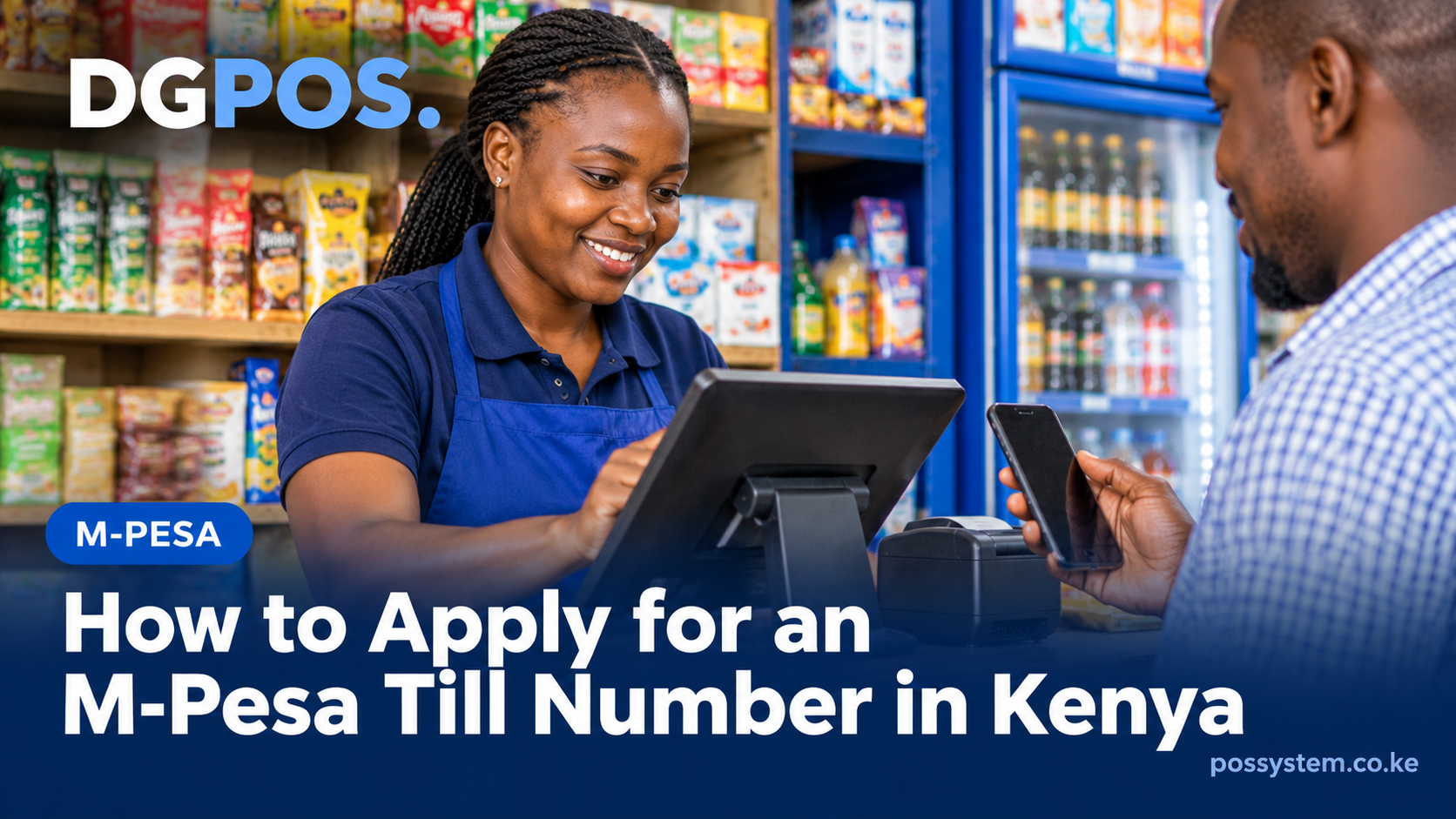
Running a business in Kenya today requires convenient and reliable payment methods. Many customers prefer paying for goods and services using M-Pesa instead of carrying cash. Whether you operate a minimart, supermarket, pharmacy, restaurant, boutique, hardware shop, salon, or wholesale business, having an M-Pesa Till Number can make receiving payments easier and improve your daily operations.
An M-Pesa Till Number allows businesses to receive customer payments directly through Safaricom’s Lipa Na M-Pesa service. It provides a convenient way to collect money, monitor transactions, and manage business payments. When combined with a reliable POS SYSTEM, businesses can also improve sales tracking, stock management, and financial reporting.
At Digee Technologies Limited Company, we understand the importance of integrating modern payment solutions with effective business management tools. This guide explains how to apply for an M-Pesa Till Number in Kenya, the requirements, the application process, and how a Point Of Sale system can help you manage payments more efficiently.
1. What Is an M-Pesa Till Number?
An M-Pesa Till Number is a business payment number provided through Safaricom’s Lipa Na M-Pesa service. It allows customers to pay for products and services directly from their M-Pesa accounts.
Unlike ordinary person-to-person M-Pesa transfers, a business Till Number is designed for collecting payments from customers.
Businesses can use an M-Pesa Till Number to:
- Receive payments from customers.
- Reduce the need to handle physical cash.
- Keep track of incoming payments.
- Improve payment convenience.
- Simplify daily business transactions.
- Support better financial record management.
When connected to suitable pos software, an M-Pesa Till Number can become part of a more organised business payment process.
2. Requirements for Applying for an M-Pesa Till Number in Kenya
Before starting your application, prepare the necessary business and identification documents. Requirements may vary depending on your business registration and the type of M-Pesa service you are applying for.
Common requirements include:
- National ID: A valid identification document for the business owner or authorised representative.
- Business registration certificate: Relevant registration documents for registered businesses.
- KRA PIN: The applicable KRA PIN certificate.
- Business details: Your business name, physical location, and contact information.
- Bank details: Where required for settlement arrangements.
- Authorisation documents: For companies, partnerships, or applications made by an authorised representative.
- Business contact information: A working phone number and email address.
Safaricom may request additional documents depending on the business structure and application category.
Having these documents ready can make the application process easier and reduce unnecessary delays.
3. How to Apply for an M-Pesa Till Number in Kenya
Applying for an M-Pesa Till Number involves providing your business information and completing Safaricom’s registration process.
Here are the general steps to follow.
Step 1: Prepare Your Business Documents
Start by collecting your identification documents, business registration certificate, KRA PIN, and other relevant information.
Ensure that the details on your documents are accurate and consistent. This helps prevent verification problems during the application process.
Step 2: Visit an Authorised Safaricom Shop or Business Channel
Visit a Safaricom shop or use an official Safaricom business registration channel to enquire about the appropriate Lipa Na M-Pesa product.
Explain that you want to register a business Till Number.
You can also check the official Safaricom website for current application guidance and available business payment services.
Step 3: Complete the Application
You will be required to provide information about your business and the person responsible for managing the Till Number.
Depending on the application channel, you may complete a registration form or submit your details digitally.
Double-check all the information before submitting your application.
Step 4: Submit the Required Documents
Provide the requested identification and business documents for verification.
Safaricom will review the information to establish whether the application meets its registration requirements.
Step 5: Wait for Verification and Approval
After submitting your application, wait for Safaricom to complete its verification process.
If additional information is required, follow the instructions provided by the registration team.
Step 6: Receive and Activate Your Till Number
Once approved, you will receive your business Till Number and instructions on how to use it.
Follow the activation instructions and confirm that the account is working correctly before accepting customer payments.
Step 7: Test Your First Transaction
Make an appropriate test transaction and confirm that the payment notification and transaction details are received correctly.
You can then begin displaying your Till Number at your business premises.
4. Where Can You Apply for an M-Pesa Till Number?
There are different official channels through which businesses can enquire about Lipa Na M-Pesa registration.
These include:
- Safaricom retail shops.
- Authorised Safaricom business representatives.
- Official Safaricom business registration channels.
- Safaricom’s business website.
For accurate and updated information, visit Safaricom’s official website:
Always use official Safaricom channels when submitting business documents or providing personal information.
5. What Is the Difference Between an M-Pesa Till Number and a Paybill Number?
Although both services allow businesses to receive M-Pesa payments, they serve different purposes.
An M-Pesa Till Number is commonly used by businesses that receive payments directly from customers when selling products or providing services.
A Paybill Number is generally suitable for collecting payments that require an account reference, such as customer account numbers, invoice numbers, or subscription references.
For example:
- A minimart selling groceries can use a Till Number to collect payments.
- A restaurant can receive customer payments through a Till Number.
- A school collecting fees may use a Paybill Number.
- A utility company collecting monthly bills may use a Paybill Number.
Choosing the appropriate payment option depends on your business model and payment collection requirements.
6. How Much Does It Cost to Apply for an M-Pesa Till Number?
The costs and transaction charges associated with Lipa Na M-Pesa services depend on Safaricom’s current terms and the specific business payment product.
Before applying, ask Safaricom about:
- Till Number registration charges, if applicable.
- Customer transaction charges.
- Merchant transaction charges.
- Withdrawal fees.
- Settlement arrangements.
- Applicable transaction limits.
Do not rely on outdated online pricing information. Confirm the latest charges directly through Safaricom’s official channels before registering.
7. Benefits of Having an M-Pesa Till Number for Your Business
An M-Pesa Till Number offers several advantages for businesses operating in Kenya.
Convenient Customer Payments
Customers can pay for products and services directly from their mobile phones without carrying physical cash.
Improved Payment Tracking
Businesses can access transaction information and monitor incoming payments.
Reduced Cash Handling
Receiving digital payments reduces the need to keep large amounts of cash at the business premises.
Better Customer Experience
Customers can complete purchases quickly using a familiar payment method.
Easier Business Management
When combined with a POS SYSTEM, digital payments can support organised sales records and more efficient business operations.
8. Why Your Business Needs a POS System Alongside an M-Pesa Till Number
Getting an M-Pesa Till Number is an important step towards accepting digital payments. However, receiving payments is only one part of running a successful business.
You also need to monitor sales, manage stock, track expenses, and understand your business performance.
This is where a POS SYSTEM becomes useful.
A modern Point Of Sale solution helps businesses manage daily transactions while maintaining organised records.
For example, when a customer purchases products and pays through M-Pesa, your business needs to record the items sold, quantities, selling prices, and payment method.
Using reliable pos software makes it easier to manage these activities from one system.
A good point of sale system can help your business with:
- Recording daily sales.
- Tracking M-Pesa and cash payments.
- Managing inventory and stock quantities.
- Generating sales reports.
- Monitoring business expenses.
- Tracking products that sell quickly.
- Managing employees and cashier activities.
- Reviewing business performance.
With an integrated Point Of Sale solution, you can reduce manual record-keeping and improve the accuracy of your business information.
9. How to Manage M-Pesa Payments Using POS Software
Once your business has an M-Pesa Till Number, the next step is ensuring that payments are properly recorded.
A business receiving numerous M-Pesa payments every day can struggle to reconcile transactions manually.
A reliable pos software solution helps organise payment information and connect sales records with the correct payment methods.
Here are some ways a POS SYSTEM can improve M-Pesa payment management.
Record Every Sale
Every completed transaction should have a corresponding sales record.
A point of sale system helps capture the products sold, quantities, prices, and payment methods.
Separate Cash and M-Pesa Payments
Your business may receive payments through cash, M-Pesa, and other available payment methods.
A good POS SYSTEM helps organise sales according to payment type, making it easier to review transactions.
Simplify Daily Reconciliation
At the end of the day, compare your business sales records with the actual M-Pesa transactions received.
This helps identify missing payments, incorrect entries, and differences between recorded sales and received money.
Generate Sales Reports
Using pos software, you can review daily sales, payment methods, and business performance.
These reports help you make better decisions about stock purchases, pricing, and business operations.
10. Common Mistakes to Avoid When Applying for an M-Pesa Till Number
Although the registration process is straightforward, some businesses experience delays because of avoidable mistakes.
Watch out for the following:
- Submitting incomplete application documents.
- Providing incorrect identification details.
- Using inconsistent business registration information.
- Failing to provide the required authorisation documents.
- Applying through unofficial registration agents.
- Ignoring Safaricom’s verification instructions.
- Failing to understand the transaction charges.
- Not testing the Till Number after activation.
Take time to confirm the application requirements before submitting your documents.
You should also establish a proper payment recording process using a reliable POS SYSTEM to ensure that customer transactions are properly accounted for.
11. Which Businesses Should Apply for an M-Pesa Till Number?
An M-Pesa Till Number can benefit different types of businesses in Kenya.
Some examples include:
Minimarts and Supermarkets: These businesses receive frequent customer payments and benefit from faster checkout processes.
Restaurants and Cafes: Customers can conveniently pay for meals, drinks, and other services.
Pharmacies: Digital payments make it easier for customers to purchase medicines and healthcare products.
Boutiques and Clothing Shops: Customers can pay for clothing, shoes, accessories, and other fashion products.
Hardware Shops: Businesses can receive payments for construction materials, tools, and equipment.
Salons and Barbershops: Service providers can collect payments conveniently without relying entirely on cash.
Wholesale Businesses: Businesses handling large customer orders can benefit from organised digital payment records.
For these businesses, combining an M-Pesa Till Number with a point of sale system provides better control over sales and payment information.
12. Why Choose Digee Technologies Limited Company for Your POS System?
Receiving M-Pesa payments is important, but managing your entire business efficiently is equally essential.
Digee Technologies Limited Company provides DGPOS, a POS SYSTEM designed to help Kenyan businesses manage their daily operations more effectively.
Whether you operate a minimart, supermarket, pharmacy, restaurant, boutique, hardware shop, or another retail business, having the right pos software can simplify your operations.
With DGPOS, businesses can improve how they manage:
- Sales and transaction records.
- Product and inventory management.
- Stock monitoring.
- Cash and digital payment records.
- Business expenses.
- Employee activities.
- Daily and monthly sales reports.
A reliable Point Of Sale solution helps business owners understand what is happening in their businesses without depending entirely on handwritten records and manual calculations.
Instead of managing sales and stock separately, a modern point of sale system brings important business information together.
If you already have an M-Pesa Till Number, using DGPOS can help you organise your sales records and monitor your business transactions more effectively.
13. Frequently Asked Questions About Applying for an M-Pesa Till Number in Kenya
1. Can a small business apply for an M-Pesa Till Number?
Yes. Small businesses can apply for an appropriate Lipa Na M-Pesa business payment solution, subject to Safaricom’s registration requirements.
2. Can I apply for an M-Pesa Till Number without registering my business?
Requirements depend on the type of Till Number and business arrangement. Contact Safaricom to confirm which registration documents are accepted for your situation.
3. How long does it take to get an M-Pesa Till Number?
Processing times can vary depending on the application channel, document verification, and whether additional information is required.
4. Can customers pay using their personal M-Pesa accounts?
Yes. Customers can use their personal M-Pesa accounts to pay businesses through the appropriate Lipa Na M-Pesa service.
5. Can I use an M-Pesa Till Number for my supermarket?
Yes. Supermarkets and minimarts can use Till Numbers to receive customer payments for purchases.
6. Can I manage M-Pesa payments using a POS SYSTEM?
Yes. A POS SYSTEM can help record sales paid through M-Pesa and organise payment information. The availability of automatic payment integration depends on the system’s supported integrations and configuration.
7. Why should I use POS software after getting a Till Number?
An M-Pesa Till Number helps you receive payments, while pos software helps you manage sales, inventory, expenses, and business reports. Using both can improve overall business management.
8. Is a Point Of Sale system necessary for a small shop?
A Point Of Sale system is useful even for small shops because it helps maintain accurate sales records, monitor stock, and understand business performance.
Conclusion
Applying for an M-Pesa Till Number in Kenya is an important step for businesses looking to accept convenient digital payments. By preparing the necessary documents, using official Safaricom registration channels, and following the application process, you can get started with Lipa Na M-Pesa for your business.
However, accepting payments is only one part of business management. You also need to monitor sales, manage inventory, record expenses, and reconcile daily transactions.
Combining your M-Pesa Till Number with a reliable POS SYSTEM, Point Of Sale solution, and modern pos software can help you achieve better business organisation and control.
Digee Technologies Limited Company provides DGPOS to help Kenyan businesses simplify sales management, inventory tracking, and daily operations.
If you want to improve how your business operates, consider adopting a modern point of sale system that supports your business growth and makes everyday management easier.
Digee Technologies Limited Company – Smart POS Solutions for Kenyan Businesses.