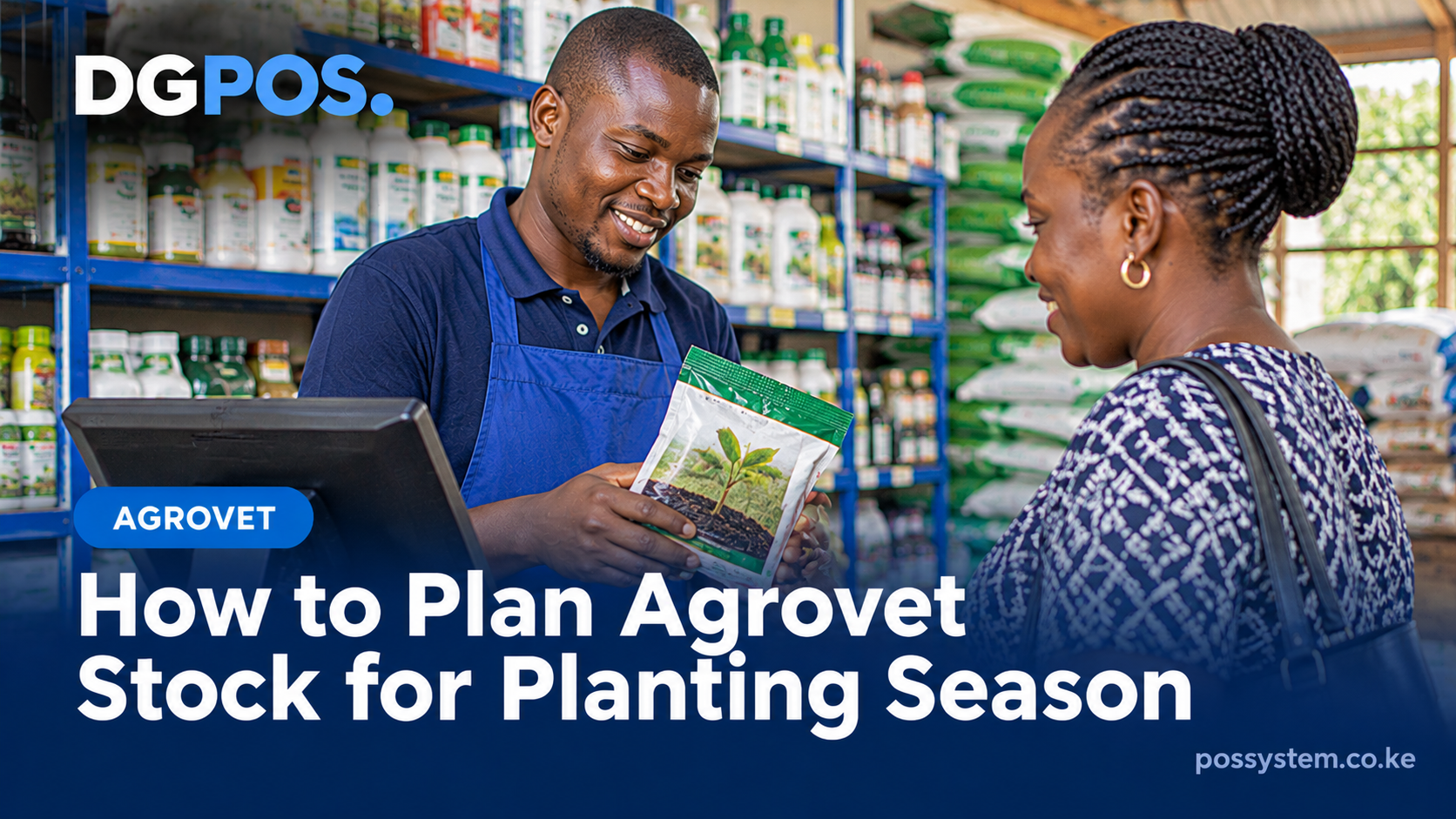
Planting season is one of the busiest periods for agrovet businesses in Kenya. Farmers begin preparing their land, purchasing seeds, selecting fertilisers, looking for crop protection products, and buying essential farming supplies. For agrovet owners, this creates an opportunity to increase sales, attract new customers, and build long-term relationships with farmers. However, the demand for agricultural products can change quickly depending on rainfall patterns, planting schedules, crop types, and local farming conditions. An agrovet that fails to prepare may run out of fast-moving products, purchase too much slow-moving stock, or tie up business money in inventory that takes months to sell. Proper stock planning helps businesses maintain the right products in the right quantities at the right time. Using a reliable POS SYSTEM can make this process easier by helping agrovet owners monitor sales, track inventory, identify popular products, and make better purchasing decisions. Modern pos software can also provide useful sales information that helps businesses understand customer demand during different planting periods. For agrovet businesses seeking better inventory control, a dependable Point Of Sale solution can support organised operations and improve stock management. This guide explains how Kenyan agrovet owners can plan stock for planting season, reduce shortages, control purchasing costs, and use a point of sale system to manage inventory more effectively.
1. Understand the Planting Season in Your Area
The first step in planning agrovet stock is understanding when farmers in your area are likely to begin planting. Kenya has different rainfall patterns across its regions, meaning planting seasons do not occur at exactly the same time everywhere. Farmers in some areas depend on long rains, while others prepare for short rains or irrigation-based farming.
Agrovet owners should understand the agricultural calendar of the communities they serve. For example, businesses serving farmers in Nakuru may experience demand influenced by local maize, potato, vegetable, and other crop production cycles. An agrovet in a different county may experience different demand depending on the crops commonly grown in that location.
Understanding local planting periods helps businesses decide when to purchase seeds, fertilisers, pesticides, herbicides, and other agricultural supplies. A reliable POS SYSTEM can help owners review sales from previous seasons and identify when customers usually purchase specific products.
With organised pos software, agrovet businesses can compare sales across different months and prepare for expected demand. Historical sales information from a point of sale system should be considered alongside current weather information, farmer feedback, supplier availability, and local agricultural advice.
2. Identify the Main Crops Grown by Local Farmers
Not every farmer purchases the same agricultural products. Stock requirements depend heavily on the crops grown in the surrounding community. An agrovet serving maize farmers will have different inventory needs from one serving vegetable, fruit, flower, or coffee farmers.
Before purchasing stock, identify the main crops grown by customers. You can gather this information by speaking to farmers, observing previous purchasing patterns, consulting local agricultural extension officers, and reviewing sales records.
For example, an agrovet serving maize farmers may need to plan for:
- Certified maize seeds suitable for the relevant growing conditions.
- Fertilisers recommended for the crop and soil conditions.
- Approved weed-control products.
- Appropriate pest and disease management products.
- Seed treatment products where required.
- Protective equipment and other farming accessories.
An agrovet serving vegetable farmers may need a different selection of vegetable seeds, fertilisers, crop protection products, and irrigation supplies.
A modern Point Of Sale solution helps businesses identify which product categories generate the most sales. By reviewing previous transactions through a POS SYSTEM, owners can understand which products customers frequently purchase during planting season.
3. Review Previous Planting Season Sales
One of the most useful sources of information for planning stock is your own business history. Previous planting seasons can reveal which products sold quickly, which products remained on shelves, and which items customers frequently requested but could not find.
Instead of relying entirely on memory, agrovet owners should review sales records from previous months and seasons. Identify the products that experienced increased demand, the quantities sold, and the periods when sales were highest.
For example, if maize seed sales increased significantly during the weeks before the long rains, the business can use that information when preparing for the next similar season. If certain fertiliser products consistently sold out early, the owner may consider ordering earlier or adjusting the quantity purchased.
A reliable point of sale system can make this analysis easier by storing sales transactions and generating reports where supported. With suitable pos software, owners can review product performance without relying entirely on handwritten records.
A POS SYSTEM also helps businesses identify slow-moving products that may need smaller future orders. Using historical information makes purchasing decisions more informed and reduces unnecessary inventory expenses.
4. Create a Planting Season Stock List
Once you understand local crop requirements and previous sales patterns, prepare a detailed planting season stock list. This list should include all products the agrovet expects farmers to need during the coming period.
Organise the list into clear product categories so that employees can locate items and management can monitor stock levels.
Common agrovet product categories include:
Seeds
Seeds are among the most important products during planting season. Depending on the farmers served, an agrovet may stock maize seeds, bean seeds, vegetable seeds, sunflower seeds, and other locally relevant varieties.
Always consider seed variety, maturity period, growing conditions, packaging size, supplier reliability, and customer demand. Purchase from authorised and reputable suppliers and verify product labels and registration requirements.
Fertilisers
Farmers may purchase different fertiliser types depending on the crop, soil conditions, and recommendations from qualified agricultural professionals. An agrovet should plan its fertiliser inventory according to local demand rather than assuming that one product suits every farmer.
Crop Protection Products
These include approved herbicides, insecticides, fungicides, and other crop protection products. Product selection should reflect the crops grown locally and the pests or diseases farmers commonly encounter.
Agrovets should ensure that products are legally registered and that customers receive accurate instructions on label use, handling, storage, and safety.
Farming Equipment and Accessories
Farmers may also require knapsack sprayers, protective clothing, watering equipment, measuring tools, gloves, and other agricultural accessories.
Using a POS SYSTEM to organise these categories helps businesses monitor different product groups and understand which categories require more attention during planting season.
5. Estimate How Much Stock You Need
After creating a stock list, the next step is estimating the quantity of each product to purchase. Ordering too little can result in stock shortages, while ordering too much can tie up money and increase storage costs.
Start by reviewing previous sales, current stock levels, expected customer demand, and supplier delivery times. Consider whether the coming planting season is expected to be busier than the previous one.
For example, if your agrovet sold 100 packets of a particular seed variety during the previous comparable planting period, you can use that information as a starting point. However, the next order should also consider current demand, local planting conditions, competition, and available capital.
A useful stock planning formula is:
Required Purchase Quantity = Expected Demand + Desired Safety Stock − Available Stock
For example:
- Expected demand: 150 units.
- Desired safety stock: 20 units.
- Available stock: 40 units.
Required purchase quantity = 150 + 20 − 40 = 130 units.
This is a planning estimate, not a guarantee of future sales. Agrovet owners should adjust quantities according to product expiry dates, storage requirements, supplier lead times, and the risk of seasonal demand changes.
A point of sale system can help provide accurate information about available stock and previous sales where inventory tracking is enabled. With suitable pos software, agrovet owners can make purchasing decisions using more reliable information.
6. Prioritise Fast-Moving Agricultural Products
Not every product in an agrovet sells at the same speed. Some products experience high demand during planting season, while others sell gradually throughout the year.
Fast-moving products deserve particular attention because running out of them may result in lost sales and disappointed customers. However, owners should avoid purchasing large quantities simply because a product sold quickly in the past.
Identify products that consistently generate high sales during planting periods. Review their sales quantities, stock turnover, profit margins, and supplier availability.
A POS SYSTEM can help identify fast-moving products through sales reports and inventory records where supported. This enables management to prioritise restocking and avoid unnecessary shortages.
For example, if a particular seed variety is frequently purchased by local farmers, the agrovet may need to monitor its stock more closely than less popular varieties.
A dependable Point Of Sale solution helps business owners understand product movement and make informed decisions about which items deserve more attention.
7. Avoid Overstocking Slow-Moving Products
While running out of essential products can affect sales, holding excessive stock can also create problems. Agrovet products may have expiry dates, special storage requirements, or limited demand outside certain planting periods.
Overstocking can tie up working capital that could otherwise be used to purchase faster-moving products. It may also increase the risk of expired, damaged, or unsold inventory.
Before ordering a product, review how quickly it sells and whether demand is likely to continue after planting season. Consider purchasing smaller quantities for products with uncertain demand and arranging repeat deliveries where suppliers allow.
A modern pos software solution can help owners monitor slow-moving inventory and identify products that have remained unsold for extended periods. A well-maintained point of sale system provides useful information for deciding which products to reorder and which purchases should be reduced.
8. Work With Reliable Agricultural Suppliers
Supplier reliability is essential when preparing for planting season. Even if an agrovet has planned its stock correctly, delayed deliveries can create shortages when farmers need products urgently.
Build relationships with reputable suppliers and distributors who can provide genuine, properly labelled, and legally compliant agricultural products. Compare supplier prices, delivery times, payment terms, minimum order quantities, and product availability.
Before placing orders, confirm:
- Product availability.
- Expected delivery dates.
- Purchase prices.
- Packaging sizes.
- Product registration and authenticity.
- Expiry dates and batch information.
- Return and replacement policies.
- Payment terms.
Avoid purchasing agricultural products from unreliable sources simply because the prices are lower. Counterfeit, expired, or improperly stored products can damage customer trust and expose farmers to serious losses.
A POS SYSTEM can help agrovet businesses maintain purchase and stock records where supplier and inventory management features are available. Using organised pos software also makes it easier to compare purchase costs with sales performance.
9. Monitor Product Expiry Dates and Storage Conditions
Agrovet stock planning is not only about purchasing the right quantities. Products must also be stored correctly and monitored throughout their time in the shop or storeroom.
Some agricultural products have expiry dates and specific storage requirements. Exposure to excessive heat, moisture, sunlight, or unsuitable conditions may affect product quality.
Agrovet owners should organise stock according to product instructions and applicable storage requirements. Employees should regularly inspect packaging, labels, batch details, and expiry dates.
Where appropriate, apply the First In, First Out (FIFO) method, ensuring older stock is sold before newer stock, while also checking expiry dates and product condition. For products with different expiry dates, a First Expired, First Out (FEFO) approach can be more suitable.
A point of sale system with batch and expiry tracking can help businesses monitor products more effectively where supported. A POS SYSTEM may also provide stock reports that help management identify items requiring attention.
Remember that technology supports stock control, but employees must still conduct physical inspections and follow manufacturer storage instructions.
10. Set Minimum and Maximum Stock Levels
Minimum and maximum stock levels help agrovet owners maintain better control over inventory. A minimum level represents the quantity at which a product should be considered for replenishment, while a maximum level helps prevent unnecessary purchasing.
For example, an agrovet may decide that a particular fast-moving product should not fall below 15 units. When stock reaches this level, the owner reviews demand and supplier delivery time before placing a new order.
Maximum levels should reflect expected demand, available storage, expiry risks, and the amount of money the business can safely invest in stock.
A suitable POS SYSTEM can help monitor inventory quantities and identify products approaching their minimum levels where stock alerts are supported.
Using reliable pos software helps management maintain more consistent stock levels and reduces the risk of making purchasing decisions without checking available inventory.
11. Prepare for Changes in Weather and Farmer Demand
Planting season demand can change depending on rainfall patterns and other farming conditions. If rains arrive later than expected, farmers may delay purchasing seeds and fertilisers. If rainfall begins earlier, demand may increase quickly.
Agrovet owners should avoid treating seasonal forecasts as guaranteed outcomes. Instead, monitor reliable weather information, communicate with farmers, and maintain contact with agricultural suppliers.
It is also important to understand that different crops have different planting requirements. Farmers may change their plans depending on soil conditions, available water, seed availability, and expected market prices.
A point of sale system helps businesses review actual sales as demand changes. By monitoring transactions through a POS SYSTEM, owners can identify products experiencing increased or reduced demand and adjust purchasing plans accordingly.
12. Manage Your Planting Season Budget
Stock planning requires financial discipline. Agrovet owners must balance the need to have enough products with the need to maintain sufficient cash for rent, salaries, transport, utilities, and other operating expenses.
Before purchasing inventory, prepare a planting season budget. Estimate how much money is available for seeds, fertilisers, crop protection products, accessories, and other supplies.
Avoid spending the entire business budget on one product category. A sudden increase in demand for another category may create an opportunity that the business cannot take advantage of if all its money is tied up in existing inventory.
Review supplier credit terms carefully and understand when payments are due. Track the cost of stock purchased, the value of inventory available, and the sales generated.
A Point Of Sale solution can help provide sales information that supports budgeting and purchasing decisions. With organised pos software, business owners can review product performance and make more informed decisions about where to allocate available funds.
13. Understand the Importance of Stock Turnover
Stock turnover refers to how quickly a business sells and replaces its inventory. Monitoring stock turnover helps agrovet owners understand whether their purchasing decisions match customer demand.
Products that sell quickly may require more frequent replenishment, while products that remain on shelves for long periods may need smaller orders.
However, high stock turnover does not automatically mean that a product is highly profitable. Owners should also consider purchase prices, selling prices, operating expenses, and profit margins.
A reliable point of sale system can provide sales information that helps management evaluate product movement. Where reporting features are available, pos software can help identify products with strong sales performance and those that need closer monitoring.
Regular stock turnover reviews help businesses improve purchasing decisions and reduce unnecessary inventory costs.
14. Use POS Software to Track Agrovet Inventory
Managing agrovet inventory manually can become difficult, particularly during busy planting periods. A business may have hundreds of products with different packaging sizes, purchase prices, selling prices, and stock requirements.
Handwritten records and spreadsheets may become difficult to maintain when several employees are handling sales and stock movements. Missing entries or incorrect calculations can lead to differences between recorded inventory and actual stock.
A suitable POS SYSTEM can help organise sales and inventory information in one place. Depending on the available features, agrovet businesses may use pos software to:
- Record product sales.
- Monitor stock quantities.
- Track product prices.
- Review fast-moving products.
- Identify slow-moving inventory.
- Generate sales reports.
- Monitor stock movements.
- Support purchasing decisions.
- Maintain transaction records.
A modern Point Of Sale solution can make it easier for management to understand what is happening in the business without relying entirely on manual calculations.
Agrovet owners should select a point of sale system that matches their actual operations and confirm which inventory features are included before implementation.
15. Use Sales Reports to Make Better Restocking Decisions
Restocking should be based on business information rather than guesswork. Before placing a new order, review which products have sold, which quantities remain, and how quickly suppliers can deliver replacements.
For example, if a particular fertiliser has experienced strong sales over the last two weeks, the owner may need to check whether the remaining stock will be sufficient for expected demand.
A POS SYSTEM with sales and inventory reporting can help management review product movement. It may also help compare sales across different periods, depending on the system’s reporting features.
Using pos software to review sales information helps owners identify patterns and make more informed purchasing decisions. This is especially useful when demand changes quickly during planting season.
16. Organise Your Agrovet Store for Easier Stock Management
A well-organised agrovet makes it easier for employees to locate products, serve customers, and monitor inventory. Products should be arranged in suitable categories, with clear labels and appropriate storage conditions.
Keep frequently requested products accessible to authorised staff while following all applicable safety and storage requirements. Restricted or hazardous agricultural products should be handled and stored according to their labels and relevant regulations.
Create a consistent method for recording stock received from suppliers, stock sold, damaged products, returns, and adjustments.
A point of sale system can support this process by maintaining digital inventory records where the relevant features are available. A POS SYSTEM also helps employees record transactions more consistently and reduces dependence on handwritten notes.
17. Train Employees Before Planting Season Begins
Planting season can bring increased customer traffic, making it important for employees to understand their responsibilities. Staff should know how to record sales, check stock availability, identify products correctly, and communicate with customers.
Training should also cover how to use the business’s POS SYSTEM. Employees should understand how to search for products, enter quantities, process transactions, and check stock information.
Agrovet employees should never recommend agricultural chemicals or application rates beyond their qualifications. They should follow product labels and refer farmers to qualified agricultural professionals when technical guidance is needed.
A well-trained team combined with suitable pos software helps the business operate more efficiently during busy periods. It also reduces avoidable stock recording mistakes and improves the customer experience.
18. Conduct Physical Stock Counts Before and During Planting Season
Digital records are useful, but physical stock counts remain important. Products may be damaged, misplaced, returned, or incorrectly recorded during daily operations.
Before planting season begins, conduct a physical stock count to establish how much inventory is actually available. Compare the count with the quantities recorded in your point of sale system.
Investigate any differences and correct records according to the business’s stock adjustment procedures.
During planting season, carry out regular counts of fast-moving and high-value products. This helps identify shortages early and reduces the risk of selling products that are no longer available.
A POS SYSTEM with stock adjustment and reporting features can make reconciliation easier where supported. Combining physical counts with accurate digital records improves inventory accountability.
19. Plan for Unexpected Demand and Emergency Reordering
Even a carefully prepared agrovet can experience unexpected demand. A product may become popular because more farmers decide to plant a particular crop, or supplier deliveries may be delayed.
To reduce the effect of these situations, maintain appropriate safety stock for selected fast-moving products. Safety stock should be based on demand uncertainty, supplier lead times, available capital, storage capacity, and expiry risks.
Keep communication open with suppliers so that you understand how quickly additional stock can be delivered.
A reliable pos software solution can help identify products approaching low stock levels where alerts are supported. A well-configured point of sale system also provides information that helps management respond to changing sales patterns.
Emergency purchases should still be checked carefully to ensure that products are genuine, properly registered, and suitable for the business’s customers.
20. Measure Planting Season Business Performance
When planting season ends, review how well your stock plan performed. This helps you identify what worked and what should be improved before the next season.
Evaluate:
- Products that sold out too early.
- Products that remained unsold.
- Stock purchased but not received on time.
- Products with high and low sales turnover.
- Supplier delivery performance.
- Differences between recorded and physical stock.
- Customer requests that could not be fulfilled.
- Inventory costs and sales revenue.
- Products that experienced expiry or damage.
A POS SYSTEM can provide valuable transaction information for these reviews. Depending on the reporting features, pos software may help owners compare sales by product, category, and period.
Use these findings to improve the next purchasing plan. Consistent evaluation helps agrovet businesses become more prepared for future planting seasons.
21. Common Stock Planning Mistakes Agrovet Owners Should Avoid
Even experienced agrovet owners can make inventory planning mistakes. Some of the most common include:
Buying Stock Without Reviewing Demand
Purchasing products simply because suppliers offer discounts can result in excess inventory. Always consider local farming needs, previous sales, and available capital.
Ignoring Expiry Dates
Agricultural products may have limited shelf lives. Overstocking products without checking expiry dates can lead to financial losses.
Depending on One Supplier
A supplier may experience shortages or delivery delays during peak demand. Working with reputable alternative suppliers can help reduce supply risks.
Failing to Monitor Fast-Moving Products
Popular products can sell out quickly. Regular stock reviews and appropriate minimum stock levels help prevent avoidable shortages.
Mixing Product Records
Incorrect product names, packaging sizes, or units can create inventory errors. Maintain consistent product descriptions and units of measurement in your POS SYSTEM.
Ignoring Sales Reports
Businesses that do not review sales information may continue repeating the same purchasing mistakes. A point of sale system can provide useful information for improving stock decisions.
Failing to Conduct Physical Stock Counts
Digital inventory records should be checked against actual stock. Regular physical counts help identify missing, damaged, or incorrectly recorded products.
22. How Digee Technologies Limited Company Supports Better Agrovet Management
Digee Technologies Limited Company recognises that agrovet businesses need organised systems to manage daily sales, inventory, and business information. During planting season, the ability to monitor product movement and understand stock requirements can make a significant difference to business operations.
A suitable POS SYSTEM can help agrovet owners manage sales transactions and inventory records more efficiently. Depending on its features, a point of sale system may support product management, stock monitoring, sales reporting, and other essential business activities.
When choosing pos software, agrovet owners should consider the number of products they manage, inventory requirements, ease of use, reporting capabilities, employee training, and available technical support.
A good Point Of Sale solution should support the way the business operates rather than make everyday tasks unnecessarily complicated.
Digee Technologies Limited Company encourages agrovet owners to explore technology that can improve stock visibility, support better purchasing decisions, and create more organised business operations.
Frequently Asked Questions About Planning Agrovet Stock for Planting Season
1. When should an agrovet start preparing stock for planting season?
An agrovet should begin planning before farmers start making their main planting purchases. The exact preparation period depends on local rainfall patterns, crop calendars, supplier lead times, and expected demand. Reviewing previous sales through a POS SYSTEM can help identify when preparations should begin.
2. Which products should an agrovet stock during planting season?
Common products include certified seeds, suitable fertilisers, approved crop protection products, sprayers, protective equipment, and other farming accessories. The exact selection should reflect local crops and farmer requirements.
3. How can agrovet owners avoid running out of stock?
Businesses should review previous sales, estimate demand, set minimum stock levels, monitor fast-moving products, and maintain communication with suppliers. A reliable point of sale system can help monitor stock quantities where inventory tracking is supported.
4. How can an agrovet know which products sell fastest?
Owners can review sales records and compare quantities sold across different periods. Suitable pos software can generate product sales reports that help identify fast-moving inventory.
5. Why is stock management important for agrovet businesses?
Stock management helps businesses maintain product availability, reduce overstocking, control purchasing costs, monitor expiry dates, and improve customer service.
6. Can POS software help an agrovet manage planting season stock?
Yes. A suitable POS SYSTEM can help manage product sales, record stock movements, monitor quantities, and generate reports, depending on its available features.
7. What is safety stock in agrovet inventory management?
Safety stock is additional inventory kept to reduce the risk of running out of products when demand increases or supplier deliveries are delayed. The appropriate quantity depends on demand, lead time, product shelf life, and available capital.
8. How often should an agrovet conduct stock counts?
The frequency depends on the size of the business and the value and movement of its products. Fast-moving and high-value items should be checked regularly, while a complete physical stock count should be scheduled periodically.
9. How can agrovet owners reduce expired stock?
They should monitor expiry dates, avoid unnecessary bulk purchases, follow appropriate storage instructions, and use stock rotation methods such as FIFO and FEFO where applicable. A point of sale system with expiry tracking can provide additional support where available.
10. What should agrovet owners consider when choosing a POS system?
They should consider inventory tracking, sales recording, product management, reporting, ease of use, stock adjustments, staff training, and technical support. The selected POS SYSTEM should meet the specific needs of the agrovet business.
Conclusion
Planning agrovet stock for planting season requires preparation, accurate information, and a clear understanding of local farming needs. Agrovet owners must identify the crops grown in their communities, review previous sales, estimate product demand, work with reliable suppliers, and monitor inventory throughout the season. They should also avoid overstocking, pay attention to expiry dates, maintain appropriate safety stock, and conduct regular physical stock counts. Technology can make these activities easier by providing organised sales and inventory information. A reliable POS SYSTEM helps agrovet businesses improve stock visibility, monitor product movement, and make more informed purchasing decisions. With suitable pos software, owners can reduce dependence on manual records and manage daily operations more efficiently. Choosing the right Point Of Sale solution can support better inventory control and help businesses prepare for changing customer demand. Digee Technologies Limited Company encourages Kenyan agrovet businesses to embrace practical technology and organised stock management practices. By combining careful planning with a dependable point of sale system, agrovet owners can serve farmers more effectively, reduce avoidable stock problems, and build a stronger business throughout planting season.Planting season is one of the busiest periods for agrovet businesses in Kenya. Farmers begin preparing their land, purchasing seeds, selecting fertilisers, looking for crop protection products, and buying essential farming supplies. For agrovet owners, this creates an opportunity to increase sales, attract new customers, and build long-term relationships with farmers. However, the demand for agricultural products can change quickly depending on rainfall patterns, planting schedules, crop types, and local farming conditions. An agrovet that fails to prepare may run out of fast-moving products, purchase too much slow-moving stock, or tie up business money in inventory that takes months to sell. Proper stock planning helps businesses maintain the right products in the right quantities at the right time. Using a reliable POS SYSTEM can make this process easier by helping agrovet owners monitor sales, track inventory, identify popular products, and make better purchasing decisions. Modern pos software can also provide useful sales information that helps businesses understand customer demand during different planting periods. For agrovet businesses seeking better inventory control, a dependable Point Of Sale solution can support organised operations and improve stock management. This guide explains how Kenyan agrovet owners can plan stock for planting season, reduce shortages, control purchasing costs, and use a point of sale system to manage inventory more effectively.
1. Understand the Planting Season in Your Area
The first step in planning agrovet stock is understanding when farmers in your area are likely to begin planting. Kenya has different rainfall patterns across its regions, meaning planting seasons do not occur at exactly the same time everywhere. Farmers in some areas depend on long rains, while others prepare for short rains or irrigation-based farming.
Agrovet owners should understand the agricultural calendar of the communities they serve. For example, businesses serving farmers in Nakuru may experience demand influenced by local maize, potato, vegetable, and other crop production cycles. An agrovet in a different county may experience different demand depending on the crops commonly grown in that location.
Understanding local planting periods helps businesses decide when to purchase seeds, fertilisers, pesticides, herbicides, and other agricultural supplies. A reliable POS SYSTEM can help owners review sales from previous seasons and identify when customers usually purchase specific products.
With organised pos software, agrovet businesses can compare sales across different months and prepare for expected demand. Historical sales information from a point of sale system should be considered alongside current weather information, farmer feedback, supplier availability, and local agricultural advice.
2. Identify the Main Crops Grown by Local Farmers
Not every farmer purchases the same agricultural products. Stock requirements depend heavily on the crops grown in the surrounding community. An agrovet serving maize farmers will have different inventory needs from one serving vegetable, fruit, flower, or coffee farmers.
Before purchasing stock, identify the main crops grown by customers. You can gather this information by speaking to farmers, observing previous purchasing patterns, consulting local agricultural extension officers, and reviewing sales records.
For example, an agrovet serving maize farmers may need to plan for:
- Certified maize seeds suitable for the relevant growing conditions.
- Fertilisers recommended for the crop and soil conditions.
- Approved weed-control products.
- Appropriate pest and disease management products.
- Seed treatment products where required.
- Protective equipment and other farming accessories.
An agrovet serving vegetable farmers may need a different selection of vegetable seeds, fertilisers, crop protection products, and irrigation supplies.
A modern Point Of Sale solution helps businesses identify which product categories generate the most sales. By reviewing previous transactions through a POS SYSTEM, owners can understand which products customers frequently purchase during planting season.
3. Review Previous Planting Season Sales
One of the most useful sources of information for planning stock is your own business history. Previous planting seasons can reveal which products sold quickly, which products remained on shelves, and which items customers frequently requested but could not find.
Instead of relying entirely on memory, agrovet owners should review sales records from previous months and seasons. Identify the products that experienced increased demand, the quantities sold, and the periods when sales were highest.
For example, if maize seed sales increased significantly during the weeks before the long rains, the business can use that information when preparing for the next similar season. If certain fertiliser products consistently sold out early, the owner may consider ordering earlier or adjusting the quantity purchased.
A reliable point of sale system can make this analysis easier by storing sales transactions and generating reports where supported. With suitable pos software, owners can review product performance without relying entirely on handwritten records.
A POS SYSTEM also helps businesses identify slow-moving products that may need smaller future orders. Using historical information makes purchasing decisions more informed and reduces unnecessary inventory expenses.
4. Create a Planting Season Stock List
Once you understand local crop requirements and previous sales patterns, prepare a detailed planting season stock list. This list should include all products the agrovet expects farmers to need during the coming period.
Organise the list into clear product categories so that employees can locate items and management can monitor stock levels.
Common agrovet product categories include:
Seeds
Seeds are among the most important products during planting season. Depending on the farmers served, an agrovet may stock maize seeds, bean seeds, vegetable seeds, sunflower seeds, and other locally relevant varieties.
Always consider seed variety, maturity period, growing conditions, packaging size, supplier reliability, and customer demand. Purchase from authorised and reputable suppliers and verify product labels and registration requirements.
Fertilisers
Farmers may purchase different fertiliser types depending on the crop, soil conditions, and recommendations from qualified agricultural professionals. An agrovet should plan its fertiliser inventory according to local demand rather than assuming that one product suits every farmer.
Crop Protection Products
These include approved herbicides, insecticides, fungicides, and other crop protection products. Product selection should reflect the crops grown locally and the pests or diseases farmers commonly encounter.
Agrovets should ensure that products are legally registered and that customers receive accurate instructions on label use, handling, storage, and safety.
Farming Equipment and Accessories
Farmers may also require knapsack sprayers, protective clothing, watering equipment, measuring tools, gloves, and other agricultural accessories.
Using a POS SYSTEM to organise these categories helps businesses monitor different product groups and understand which categories require more attention during planting season.
5. Estimate How Much Stock You Need
After creating a stock list, the next step is estimating the quantity of each product to purchase. Ordering too little can result in stock shortages, while ordering too much can tie up money and increase storage costs.
Start by reviewing previous sales, current stock levels, expected customer demand, and supplier delivery times. Consider whether the coming planting season is expected to be busier than the previous one.
For example, if your agrovet sold 100 packets of a particular seed variety during the previous comparable planting period, you can use that information as a starting point. However, the next order should also consider current demand, local planting conditions, competition, and available capital.
A useful stock planning formula is:
Required Purchase Quantity = Expected Demand + Desired Safety Stock − Available Stock
For example:
- Expected demand: 150 units.
- Desired safety stock: 20 units.
- Available stock: 40 units.
Required purchase quantity = 150 + 20 − 40 = 130 units.
This is a planning estimate, not a guarantee of future sales. Agrovet owners should adjust quantities according to product expiry dates, storage requirements, supplier lead times, and the risk of seasonal demand changes.
A point of sale system can help provide accurate information about available stock and previous sales where inventory tracking is enabled. With suitable pos software, agrovet owners can make purchasing decisions using more reliable information.
6. Prioritise Fast-Moving Agricultural Products
Not every product in an agrovet sells at the same speed. Some products experience high demand during planting season, while others sell gradually throughout the year.
Fast-moving products deserve particular attention because running out of them may result in lost sales and disappointed customers. However, owners should avoid purchasing large quantities simply because a product sold quickly in the past.
Identify products that consistently generate high sales during planting periods. Review their sales quantities, stock turnover, profit margins, and supplier availability.
A POS SYSTEM can help identify fast-moving products through sales reports and inventory records where supported. This enables management to prioritise restocking and avoid unnecessary shortages.
For example, if a particular seed variety is frequently purchased by local farmers, the agrovet may need to monitor its stock more closely than less popular varieties.
A dependable Point Of Sale solution helps business owners understand product movement and make informed decisions about which items deserve more attention.
7. Avoid Overstocking Slow-Moving Products
While running out of essential products can affect sales, holding excessive stock can also create problems. Agrovet products may have expiry dates, special storage requirements, or limited demand outside certain planting periods.
Overstocking can tie up working capital that could otherwise be used to purchase faster-moving products. It may also increase the risk of expired, damaged, or unsold inventory.
Before ordering a product, review how quickly it sells and whether demand is likely to continue after planting season. Consider purchasing smaller quantities for products with uncertain demand and arranging repeat deliveries where suppliers allow.
A modern pos software solution can help owners monitor slow-moving inventory and identify products that have remained unsold for extended periods. A well-maintained point of sale system provides useful information for deciding which products to reorder and which purchases should be reduced.
8. Work With Reliable Agricultural Suppliers
Supplier reliability is essential when preparing for planting season. Even if an agrovet has planned its stock correctly, delayed deliveries can create shortages when farmers need products urgently.
Build relationships with reputable suppliers and distributors who can provide genuine, properly labelled, and legally compliant agricultural products. Compare supplier prices, delivery times, payment terms, minimum order quantities, and product availability.
Before placing orders, confirm:
- Product availability.
- Expected delivery dates.
- Purchase prices.
- Packaging sizes.
- Product registration and authenticity.
- Expiry dates and batch information.
- Return and replacement policies.
- Payment terms.
Avoid purchasing agricultural products from unreliable sources simply because the prices are lower. Counterfeit, expired, or improperly stored products can damage customer trust and expose farmers to serious losses.
A POS SYSTEM can help agrovet businesses maintain purchase and stock records where supplier and inventory management features are available. Using organised pos software also makes it easier to compare purchase costs with sales performance.
9. Monitor Product Expiry Dates and Storage Conditions
Agrovet stock planning is not only about purchasing the right quantities. Products must also be stored correctly and monitored throughout their time in the shop or storeroom.
Some agricultural products have expiry dates and specific storage requirements. Exposure to excessive heat, moisture, sunlight, or unsuitable conditions may affect product quality.
Agrovet owners should organise stock according to product instructions and applicable storage requirements. Employees should regularly inspect packaging, labels, batch details, and expiry dates.
Where appropriate, apply the First In, First Out (FIFO) method, ensuring older stock is sold before newer stock, while also checking expiry dates and product condition. For products with different expiry dates, a First Expired, First Out (FEFO) approach can be more suitable.
A point of sale system with batch and expiry tracking can help businesses monitor products more effectively where supported. A POS SYSTEM may also provide stock reports that help management identify items requiring attention.
Remember that technology supports stock control, but employees must still conduct physical inspections and follow manufacturer storage instructions.
10. Set Minimum and Maximum Stock Levels
Minimum and maximum stock levels help agrovet owners maintain better control over inventory. A minimum level represents the quantity at which a product should be considered for replenishment, while a maximum level helps prevent unnecessary purchasing.
For example, an agrovet may decide that a particular fast-moving product should not fall below 15 units. When stock reaches this level, the owner reviews demand and supplier delivery time before placing a new order.
Maximum levels should reflect expected demand, available storage, expiry risks, and the amount of money the business can safely invest in stock.
A suitable POS SYSTEM can help monitor inventory quantities and identify products approaching their minimum levels where stock alerts are supported.
Using reliable pos software helps management maintain more consistent stock levels and reduces the risk of making purchasing decisions without checking available inventory.
11. Prepare for Changes in Weather and Farmer Demand
Planting season demand can change depending on rainfall patterns and other farming conditions. If rains arrive later than expected, farmers may delay purchasing seeds and fertilisers. If rainfall begins earlier, demand may increase quickly.
Agrovet owners should avoid treating seasonal forecasts as guaranteed outcomes. Instead, monitor reliable weather information, communicate with farmers, and maintain contact with agricultural suppliers.
It is also important to understand that different crops have different planting requirements. Farmers may change their plans depending on soil conditions, available water, seed availability, and expected market prices.
A point of sale system helps businesses review actual sales as demand changes. By monitoring transactions through a POS SYSTEM, owners can identify products experiencing increased or reduced demand and adjust purchasing plans accordingly.
12. Manage Your Planting Season Budget
Stock planning requires financial discipline. Agrovet owners must balance the need to have enough products with the need to maintain sufficient cash for rent, salaries, transport, utilities, and other operating expenses.
Before purchasing inventory, prepare a planting season budget. Estimate how much money is available for seeds, fertilisers, crop protection products, accessories, and other supplies.
Avoid spending the entire business budget on one product category. A sudden increase in demand for another category may create an opportunity that the business cannot take advantage of if all its money is tied up in existing inventory.
Review supplier credit terms carefully and understand when payments are due. Track the cost of stock purchased, the value of inventory available, and the sales generated.
A Point Of Sale solution can help provide sales information that supports budgeting and purchasing decisions. With organised pos software, business owners can review product performance and make more informed decisions about where to allocate available funds.
13. Understand the Importance of Stock Turnover
Stock turnover refers to how quickly a business sells and replaces its inventory. Monitoring stock turnover helps agrovet owners understand whether their purchasing decisions match customer demand.
Products that sell quickly may require more frequent replenishment, while products that remain on shelves for long periods may need smaller orders.
However, high stock turnover does not automatically mean that a product is highly profitable. Owners should also consider purchase prices, selling prices, operating expenses, and profit margins.
A reliable point of sale system can provide sales information that helps management evaluate product movement. Where reporting features are available, pos software can help identify products with strong sales performance and those that need closer monitoring.
Regular stock turnover reviews help businesses improve purchasing decisions and reduce unnecessary inventory costs.
14. Use POS Software to Track Agrovet Inventory
Managing agrovet inventory manually can become difficult, particularly during busy planting periods. A business may have hundreds of products with different packaging sizes, purchase prices, selling prices, and stock requirements.
Handwritten records and spreadsheets may become difficult to maintain when several employees are handling sales and stock movements. Missing entries or incorrect calculations can lead to differences between recorded inventory and actual stock.
A suitable POS SYSTEM can help organise sales and inventory information in one place. Depending on the available features, agrovet businesses may use pos software to:
- Record product sales.
- Monitor stock quantities.
- Track product prices.
- Review fast-moving products.
- Identify slow-moving inventory.
- Generate sales reports.
- Monitor stock movements.
- Support purchasing decisions.
- Maintain transaction records.
A modern Point Of Sale solution can make it easier for management to understand what is happening in the business without relying entirely on manual calculations.
Agrovet owners should select a point of sale system that matches their actual operations and confirm which inventory features are included before implementation.
15. Use Sales Reports to Make Better Restocking Decisions
Restocking should be based on business information rather than guesswork. Before placing a new order, review which products have sold, which quantities remain, and how quickly suppliers can deliver replacements.
For example, if a particular fertiliser has experienced strong sales over the last two weeks, the owner may need to check whether the remaining stock will be sufficient for expected demand.
A POS SYSTEM with sales and inventory reporting can help management review product movement. It may also help compare sales across different periods, depending on the system’s reporting features.
Using pos software to review sales information helps owners identify patterns and make more informed purchasing decisions. This is especially useful when demand changes quickly during planting season.
16. Organise Your Agrovet Store for Easier Stock Management
A well-organised agrovet makes it easier for employees to locate products, serve customers, and monitor inventory. Products should be arranged in suitable categories, with clear labels and appropriate storage conditions.
Keep frequently requested products accessible to authorised staff while following all applicable safety and storage requirements. Restricted or hazardous agricultural products should be handled and stored according to their labels and relevant regulations.
Create a consistent method for recording stock received from suppliers, stock sold, damaged products, returns, and adjustments.
A point of sale system can support this process by maintaining digital inventory records where the relevant features are available. A POS SYSTEM also helps employees record transactions more consistently and reduces dependence on handwritten notes.
17. Train Employees Before Planting Season Begins
Planting season can bring increased customer traffic, making it important for employees to understand their responsibilities. Staff should know how to record sales, check stock availability, identify products correctly, and communicate with customers.
Training should also cover how to use the business’s POS SYSTEM. Employees should understand how to search for products, enter quantities, process transactions, and check stock information.
Agrovet employees should never recommend agricultural chemicals or application rates beyond their qualifications. They should follow product labels and refer farmers to qualified agricultural professionals when technical guidance is needed.
A well-trained team combined with suitable pos software helps the business operate more efficiently during busy periods. It also reduces avoidable stock recording mistakes and improves the customer experience.
18. Conduct Physical Stock Counts Before and During Planting Season
Digital records are useful, but physical stock counts remain important. Products may be damaged, misplaced, returned, or incorrectly recorded during daily operations.
Before planting season begins, conduct a physical stock count to establish how much inventory is actually available. Compare the count with the quantities recorded in your point of sale system.
Investigate any differences and correct records according to the business’s stock adjustment procedures.
During planting season, carry out regular counts of fast-moving and high-value products. This helps identify shortages early and reduces the risk of selling products that are no longer available.
A POS SYSTEM with stock adjustment and reporting features can make reconciliation easier where supported. Combining physical counts with accurate digital records improves inventory accountability.
19. Plan for Unexpected Demand and Emergency Reordering
Even a carefully prepared agrovet can experience unexpected demand. A product may become popular because more farmers decide to plant a particular crop, or supplier deliveries may be delayed.
To reduce the effect of these situations, maintain appropriate safety stock for selected fast-moving products. Safety stock should be based on demand uncertainty, supplier lead times, available capital, storage capacity, and expiry risks.
Keep communication open with suppliers so that you understand how quickly additional stock can be delivered.
A reliable pos software solution can help identify products approaching low stock levels where alerts are supported. A well-configured point of sale system also provides information that helps management respond to changing sales patterns.
Emergency purchases should still be checked carefully to ensure that products are genuine, properly registered, and suitable for the business’s customers.
20. Measure Planting Season Business Performance
When planting season ends, review how well your stock plan performed. This helps you identify what worked and what should be improved before the next season.
Evaluate:
- Products that sold out too early.
- Products that remained unsold.
- Stock purchased but not received on time.
- Products with high and low sales turnover.
- Supplier delivery performance.
- Differences between recorded and physical stock.
- Customer requests that could not be fulfilled.
- Inventory costs and sales revenue.
- Products that experienced expiry or damage.
A POS SYSTEM can provide valuable transaction information for these reviews. Depending on the reporting features, pos software may help owners compare sales by product, category, and period.
Use these findings to improve the next purchasing plan. Consistent evaluation helps agrovet businesses become more prepared for future planting seasons.
21. Common Stock Planning Mistakes Agrovet Owners Should Avoid
Even experienced agrovet owners can make inventory planning mistakes. Some of the most common include:
Buying Stock Without Reviewing Demand
Purchasing products simply because suppliers offer discounts can result in excess inventory. Always consider local farming needs, previous sales, and available capital.
Ignoring Expiry Dates
Agricultural products may have limited shelf lives. Overstocking products without checking expiry dates can lead to financial losses.
Depending on One Supplier
A supplier may experience shortages or delivery delays during peak demand. Working with reputable alternative suppliers can help reduce supply risks.
Failing to Monitor Fast-Moving Products
Popular products can sell out quickly. Regular stock reviews and appropriate minimum stock levels help prevent avoidable shortages.
Mixing Product Records
Incorrect product names, packaging sizes, or units can create inventory errors. Maintain consistent product descriptions and units of measurement in your POS SYSTEM.
Ignoring Sales Reports
Businesses that do not review sales information may continue repeating the same purchasing mistakes. A point of sale system can provide useful information for improving stock decisions.
Failing to Conduct Physical Stock Counts
Digital inventory records should be checked against actual stock. Regular physical counts help identify missing, damaged, or incorrectly recorded products.
22. How Digee Technologies Limited Company Supports Better Agrovet Management
Digee Technologies Limited Company recognises that agrovet businesses need organised systems to manage daily sales, inventory, and business information. During planting season, the ability to monitor product movement and understand stock requirements can make a significant difference to business operations.
A suitable POS SYSTEM can help agrovet owners manage sales transactions and inventory records more efficiently. Depending on its features, a point of sale system may support product management, stock monitoring, sales reporting, and other essential business activities.
When choosing pos software, agrovet owners should consider the number of products they manage, inventory requirements, ease of use, reporting capabilities, employee training, and available technical support.
A good Point Of Sale solution should support the way the business operates rather than make everyday tasks unnecessarily complicated.
Digee Technologies Limited Company encourages agrovet owners to explore technology that can improve stock visibility, support better purchasing decisions, and create more organised business operations.
Frequently Asked Questions About Planning Agrovet Stock for Planting Season
1. When should an agrovet start preparing stock for planting season?
An agrovet should begin planning before farmers start making their main planting purchases. The exact preparation period depends on local rainfall patterns, crop calendars, supplier lead times, and expected demand. Reviewing previous sales through a POS SYSTEM can help identify when preparations should begin.
2. Which products should an agrovet stock during planting season?
Common products include certified seeds, suitable fertilisers, approved crop protection products, sprayers, protective equipment, and other farming accessories. The exact selection should reflect local crops and farmer requirements.
3. How can agrovet owners avoid running out of stock?
Businesses should review previous sales, estimate demand, set minimum stock levels, monitor fast-moving products, and maintain communication with suppliers. A reliable point of sale system can help monitor stock quantities where inventory tracking is supported.
4. How can an agrovet know which products sell fastest?
Owners can review sales records and compare quantities sold across different periods. Suitable pos software can generate product sales reports that help identify fast-moving inventory.
5. Why is stock management important for agrovet businesses?
Stock management helps businesses maintain product availability, reduce overstocking, control purchasing costs, monitor expiry dates, and improve customer service.
6. Can POS software help an agrovet manage planting season stock?
Yes. A suitable POS SYSTEM can help manage product sales, record stock movements, monitor quantities, and generate reports, depending on its available features.
7. What is safety stock in agrovet inventory management?
Safety stock is additional inventory kept to reduce the risk of running out of products when demand increases or supplier deliveries are delayed. The appropriate quantity depends on demand, lead time, product shelf life, and available capital.
8. How often should an agrovet conduct stock counts?
The frequency depends on the size of the business and the value and movement of its products. Fast-moving and high-value items should be checked regularly, while a complete physical stock count should be scheduled periodically.
9. How can agrovet owners reduce expired stock?
They should monitor expiry dates, avoid unnecessary bulk purchases, follow appropriate storage instructions, and use stock rotation methods such as FIFO and FEFO where applicable. A point of sale system with expiry tracking can provide additional support where available.
10. What should agrovet owners consider when choosing a POS system?
They should consider inventory tracking, sales recording, product management, reporting, ease of use, stock adjustments, staff training, and technical support. The selected POS SYSTEM should meet the specific needs of the agrovet business.
Conclusion
Planning agrovet stock for planting season requires preparation, accurate information, and a clear understanding of local farming needs. Agrovet owners must identify the crops grown in their communities, review previous sales, estimate product demand, work with reliable suppliers, and monitor inventory throughout the season. They should also avoid overstocking, pay attention to expiry dates, maintain appropriate safety stock, and conduct regular physical stock counts. Technology can make these activities easier by providing organised sales and inventory information. A reliable POS SYSTEM helps agrovet businesses improve stock visibility, monitor product movement, and make more informed purchasing decisions. With suitable pos software, owners can reduce dependence on manual records and manage daily operations more efficiently. Choosing the right Point Of Sale solution can support better inventory control and help businesses prepare for changing customer demand. Digee Technologies Limited Company encourages Kenyan agrovet businesses to embrace practical technology and organised stock management practices. By combining careful planning with a dependable point of sale system, agrovet owners can serve farmers more effectively, reduce avoidable stock problems, and build a stronger business throughout planting season.