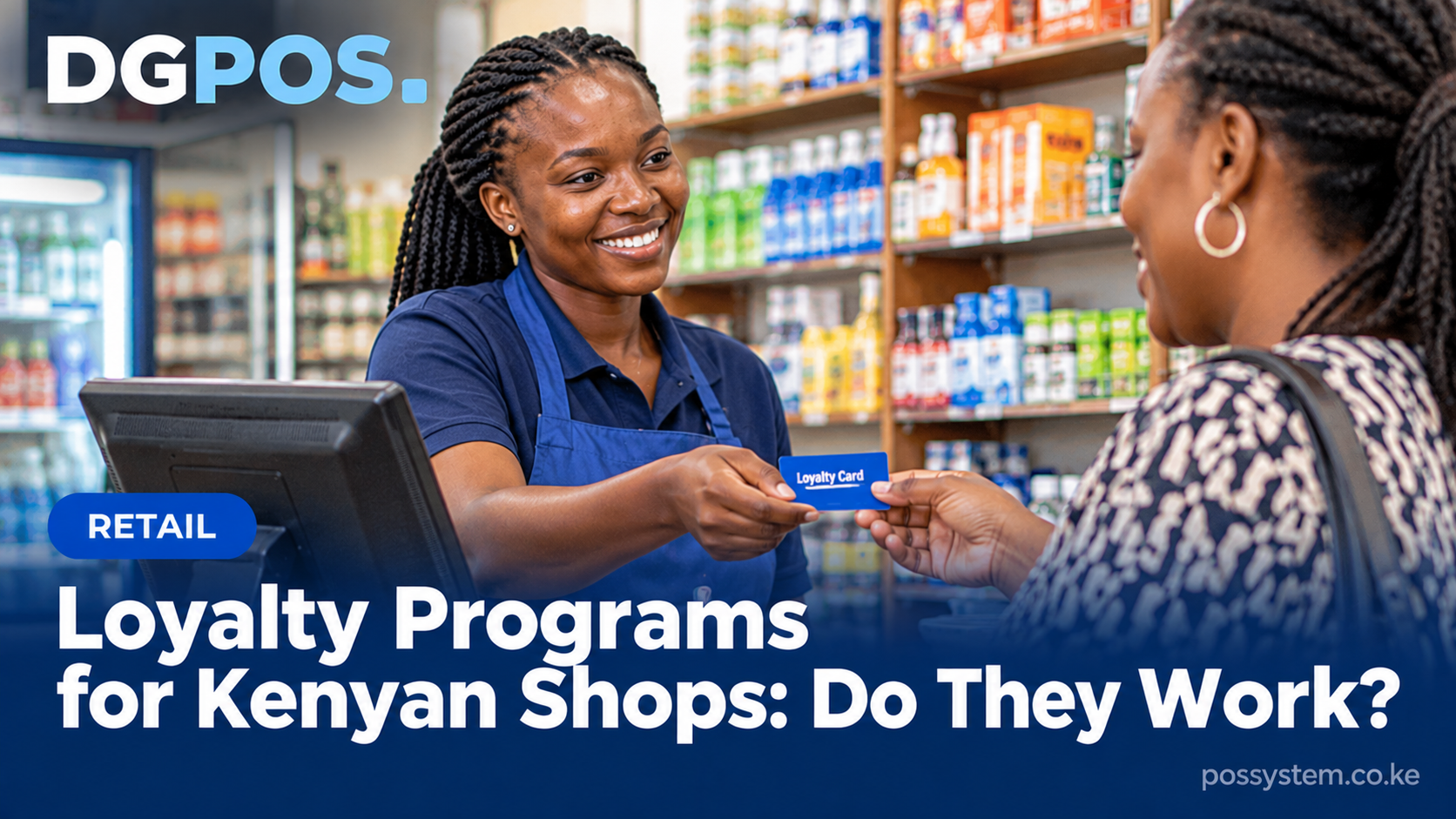
Keeping customers coming back is one of the biggest challenges facing businesses in Kenya. Whether you operate a minimart, supermarket, pharmacy, cosmetics shop, hardware store, boutique, or wholesale business, attracting new customers is important, but retaining existing ones can be even more valuable. This is where loyalty programs come in. A loyalty program rewards customers for choosing your business repeatedly and gives them a reason to continue shopping with you instead of switching to competitors.
Many Kenyan businesses are now exploring digital ways to improve customer relationships, understand buying habits, and increase repeat purchases. From points-based rewards to discounts and cashback offers, loyalty programs can help businesses build stronger customer connections. However, do they actually work? The answer depends on how the program is designed, how consistently it is managed, and whether customers find the rewards useful.
Technology also plays an important role in managing customer rewards. A reliable POS solution can help businesses record transactions and, depending on its features, support customer loyalty activities. When combined with suitable pos software, a shop can make it easier to track purchases, monitor customer activity, and evaluate whether its loyalty program is delivering results.
1. What Is a Customer Loyalty Program?
A customer loyalty program is a marketing strategy designed to encourage customers to continue buying from the same business. Customers receive rewards or benefits when they make purchases, reach spending targets, or participate in selected activities.
For example, a minimart may reward customers with points every time they shop. Once they accumulate enough points, they can redeem them for a discount or selected products.
A pharmacy may offer rewards to returning customers, while a cosmetics shop may provide special discounts to customers who frequently purchase beauty products.
Common loyalty program rewards include:
- Points for every purchase.
- Discounts after reaching a spending target.
- Cashback on qualifying purchases.
- Free products after several purchases.
- Exclusive offers for regular customers.
- Birthday or seasonal rewards.
- Special prices for loyal customers.
The purpose is not simply to give away free products. It is to create a positive shopping experience that encourages customers to return.
A well-organised Point Of Sale system can help record purchases and support reward calculations where loyalty features are available.
2. Why Loyalty Programs Matter for Kenyan Shops
Competition among Kenyan retail businesses is increasing. Customers often have several shops to choose from, especially in busy towns and shopping centres. A customer may purchase groceries from one minimart today and choose another shop tomorrow because of price, convenience, location, or customer service.
Loyalty programs give businesses an additional way to encourage repeat purchases.
Encourage Repeat Purchases
Customers may prefer shopping at a business where their purchases earn rewards. For example, a customer who has accumulated points at a minimart may choose to return rather than start earning rewards somewhere else.
Build Stronger Customer Relationships
A loyalty program can make customers feel appreciated. Small rewards and personalised offers can create a positive relationship between a shop and its regular customers.
Improve Customer Retention
Retaining existing customers is important because repeat customers already understand your products, services, and shopping experience. A well-designed loyalty program can encourage them to continue purchasing from your business.
Increase Shopping Frequency
If customers know that additional purchases bring them closer to a reward, they may visit more frequently. However, rewards should be affordable and should not encourage unprofitable discounts.
Support Better Business Decisions
When a loyalty program is managed digitally, the business may be able to analyse purchase patterns and identify popular products or active customers. A suitable POS SYSTEM can support transaction recording and reporting, depending on the features available.
3. Do Loyalty Programs Actually Work in Kenya?
Yes, loyalty programs can work for Kenyan shops, but they are not automatically successful. Their effectiveness depends on customer needs, business type, reward value, convenience, and proper management.
For example, a minimart selling everyday household products may benefit from a points-based program because customers make frequent purchases. A furniture shop may prefer a different approach because customers do not buy furniture as often.
A loyalty program is more likely to work when:
- Customers understand how the rewards are earned.
- Rewards are valuable and achievable.
- The program is easy to join.
- Customers can easily check their reward balance.
- Staff understand how to apply rewards.
- The business monitors the cost of rewards.
- The program provides a consistent customer experience.
A complicated program can discourage participation. Customers should not have to struggle to understand how many points they earn or how to redeem them.
Using pos software with suitable customer management or loyalty functionality can make it easier to organise these activities. Instead of relying entirely on handwritten records, a business may use digital transaction data to monitor participation and rewards.
4. Types of Loyalty Programs Kenyan Shops Can Use
Different businesses require different loyalty strategies. The best program is one that matches customer buying habits and the business’s profit margins.
A. Points-Based Loyalty Programs
Customers earn points whenever they make qualifying purchases. The points accumulate and can later be exchanged for discounts, products, or other benefits.
For example, a minimart may award one point for every KSh 100 spent. Customers who collect 100 points may receive a selected reward.
Advantages include:
- Encourages repeat purchases.
- Gives customers a clear reward target.
- Can be applied to frequent shopping activities.
- Allows businesses to monitor reward participation.
A POS SYSTEM with loyalty support can help calculate points automatically and reduce manual tracking errors.
B. Discount-Based Loyalty Programs
Customers receive discounts after reaching certain spending levels or completing a specific number of purchases.
For example, a boutique may offer a 10% discount on a qualifying future purchase after a customer spends a specified amount.
This approach is easy to understand because customers immediately recognise the value of the reward.
However, businesses must calculate discounts carefully to avoid reducing profits unnecessarily.
C. Cashback Programs
Cashback programs allow customers to receive a portion of qualifying purchases back as store credit or another defined benefit.
For example, a shop may offer KSh 50 in store credit after a customer spends KSh 2,000 on eligible products.
Cashback can encourage customers to return and use their accumulated credit.
Businesses should clearly communicate whether cashback is redeemable as cash, store credit, or a discount on a future transaction.
D. Buy More, Get More Programs
This type of program rewards customers after they purchase a certain quantity of products.
For example:
- Buy five selected products and get a sixth one free.
- Purchase three qualifying items and receive a discount.
- Buy a certain quantity of household products and earn a reward.
This approach can work well for shops selling frequently purchased items.
A point of sale system can help staff record qualifying transactions and apply the correct promotion when the relevant functionality is available.
E. Membership-Based Loyalty Programs
Customers register as members and receive benefits such as exclusive discounts, special offers, or priority access to selected promotions.
For example, a supermarket may introduce a membership program for regular customers. Members could receive selected offers that are not available to occasional shoppers.
The business should make membership benefits clear and ensure that customers understand any joining fees or conditions.
F. Referral Reward Programs
Customers receive a benefit when they introduce new customers to the business.
For example, a salon may offer a discount to an existing customer who successfully refers a new customer.
Referral programs can help businesses reach new audiences through existing customer relationships. Clear rules are important so that referrals can be verified and rewards are applied fairly.
5. How Kenyan Minimarts Can Benefit from Loyalty Programs
Minimarts sell everyday products such as bread, milk, cooking oil, sugar, flour, snacks, toiletries, and household supplies. Because customers often visit these shops regularly, loyalty programs can be particularly useful.
A minimart could introduce a simple points-based system where customers earn points based on qualifying purchases.
For example:
A customer spends KSh 1,000 on eligible items and earns 10 points. After accumulating a set number of points, the customer receives a discount or selected reward.
This gives customers an incentive to return while allowing the shop owner to encourage repeat purchases.
However, the business should monitor:
- The number of customers participating.
- How frequently members return.
- The value of rewards redeemed.
- The cost of providing rewards.
- Whether average spending changes.
A POS system can help record sales and provide transaction information that may support loyalty analysis. Where loyalty functionality is included, it may also help manage customer points and redemption.
6. How Supermarkets Can Use Loyalty Programs
Supermarkets handle many customers and a wide range of products. A loyalty program can help them encourage regular shopping and build long-term relationships with customers.
A supermarket may offer:
- Points for qualifying purchases.
- Member-only discounts.
- Special weekend promotions.
- Birthday offers.
- Rewards for reaching spending targets.
- Seasonal shopping rewards.
For example, a supermarket could run a monthly promotion where customers who spend a specified amount on selected products receive bonus points.
The supermarket should communicate the promotion clearly at checkout, through its website, social media, and in-store notices.
Managing a large loyalty program manually can become difficult. A suitable POS SYSTEM can support sales recording and reporting, while integrated loyalty features, where available, can help staff identify members and apply rewards.
7. Loyalty Programs for Pharmacies and Cosmetics Shops
Pharmacies and cosmetics shops can also benefit from customer loyalty programs, provided the rewards comply with applicable laws and professional requirements.
A cosmetics shop may reward customers who regularly purchase skincare products, fragrances, makeup, or hair-care products.
For example, customers who purchase selected products over several visits may qualify for a discount on a future purchase.
Pharmacies should be particularly careful when designing promotions. They must consider applicable healthcare regulations, professional standards, privacy requirements, and restrictions on advertising or rewarding purchases of medicines. Loyalty rewards should never encourage inappropriate medicine use or unnecessary purchases.
A suitable Point Of Sale solution can help businesses record transactions and organise customer information where lawful and appropriate. Access to customer information should be controlled and handled responsibly.
8. The Role of POS Software in Managing Loyalty Programs
Managing a loyalty program requires accurate records. Business owners need to know which customers qualify for rewards, how many points they have earned, and whether rewards have been redeemed.
Without an organised system, employees may make mistakes when calculating points or applying discounts. Paper-based loyalty cards can also become inconvenient when customers lose them or forget to bring them.
This is where pos software can make a difference.
Depending on the available features, a digital solution may support:
- Recording customer purchases.
- Associating transactions with customer accounts.
- Tracking loyalty points.
- Calculating qualifying rewards.
- Applying discounts during checkout.
- Monitoring reward redemptions.
- Generating sales reports.
- Reviewing customer purchase activity.
A point of sales system with loyalty functionality can help reduce manual work and make the program easier to manage.
For example, when a registered customer makes a qualifying purchase, the system may record the transaction against the customer’s account and update their points automatically if the feature is supported.
This makes it easier for staff to manage rewards while helping business owners monitor program performance.
9. How to Start a Loyalty Program in Your Shop
You do not need to introduce a complicated loyalty program immediately. Start with a simple structure, test it, and improve it based on customer feedback.
Step 1: Identify Your Business Goal
Decide what you want the program to achieve.
Possible goals include:
- Increasing repeat purchases.
- Encouraging customers to shop more frequently.
- Increasing sales of selected products.
- Improving customer retention.
- Attracting new customers through referrals.
Having a clear goal helps you choose the right reward structure.
Step 2: Understand Your Customers
Think about what your customers buy, how frequently they shop, and what rewards they would appreciate.
For example, a minimart’s customers may prefer discounts on everyday household products, while a boutique’s customers may appreciate exclusive offers on new collections.
Step 3: Choose a Reward Structure
Select a program that is easy to understand and affordable for your business.
You can start with points, discounts, cashback, membership benefits, or purchase-based rewards.
Step 4: Calculate the Cost of Rewards
Before launching the program, calculate how much each reward will cost your business.
Consider:
- Product purchase cost.
- Selling price.
- Profit margin.
- Discount value.
- Expected reward redemptions.
- Administrative costs.
A loyalty program should encourage profitable customer activity rather than simply increase sales at the expense of profit.
Step 5: Select a Suitable Technology
Decide whether you will manage the program manually or use a digital system.
For businesses handling many daily transactions, a POS SYSTEM with suitable loyalty features may be more convenient.
Before choosing a solution, confirm that it supports the specific loyalty activities you intend to offer.
Step 6: Train Your Employees
Employees should understand how customers register, earn rewards, check balances, and redeem benefits.
Staff should also know how to explain the program without delaying checkout.
Step 7: Promote the Program
Inform customers about the loyalty program through:
- Posters at the checkout counter.
- WhatsApp updates.
- Social media posts.
- Receipts, where supported.
- In-store announcements.
- Direct communication with regular customers.
Make the benefits and conditions clear.
Step 8: Monitor and Improve
After launching the program, review its performance regularly. Identify what customers like, which rewards are popular, and whether the program is generating enough value to justify its cost.
10. Common Loyalty Program Mistakes to Avoid
Even a well-intentioned loyalty program can fail if it is poorly managed.
Offering Rewards That Are Too Difficult to Earn
If customers need to spend an unrealistic amount before receiving a reward, they may lose interest. Set achievable targets.
Giving Discounts Without Calculating Profit
Discounts can increase sales while reducing profitability. Calculate your margins before introducing rewards.
Making the Program Complicated
Customers should understand the program without lengthy explanations. Keep the rules simple.
Failing to Train Employees
Staff members should know how the program works. Incorrect information at checkout can frustrate customers.
Not Promoting the Program
Customers cannot participate if they do not know the program exists. Make sure your staff and marketing channels communicate it consistently.
Failing to Track Results
Without proper records, it is difficult to know whether the program is working. Use reliable reporting methods and, where appropriate, a point of sale system to review transaction information.
Ignoring Customer Privacy
Collect only the customer information you genuinely need. Explain how information will be used, protect it from unauthorised access, and comply with applicable Kenyan data protection requirements.
Allowing Rewards to Expire Without Clear Communication
If your program has expiry dates or redemption conditions, communicate them before customers join. Unexpected restrictions can damage trust.
11. How to Measure Whether Your Loyalty Program Is Working
A loyalty program should be evaluated using measurable business results. Do not assume it is successful simply because many customers have registered.
Consider monitoring the following indicators.
Customer Repeat Purchase Rate
This measures how many customers return to make additional purchases over a given period.
An increasing repeat purchase rate may indicate that customers are responding positively to your program.
Customer Purchase Frequency
Track how often participating customers shop at your business. Compare their activity before and after joining the program.
Average Transaction Value
Check whether customers are spending more per visit. However, higher spending should not be the only measure of success.
Reward Redemption Rate
This measures how many earned rewards are actually used. A very low redemption rate may indicate that customers do not understand the program or find the rewards attractive.
Loyalty Program Costs
Calculate the total value of discounts, free products, cashback, and other rewards provided.
Customer Retention
Monitor how many customers continue shopping with your business over time.
A POS SYSTEM with reporting capabilities can help provide useful transaction data for these measurements. If the system includes loyalty reporting, it may also help track participation and reward activity.
12. Should Small Shops Use Digital or Manual Loyalty Cards?
Both digital and manual loyalty programs can work, but they offer different levels of convenience.
| Feature | Manual loyalty cards | Digital loyalty programs |
|---|---|---|
| Record keeping | Usually paper-based | Stored electronically |
| Point calculations | Often manual | Can be automated |
| Lost cards | Customers may lose progress | Records may remain in the system |
| Reporting | Requires manual counting | May provide reports |
| Customer tracking | Limited | Can support customer records |
| Scalability | Can become difficult | Often easier to manage |
Manual cards may be suitable for a small business with a limited number of customers and simple reward rules.
Digital programs may be more suitable for businesses with frequent transactions, multiple employees, or a growing customer base.
A Point Of Sale solution with integrated loyalty functionality can help manage digital rewards, provided the required features are included.
13. What Should You Look for in a POS System for Loyalty Management?
If you want to introduce a digital loyalty program, choose a system that supports your business requirements.
Consider the following features:
- Customer Records: The ability to record and manage customer information appropriately.
- Purchase Tracking: The ability to associate transactions with customer accounts.
- Points Management: Support for earning and redeeming loyalty points.
- Discount Management: The ability to apply approved promotions and discounts.
- Sales Reporting: Reports that help you evaluate business performance.
- User Permissions: Controls that help restrict access to sensitive business information.
- Ease of Use: A simple interface that employees can learn quickly.
- Reliable Support: Access to assistance when the system needs attention.
Not every pos software product includes a complete loyalty management module. Ask the provider to demonstrate the specific functions you need before making a decision.
For Kenyan shops, it is also useful to consider the business’s payment processes, internet reliability, number of checkout points, and the volume of daily transactions.
A good point of sales system should fit the way your business operates rather than forcing you to adopt unnecessary processes.
14. How Digee Technologies Limited Company Supports Digital Business Management
For Kenyan retailers, managing customer relationships is only one part of running a successful business. You also need reliable ways to record sales, monitor inventory, and understand daily performance.
Digee Technologies Limited Company provides DGPOS as a digital solution for businesses exploring more organised retail management.
A suitable POS SYSTEM can help shops manage everyday transactions and improve visibility into their operations. Depending on the available features, it may support stock tracking, sales reporting, and other business processes.
When selecting a system for loyalty management, businesses should confirm whether customer accounts, points, reward calculations, and redemption features are included in the particular package.
The goal is to make business operations more organised while creating a better experience for customers.
Whether you run a minimart, supermarket, pharmacy, cosmetics shop, or hardware store, adopting suitable pos software can help reduce dependence on manual processes and support better business record keeping.
15. Final Verdict: Are Loyalty Programs Worth It for Kenyan Shops?
Loyalty programs can work for Kenyan shops when they are designed around customer needs and business profitability. They can encourage repeat purchases, strengthen customer relationships, and provide useful insights into buying behaviour.
However, a loyalty program is not a substitute for good products, fair prices, reliable service, and convenient shopping. Customers will not remain loyal simply because they earn points. They also expect quality products, friendly employees, accurate transactions, and a positive shopping experience.
Start with a simple program, choose rewards customers genuinely value, and measure the results. As your business grows, consider using a POS, Point Of Sale solution, or point of sale system with appropriate loyalty management features to make the process easier.
Digee Technologies Limited Company encourages Kenyan businesses to explore digital solutions that support organised operations and informed business decisions. With the right strategy and suitable technology, your loyalty program can become a useful part of your customer retention plan.
Frequently Asked Questions (FAQs)
1. Do loyalty programs work for small shops in Kenya?
Yes. Small shops can use simple points, discounts, or purchase-based rewards to encourage repeat purchases. The program should be affordable, easy to understand, and suitable for the customers they serve.
2. What is the best loyalty program for a minimart?
A points-based or purchase-based program can work well because minimarts sell products that customers buy frequently. The best option depends on customer habits and profit margins.
3. Can a POS system manage customer loyalty points?
Some systems include loyalty management features that can record customer purchases, calculate points, and support reward redemption. Always confirm that the specific POS SYSTEM you choose includes these capabilities.
4. Are digital loyalty cards better than paper cards?
Digital loyalty cards can make record keeping, point calculations, and reporting easier. Paper cards may still work for small businesses with simple programs.
5. How much should a shop spend on customer rewards?
There is no fixed amount. Businesses should calculate reward costs based on product margins, expected participation, redemption rates, and their overall marketing budget.
6. Can loyalty programs increase sales?
They can encourage repeat purchases and sometimes increase shopping frequency or transaction value. Results depend on the reward structure and customer response.
7. Why is POS software useful for loyalty programs?
Suitable pos software can help organise customer transactions and, where supported, automate points and reward tracking. This reduces manual work and makes program monitoring easier.