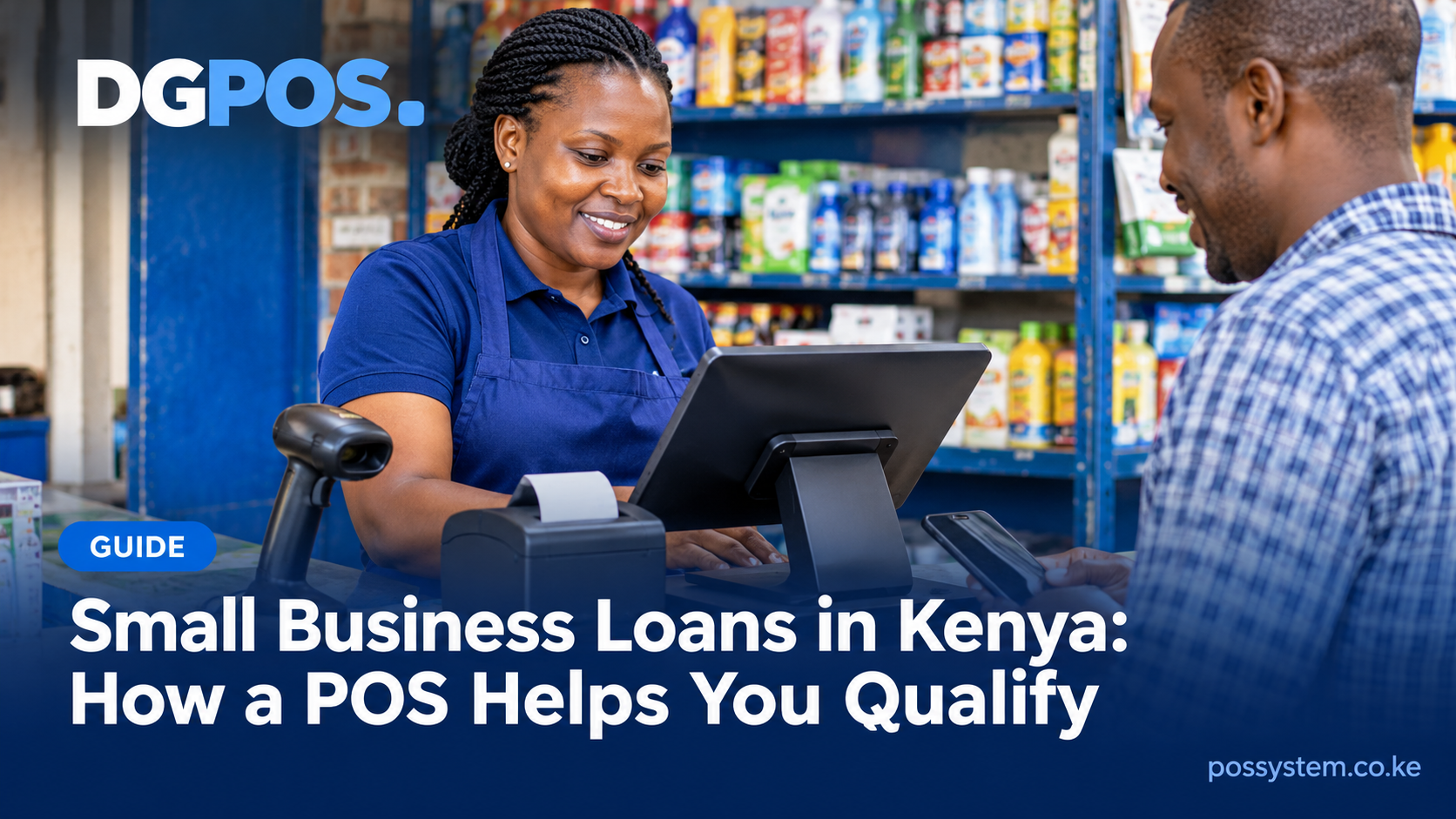
Access to financing is one of the biggest challenges facing small business owners in Kenya. Whether you operate a minimart, supermarket, electronics shop, hardware store, boutique, pharmacy, or wholesale business, having enough capital is essential for business growth. Small business loans can help entrepreneurs purchase stock, expand their shops, improve operations, and manage cash flow.
However, when applying for a business loan, lenders often want to understand how your business operates, how much revenue it generates, and whether you can repay the borrowed money. This is where digital business records become important.
A modern POS (Point Of Sale) system helps businesses maintain organised sales records, monitor inventory, and generate reports that demonstrate business activity. Instead of relying entirely on handwritten notebooks, shop owners can use pos software to record daily transactions and maintain more reliable financial information.
A reliable POS SYSTEM can therefore help small businesses prepare better documentation when seeking financing.
For Kenyan entrepreneurs looking to grow their businesses, adopting a digital point of sale system from Digee Technologies Limited Company can be an important step towards improving financial record management and business visibility.
1. Understanding Small Business Loans in Kenya
Small business loans are financial products designed to provide entrepreneurs with capital for starting, operating, or expanding their businesses.
In Kenya, small businesses can explore financing from different sources, including:
- Commercial banks.
- Microfinance institutions.
- SACCOs.
- Digital lending platforms.
- Government-supported financing programmes.
- Other licensed financial institutions.
These lenders have different eligibility requirements, interest rates, repayment periods, and application procedures.
Depending on the lender, a business owner may be required to provide identification documents, business registration information, bank statements, financial records, business performance information, or collateral.
One important consideration is demonstrating that your business generates sufficient income to support loan repayment.
A modern POS SYSTEM helps create organised transaction records that can support this process.
2. Why Business Records Matter When Applying for a Loan
When applying for financing, lenders need to assess the financial position of your business.
They want to understand whether your shop generates consistent income, how much money moves through the business, and whether you have the capacity to repay the loan.
Unfortunately, many small businesses in Kenya still depend on handwritten records that may be incomplete or difficult to verify.
For example, a shop owner may know that the business makes good sales every day but struggle to provide accurate monthly sales figures.
This can make the loan application process more difficult.
Using a digital Point Of Sale solution helps businesses maintain transaction histories and organise important sales information.
A suitable pos software solution can help record:
- Daily sales transactions.
- Product sales quantities.
- Payment records.
- Sales performance.
- Inventory movement.
- Customer transactions.
- Business reports.
These records provide a clearer picture of business operations and can help owners prepare supporting documentation when applying for loans.
However, lenders may require additional documents, and POS reports alone do not guarantee loan approval.
3. How a POS SYSTEM Helps Demonstrate Business Revenue
Revenue is one of the important factors lenders may consider when evaluating a business loan application.
A business that consistently records its sales can find it easier to explain its financial performance.
A reliable POS SYSTEM helps shop owners record transactions whenever customers purchase products.
For example, consider a minimart that sells groceries, beverages, household products, and personal care items.
Instead of recording every transaction manually, the cashier uses a digital POS (Point Of Sale) system to process purchases.
At the end of the day, the business owner can review recorded sales information.
This makes it easier to understand:
- Total recorded daily sales.
- Weekly sales performance.
- Monthly sales trends.
- Best-selling products.
- Product demand.
- Transaction histories.
When applying for financing, these reports may help demonstrate the shop’s trading activity.
A dependable point of sale system therefore supports better financial record-keeping and business transparency.
4. Using POS Software to Maintain Consistent Sales Records
Consistency is important when managing business finances.
If a shop records sales on some days but fails to document other transactions, its financial records may not accurately represent its performance.
Digital systems help reduce this problem by creating a structured process for recording transactions.
With reliable pos software, employees can record sales throughout the day rather than depending on memory or handwritten summaries.
For small business owners, this offers several advantages.
Accurate Transaction Histories
Every recorded transaction creates a reference that can be reviewed when necessary.
Easier Monthly Reporting
The business owner can use available reporting features to review sales performance over different periods.
Reduced Manual Errors
Automated calculations help minimise mistakes associated with manual addition and record-keeping.
Better Financial Organisation
Organised records make it easier to prepare business information when lenders request financial documentation.
A modern POS SYSTEM gives entrepreneurs a better foundation for managing their business information.
5. Tracking Inventory to Understand Your Business Performance
Inventory is an important part of many small businesses.
For a retail shop, stock represents money invested in products that are expected to generate future sales.
When applying for financing, understanding inventory levels can help business owners explain how their capital is being used.
A good point of sale system connects sales activities with inventory records.
For example, when a customer purchases a product, the system can update the available stock quantity, depending on its configuration.
This helps shop owners monitor:
- Products currently available.
- Fast-moving products.
- Slow-moving products.
- Products requiring restocking.
- Inventory movement.
- Stock shortages.
A suitable POS SYSTEM can also help business owners identify products that contribute significantly to their sales.
This information may support better purchasing and financial planning.
For example, if a supermarket owner wants financing to purchase additional stock, organised inventory and sales reports can help explain the business’s purchasing needs.
6. How POS Reports Can Help With Cash Flow Management
Cash flow refers to the movement of money into and out of a business.
A business may generate substantial sales but still experience financial difficulties if its expenses are not properly managed.
Small business owners need to understand how much money comes in, how much goes out, and what remains available for business operations.
A modern POS (Point Of Sale) solution helps record sales transactions and may provide useful payment reports depending on the system’s features.
By reviewing available reports, business owners can better understand their recorded sales activity.
For example:
| Business Activity | How Digital Records Help |
|---|---|
| Daily sales | Monitor recorded revenue |
| Product purchases | Review stock purchasing information |
| Inventory movement | Track products sold and remaining stock |
| Payment transactions | Review recorded payment methods |
| Sales trends | Identify changes in business performance |
| Business planning | Support more informed financial decisions |
Combining pos software with proper expense tracking, bank statements, and accounting records can give business owners a clearer understanding of their financial position.
It is important to remember that sales revenue is not the same as profit or available cash. Businesses must also account for operating expenses, supplier payments, taxes, and other financial obligations.
7. Building Financial Credibility Through Digital Records
Financial credibility is important when approaching lenders for business financing.
A business with organised records can provide clearer information about its operations than one that depends entirely on informal calculations.
Using a reliable POS SYSTEM helps establish a consistent record of business transactions.
Over time, these records can help demonstrate:
- How frequently the business makes sales.
- Which products generate the most revenue.
- How sales change over time.
- How inventory moves.
- Whether the business is growing.
- How the business performs during different periods.
A well-maintained point of sale system can therefore support a more transparent approach to business management.
However, lenders may also assess credit history, existing debts, bank transactions, business expenses, collateral, and other eligibility requirements.
Digital sales records strengthen business documentation but do not replace these requirements.
8. Why Manual Record-Keeping Can Make Loan Applications Difficult
Many small businesses begin with notebooks, calculators, and spreadsheets.
These tools may be sufficient when transactions are limited, but they can become difficult to manage as the business grows.
Manual record-keeping can create several challenges.
Missing Sales Information
Employees may forget to record certain transactions, resulting in incomplete records.
Incorrect Calculations
Repeated manual calculations can lead to errors when preparing daily or monthly sales summaries.
Difficulty Preparing Reports
Shop owners may spend hours going through notebooks to determine their monthly sales.
Poor Inventory Visibility
Without updated stock records, it becomes difficult to establish how much inventory is available.
Limited Business Transparency
Incomplete records can make it harder to explain business performance when approaching lenders.
A digital POS (Point Of Sale) solution helps address these challenges by creating a more organised record-keeping process.
9. How Different Small Businesses Can Use POS Records When Seeking Financing
Different businesses have different financing needs. However, accurate sales and inventory information can benefit many types of enterprises.
Minimarts and Grocery Shops
A POS SYSTEM helps grocery retailers monitor daily sales, stock movement, and popular products.
These records may support applications for financing to purchase additional inventory or expand the shop.
Supermarkets
Supermarkets handle large numbers of transactions and products.
A reliable point of sale system helps organise sales information and monitor inventory across different product categories.
Electronics Shops
Electronics retailers can use pos software to record product sales, monitor stock, and maintain organised transaction information.
This may help when preparing documentation for financing additional stock.
Clothing and Fashion Shops
Fashion retailers can use a digital POS solution to monitor sales by product, size, colour, and category, depending on the system’s capabilities.
Hardware Shops
Hardware businesses often manage many products with different specifications and prices.
A suitable Point Of Sale system helps maintain organised product and sales records.
Pharmacies
Pharmacies can benefit from structured sales and inventory management, including monitoring product movement and available stock.
In all these businesses, digital records can support better financial organisation and business planning.
10. Preparing Your Business for a Loan Application Using POS
Having a digital POS SYSTEM is a useful step, but business owners should also prepare other financial documents before applying for financing.
Here are some practical steps to consider.
Step 1: Record Every Sale
Ensure that all business transactions are captured in your POS (Point Of Sale) system.
Step 2: Review Your Sales Reports
Generate daily, weekly, and monthly reports to understand your business performance.
Step 3: Monitor Inventory
Keep product records updated and regularly check physical stock against system records.
Step 4: Track Business Expenses
Record rent, electricity, salaries, transport, supplier payments, and other operating costs separately.
Step 5: Maintain Bank Records
Where possible, use a dedicated business bank account and keep statements showing business transactions.
Step 6: Calculate Your Actual Profit
Do not confuse total sales with profit. Deduct the cost of goods sold and relevant expenses to understand your actual earnings.
Step 7: Prepare Your Loan Documents
Organise your business registration documents, identification, financial statements, bank records, and other information requested by the lender.
Step 8: Review Your Repayment Ability
Before borrowing, determine whether your business can comfortably meet the proposed repayment schedule.
A reliable point of sale system makes the sales-recording part of this process easier and more organised.
11. What Lenders May Look for When Evaluating Small Business Loans in Kenya
Different financial institutions have different loan assessment procedures.
However, many lenders consider several important factors when reviewing applications.
| Loan Assessment Factor | What the Lender May Review |
|---|---|
| Business activity | Whether the business is operating |
| Revenue | Sales and income records |
| Profitability | Whether the business generates profit |
| Cash flow | Ability to meet financial obligations |
| Credit history | Previous borrowing and repayment behaviour |
| Existing debts | Current financial commitments |
| Business documents | Registration and ownership information |
| Security | Collateral or guarantees, where required |
Digital pos software can help with some aspects of financial documentation, especially sales and inventory records.
However, a POS SYSTEM does not independently determine whether a business qualifies for a loan.
Loan approval depends on the lender’s policies, assessment criteria, and the overall financial position of the applicant.
12. Why Digee Technologies Limited Company Recommends Going Digital
At Digee Technologies Limited Company, we understand that managing a small business requires accurate information, efficient operations, and proper financial organisation.
Many entrepreneurs concentrate on selling products but overlook the importance of maintaining reliable business records.
Adopting a digital POS (Point Of Sale) solution can help change how a business manages its daily activities.
DGPOS provides a digital retail management solution designed to help businesses organise important operations such as:
- Sales management.
- Product management.
- Inventory monitoring.
- Transaction recording.
- Sales reporting.
- Business performance monitoring.
With a suitable POS SYSTEM, shop owners can reduce dependence on manual records and maintain better visibility into their operations.
For businesses planning to apply for financing, organised digital records can be valuable when preparing supporting documentation.
Digee Technologies Limited Company encourages small business owners in Kenya to embrace technology and build stronger foundations for sustainable business growth.
13. Can a POS Guarantee a Small Business Loan in Kenya?
One important point every entrepreneur should understand is that having a POS SYSTEM does not automatically qualify a business for financing.
A point of sale system helps organise sales and inventory information, but lenders consider several other factors.
These may include:
- Business profitability.
- Monthly income.
- Existing financial obligations.
- Credit history.
- Repayment capacity.
- Business stability.
- Loan purpose.
- Required supporting documents.
A business can have impressive sales figures but still struggle with profitability or cash flow.
For this reason, entrepreneurs should use pos software as part of a broader financial management strategy.
Maintaining accurate sales records, controlling expenses, separating personal and business finances, and meeting financial obligations can help businesses become better prepared for financing opportunities.
Conclusion: Improve Your Business Records With POS
Access to financing can help small businesses in Kenya expand, increase inventory, improve operations, and explore new opportunities.
However, preparing for a loan application requires more than simply having a good business idea. Entrepreneurs need organised records that help explain how their businesses operate and perform financially.
A modern POS (Point Of Sale) system helps retailers record daily sales, monitor inventory, generate reports, and maintain reliable business information.
With the right pos software, business owners can improve financial record-keeping and gain better visibility into their operations.
Although a POS SYSTEM cannot guarantee loan approval, it can help establish a more organised approach to business management and financial documentation.
If you are a shop owner looking to improve your business operations, consider adopting DGPOS from Digee Technologies Limited Company.
Go digital, maintain better records, manage your business smarter, and prepare for growth with DGPOS.
Frequently Asked Questions (FAQs)
1. Can a POS system help a small business qualify for a loan in Kenya?
A POS SYSTEM can help maintain organised sales and inventory records that may support a loan application. However, approval depends on the lender’s requirements, credit assessment, profitability, and repayment capacity.
2. Why do lenders need business sales records?
Lenders may use sales records to understand business activity, revenue patterns, and financial performance. A reliable point of sale system helps businesses maintain organised transaction histories.
3. Can pos software generate sales reports for loan applications?
Yes. Depending on its features, pos software can generate daily, weekly, and monthly sales reports that business owners may use as supporting financial documentation.
4. What documents do I need when applying for a small business loan in Kenya?
Requirements vary by lender but may include identification documents, business registration documents, bank statements, financial records, credit information, and collateral documents where applicable.
5. Does a POS system calculate business profit?
Some POS SYSTEM solutions provide sales and profitability reports. However, accurate net profit calculations require accounting for the cost of goods sold, operating expenses, taxes, and other costs.
6. Can a small shop benefit from using a POS?
Yes. Even a small retail business can benefit from a digital POS (Point Of Sale) solution through improved transaction recording, inventory management, and access to business reports.
7. Where can I get POS software in Kenya?
You can contact Digee Technologies Limited Company to learn more about DGPOS and how its digital retail management solution can support your business.