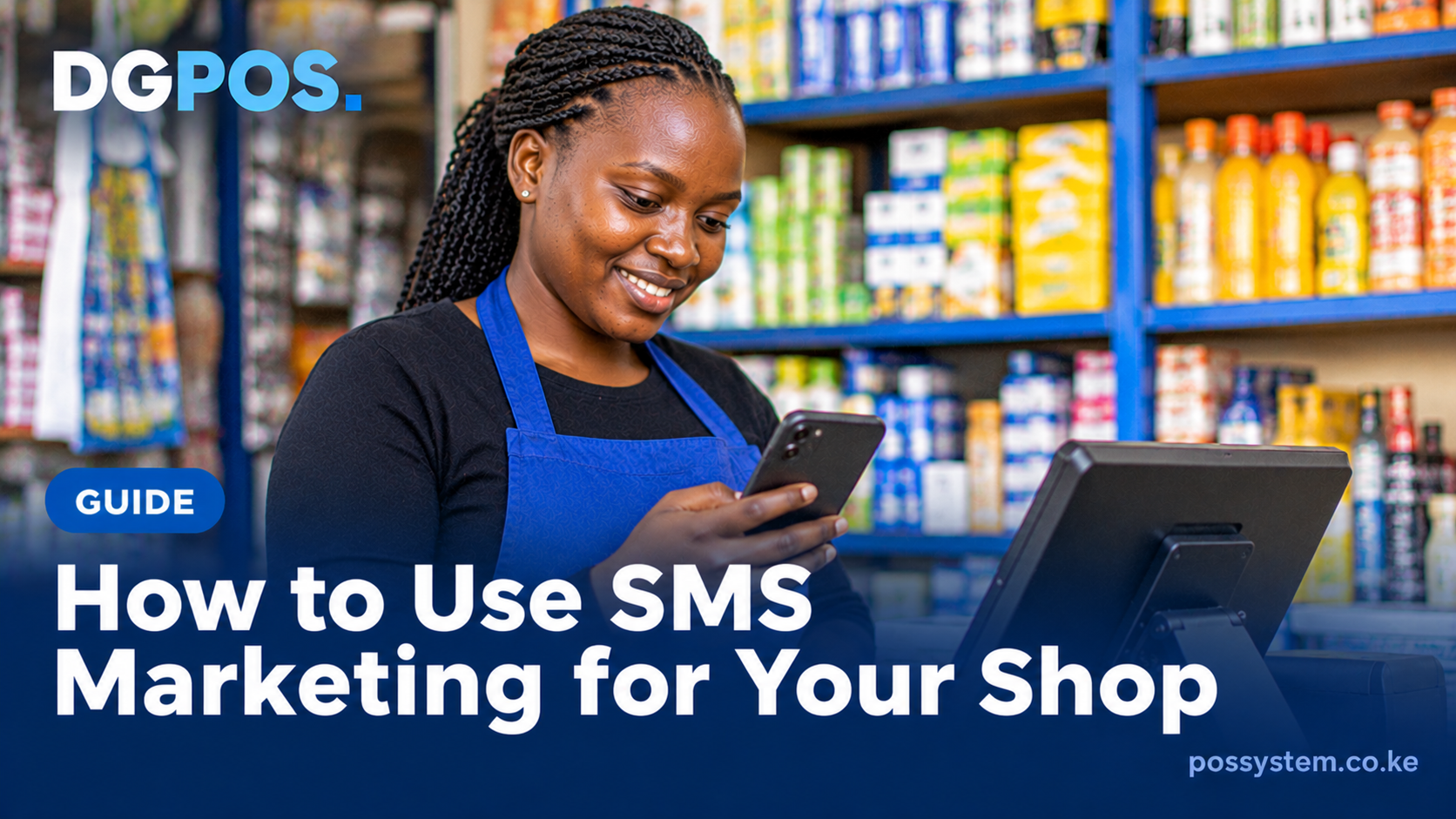
SMS marketing is one of the simplest and most effective ways for small businesses to communicate directly with customers. Whether you operate a minimart, supermarket, pharmacy, boutique, hardware store, restaurant, or wholesale shop, sending text messages can help you promote products, announce discounts, share business updates, and encourage repeat purchases. Unlike some digital marketing methods that depend on customers having internet access, SMS marketing allows your business to reach customers directly through their mobile phones. When combined with a reliable POS SYSTEM, SMS marketing becomes even more effective because you can use sales records and customer information to create relevant marketing campaigns. With the right POS tools, your shop can understand buying patterns, identify regular customers, and communicate with them more effectively. At Digee Technologies Limited Company, we understand how technology can help businesses improve customer relationships, manage daily operations, and increase sales.
1. Understand What SMS Marketing Means
SMS marketing involves sending promotional or informational text messages to customers who have agreed to receive communication from your business. These messages can include special offers, new product announcements, seasonal discounts, loyalty rewards, and reminders.
For example, a minimart can send customers a message announcing discounts on household products, while a pharmacy can notify customers about product availability or collection reminders where appropriate. A boutique can announce new clothing arrivals, and a restaurant can share special meal offers.
Using POS software alongside SMS marketing helps businesses organise customer information and understand which products are popular. Instead of sending random messages, your business can create campaigns based on customer interests and purchasing behaviour. A modern Point Of Sale solution can also help maintain accurate sales records that support better marketing decisions.
2. Collect Customer Phone Numbers Responsibly
The first step in starting SMS marketing is building a customer contact list. Your business can invite customers to subscribe to promotional messages when they make purchases, register for a loyalty programme, or interact with your shop.
Consider the following methods:
- Ask customers whether they would like to receive special offers through SMS.
- Provide a simple subscription form at the checkout counter.
- Allow customers to register for loyalty rewards using their phone numbers.
- Explain what types of messages they will receive.
- Give customers an easy way to unsubscribe.
Always obtain permission before sending promotional messages. Respect customer privacy and follow applicable data protection and marketing requirements in Kenya.
A well-organised POS SYSTEM can help your shop maintain customer records, making it easier to manage customer relationships. A good point of sale system should support accurate business records and help you organise information responsibly.
3. Send Welcome Messages to New Customers
A welcome message is a good way to introduce your business to new customers. When someone subscribes to your SMS marketing list, send a short message thanking them for joining.
For example:
“Welcome to our shop! Thank you for joining our customer updates. Stay connected for exciting offers, new arrivals, and exclusive discounts.”
Welcome messages help establish communication and make customers feel appreciated. You can also explain how customers can access special promotions and loyalty benefits.
When your business uses POS technology, customer registration and purchase records can support a more organised customer experience. Integrating customer management with POS software can make it easier to maintain useful records and improve communication.
4. Promote Discounts and Special Offers
One of the main reasons businesses use SMS marketing is to announce discounts and special promotions. A short message can remind customers about an offer and encourage them to visit your shop.
For example:
- A supermarket can advertise weekend grocery discounts.
- A boutique can announce seasonal clothing offers.
- A pharmacy can communicate approved product promotions.
- A hardware shop can advertise selected building materials.
- A restaurant can promote lunch offers and special menus.
Keep promotional messages simple and include the most important information. Mention the offer, its validity period, and where customers can find the products.
A reliable Point Of Sale system helps you monitor product sales and identify items that may benefit from promotional campaigns. By reviewing sales information from your POS SYSTEM, you can make more informed decisions about which products to promote.
5. Use Customer Purchase History to Personalise Messages
Customers are more likely to respond to messages that match their interests. Sending the same promotion to every customer may not always produce the best results.
For example, customers who regularly purchase baby products may appreciate updates about related offers. Customers who frequently buy groceries may respond better to supermarket discounts, while clothing shoppers may be interested in new arrivals.
Your business can use customer purchase information to understand shopping patterns and create more relevant campaigns.
A modern point of sales system can help organise transaction records and provide useful sales information. When customer management features are available, POS software can support more informed marketing activities.
Personalised marketing should always respect customer consent and privacy. Avoid collecting or using unnecessary personal information.
6. Send Messages About New Product Arrivals
SMS marketing is also useful when your shop receives new stock. Instead of waiting for customers to visit and discover the products, you can notify interested customers about new arrivals.
For example:
“New arrivals are here! Visit our shop today and explore our latest collection. Thank you for shopping with us.”
A clothing store can announce new designs, a supermarket can highlight newly stocked products, and an electronics shop can inform customers about new accessories.
Using a POS SYSTEM to record incoming stock and monitor product availability helps prevent misleading promotions. Before sending a campaign, confirm that the advertised products are actually available.
With effective Point Of Sale management, your business can connect stock information with sales performance and make better decisions about product promotions.
7. Remind Customers About Loyalty Rewards
Customer loyalty programmes encourage shoppers to return to your business. SMS messages can help customers remember their rewards, available points, special benefits, or upcoming loyalty promotions.
For example:
“Thank you for shopping with us! You are eligible for our latest customer rewards. Visit our shop to learn more.”
You can also send birthday offers or exclusive promotions to customers who have agreed to receive them.
A well-managed POS solution can help track customer purchases and support loyalty programme activities. Depending on the available features, POS software can make it easier to identify regular customers and understand their shopping frequency.
Combining loyalty activities with a point of sale system helps create a more organised approach to customer retention.
8. Send Payment and Order Notifications
SMS marketing does not have to focus entirely on promotions. Your business can also use text messages to improve customer communication through useful notifications.
Examples include:
- Order confirmation messages.
- Collection reminders.
- Delivery updates.
- Payment confirmations.
- Service notifications.
These messages help customers stay informed about their transactions and orders.
A modern POS SYSTEM can help manage sales transactions, payments, and order records. When connected notification features are available, your business can provide timely updates without relying entirely on manual communication.
A reliable Point Of Sale solution also helps maintain organised transaction information, making it easier for staff to follow up on customer orders.
9. Choose the Right Time to Send SMS Messages
Timing can influence whether customers read and respond to your messages. Sending promotional messages too early, too late, or too frequently may annoy customers.
Consider these guidelines:
- Send promotional messages during reasonable daytime hours.
- Announce weekend offers before the weekend begins.
- Send holiday promotions early enough for customers to plan.
- Avoid sending unnecessary messages every day.
- Consider customer preferences when planning campaigns.
Your business should also monitor campaign responses to understand which days and times generate better engagement.
Sales information from your POS software can help you identify busy shopping periods and plan promotions accordingly. By connecting marketing decisions with information from your POS SYSTEM, you can make your campaigns more organised and relevant.
10. Keep Your SMS Messages Short and Clear
Customers receive many messages every day, so your promotional SMS should communicate its purpose quickly. Avoid long explanations, complicated language, and unnecessary details.
A good marketing message should include:
- Your business name.
- The main offer or announcement.
- The benefit to the customer.
- The promotion deadline, where applicable.
- A clear call to action.
For example:
“Weekend Offer at ABC Shop! Enjoy special discounts on selected household products this Saturday and Sunday. Visit us today!”
Remember to identify your business clearly so customers know who is contacting them.
A POS SYSTEM helps your business organise sales and customer information, while effective SMS marketing helps communicate relevant offers. Together, these tools can support a better customer experience.
11. Measure the Performance of Your SMS Campaigns
Sending messages is only one part of SMS marketing. You should also evaluate whether your campaigns are helping your business achieve its goals.
Important measurements include:
- Number of messages successfully delivered.
- Number of customers responding to offers.
- Number of customers visiting after receiving messages.
- Sales generated during promotional campaigns.
- Number of customers returning to purchase.
- Number of customers unsubscribing.
For example, if you send 200 promotional messages and 30 customers make purchases after receiving the offer, you can evaluate whether the campaign delivered useful results.
Your point of sale system can help compare sales performance before, during, and after a promotion. This information can help you understand which campaigns are worth repeating.
With accurate reports from POS software, your shop can make better marketing decisions instead of relying on guesswork.
12. Avoid Sending Too Many Promotional Messages
Although SMS marketing is effective, sending too many messages can have the opposite effect. Customers may become frustrated, ignore your communication, or unsubscribe.
Create a reasonable communication schedule that balances promotions with useful updates.
For example, you could send a weekly promotional message, occasional new-product announcements, and important customer notifications when necessary.
Always prioritise message quality over quantity. Your goal should be to provide information customers find useful rather than constantly asking them to purchase something.
A good POS solution supports organised business operations, while a thoughtful SMS strategy helps maintain positive customer relationships. Combining both can make your shop more professional and customer-focused.
13. Combine SMS Marketing with a Modern POS System
SMS marketing becomes more useful when supported by technology that helps your business manage customers, products, and sales. This is where a modern POS SYSTEM plays an important role.
A reliable Point Of Sale solution can help your shop manage daily transactions, monitor stock, generate sales reports, and organise business information. These functions provide useful insights that can guide your marketing activities.
For example, your business can:
- Identify fast-moving products using sales reports.
- Monitor stock before announcing promotions.
- Understand customer purchasing patterns where customer records are available.
- Track sales performance during promotional campaigns.
- Identify products that may require additional marketing.
- Improve the checkout experience.
With the right point of sale system, your shop can reduce manual work and improve the accuracy of daily business records.
Modern POS software can also help businesses bring different operational activities together. Instead of managing sales information in notebooks and marketing contacts in separate records, businesses can use technology to create a more organised working environment.
However, SMS campaign automation and direct messaging integrations depend on the features and services supported by the selected POS solution.
14. Common SMS Marketing Mistakes to Avoid
Even a well-planned SMS campaign can produce poor results if your business makes avoidable mistakes.
Here are some common mistakes to watch out for:
Sending messages without permission: Always obtain customer consent before sending promotional messages.
Using unclear messages: Make sure customers understand the offer without needing additional explanations.
Promoting unavailable products: Check your stock records before advertising products.
Ignoring customer preferences: Give customers control over the marketing messages they receive.
Sending too frequently: Maintain a reasonable messaging schedule.
Failing to measure results: Track responses and compare promotional sales performance.
Using outdated customer information: Regularly review customer records and maintain accurate information.
A combination of responsible SMS marketing practices and a reliable POS SYSTEM can help your shop avoid these challenges and build stronger customer relationships.
15. Why Kenyan Shops Should Adopt SMS Marketing
In Kenya, mobile phones are an important part of everyday communication. Shops can use SMS marketing to reach customers with product updates, discounts, announcements, and useful reminders.
Whether you operate a small retail shop in Nakuru, a supermarket in Nairobi, a pharmacy in Eldoret, or a boutique in Mombasa, SMS marketing provides an additional way to connect with customers.
It is particularly useful for businesses that want to:
- Increase awareness of available products.
- Encourage repeat purchases.
- Announce special discounts.
- Improve customer engagement.
- Promote seasonal offers.
- Communicate important business updates.
When supported by a modern Point Of Sale solution, SMS marketing can become part of a wider business management strategy. Your POS software can help organise sales information, while SMS campaigns help turn customer engagement into potential business growth.
Conclusion
SMS marketing is a practical strategy for shops that want to communicate directly with customers, promote products, increase awareness, and encourage repeat purchases. By building a permission-based contact list, sending relevant offers, announcing new arrivals, and measuring campaign performance, your business can create a more effective marketing strategy.
However, successful SMS marketing requires more than sending promotional messages. Your shop also needs accurate sales records, organised stock management, and reliable customer information. This is why combining SMS marketing with a modern POS, POS SYSTEM, and point of sale system can make a significant difference in managing daily business activities.
Digee Technologies Limited Company provides technology solutions designed to help Kenyan businesses improve their operations through modern business management tools. With DGPOS, businesses can take advantage of digital POS software to manage sales, monitor inventory, and access useful business information.
Whether you operate a minimart, supermarket, pharmacy, restaurant, boutique, or hardware shop, choosing the right Point Of Sale technology can help you work more efficiently and make informed business decisions.
Looking to improve how your shop manages sales and daily operations? Discover DGPOS from Digee Technologies Limited Company and take a step towards smarter business management.